
Top 10 Types of Three Phase Transformers for Global Buyers
Three Phase Transformer selection is becoming a strategic purchasing decision, not just a specification exercise. The International Energy Agency’s Electricity Grids and Secure Energy Transitions (2023) estimates that annual grid investment must rise from about $300 billion to more than $600 billion by 2030. That growth puts pressure on equipment availability, delivery schedules, and technical support. For global buyers, comparing transformer types early can help align capacity, installation conditions, and lifecycle costs.
The right design depends on the job. A compact dry-type unit may suit an indoor commercial building, while an oil-immersed transformer may fit an outdoor utility installation. Three-phase transformers also differ by winding configuration, cooling method, voltage class, and application. Small details matter: enclosure access, ambient temperature, noise limits, and space for maintenance can change the practical choice. They are easy to overlook.
This guide examines ten common types and explains where each may fit. It also highlights trade-offs buyers should verify with manufacturers, including efficiency data, insulation, protection features, and applicable test documentation. Regional standards and project requirements vary, so one comparison table cannot settle every purchase. No shortlist is perfect. Still, a clear technical brief helps buyers ask better questions, compare quotations consistently, and avoid choosing on price alone.
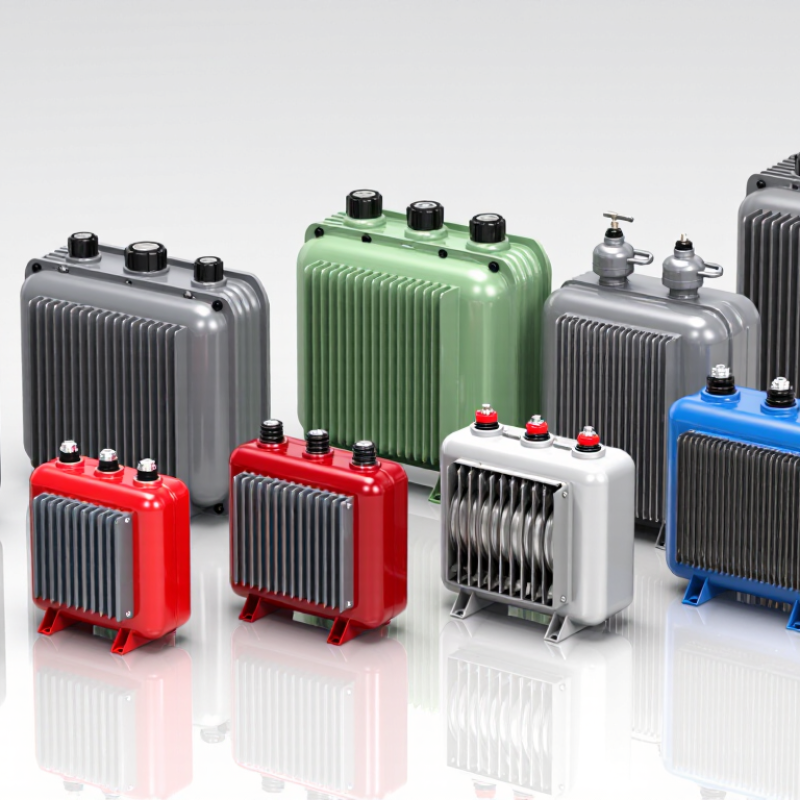
How Three-Phase Transformers Are Classified
Three-phase transformers are best classified across several independent dimensions, not as ten mutually exclusive designs. Electrical function separates step-up, step-down, isolation, and autotransformers. Construction and insulation distinguish oil-immersed, dry-type, and cast-resin units. Installation and duty add pad-mounted, pole-mounted, substation, and furnace transformers. One unit may fit several categories: a cast-resin transformer can also be a step-down unit. Classification gets messy here.
IEC 60076 provides the core framework for power-transformer ratings and performance, while buyers should also compare winding connections, cooling methods, enclosure, and vector group. These details affect voltage compatibility, heat removal, and how equipment fits a site. The IEA’s Electricity Grids and Secure Energy Transitions report says annual grid investment must rise to more than USD 600 billion by 2030, from about USD 300 billion. That expansion makes sound equipment selection increasingly practical, not merely technical. The IEA’s Electricity 2024 report also projected average global electricity-demand growth of 3.4% annually from 2024 to 2026. Still, demand forecasts cannot specify a transformer. Load profile, ambient temperature, harmonics, and maintenance capacity matter at the installation itself. A classification label is only a starting point.
Top 10 Types of Three Phase Transformers for Global Buyers - How Three-Phase Transformers Are Classified
Transformer types are classified by different characteristics, so categories can overlap. For example, a unit can be both oil-immersed and pad-mounted. Actual ratings, construction, and applicable requirements depend on the project and local regulations.
| No. | Transformer Type | Classification Basis | Typical Characteristics | Common Applications | Buyer Considerations |
|---|---|---|---|---|---|
| 1 | Core-Type Transformer | Magnetic-core construction | Windings surround portions of the laminated core; three-limb arrangements are common in three-phase designs. | Utility substations, industrial plants, and distribution networks. | Compare losses, noise, insulation design, and short-circuit withstand capability for the specified duty. |
| 2 | Shell-Type Transformer | Magnetic-core construction | The core surrounds much of the winding assembly. The design can provide strong mechanical support to the windings. | Applications where winding support and mechanical performance are important. | Assess the complete design and test data; core form alone does not determine efficiency or suitability. |
| 3 | Oil-Immersed Transformer | Insulation and cooling medium | The active parts are immersed in insulating liquid, which provides insulation and transfers heat to the cooling system. | Outdoor substations, utility distribution, and many medium- or high-capacity installations. | Check liquid type, containment, fire protection, environmental rules, and the specified cooling method. |
| 4 | Dry-Type Transformer | Insulation and cooling medium | Uses air and solid insulation rather than an insulating liquid; designs include cast-resin and impregnated windings. | Buildings, commercial facilities, and locations where liquid containment is undesirable. | Verify ventilation, enclosure rating, ambient conditions, fire requirements, and relevant dry-type standards. |
| 5 | Two-Winding Transformer | Winding arrangement | Has separate primary and secondary windings, providing electrical isolation between the circuits. | General voltage step-up or step-down duties in utility and industrial systems. | Specify vector group, tap arrangement, impedance, winding material, and required isolation. |
| 6 | Three-Phase Autotransformer | Winding arrangement | Uses a shared winding section for input and output; it does not provide the same galvanic isolation as a two-winding transformer. | Interconnecting systems with relatively close voltage levels and certain starting or regulation duties. | Evaluate isolation needs, fault levels, grounding, and the voltage ratio before selection. |
| 7 | Distribution Transformer | Power-system function | Steps distribution-network voltage down to a level used by local loads; often operates continuously with varying load. | Neighborhood networks, commercial sites, and industrial distribution systems. | Consider load profile, no-load and load losses, voltage regulation, and expected future demand. |
| 8 | Power Transformer | Power-system function | Designed for bulk power transfer or major system voltage transformation, commonly in transmission and large substations. | Generation connections, transmission substations, and large industrial networks. | Review system studies, cooling stages, on-load tap-changing needs, protection, and transport constraints. |
| 9 | Pad-Mounted Transformer | Installation and enclosure | Ground-mounted unit in a locked, tamper-resistant enclosure; commonly used in underground distribution systems. | Residential developments, commercial properties, and industrial sites with underground feeders. | Confirm access clearances, cable entry, switching arrangement, enclosure protection, and local safety requirements. |
| 10 | Pole-Mounted Three-Phase Transformer | Installation and mounting | Installed on a utility pole; three-phase service may use a three-phase unit or a bank of three single-phase units. | Overhead distribution networks, particularly where ground-mounted equipment is impractical. | Check pole loading, mounting hardware, lightning protection, phase configuration, and utility specifications. |
For international projects, confirm the required electrical ratings, frequency, vector group, efficiency limits, environmental conditions, and applicable standards. IEC 60076 is a widely used series for power transformers; additional national or regional requirements may also apply.
