
China Top 10 Screw Centrifuge Manufacturers
China has become a significant source of industrial separation equipment, including Screw Centrifuge systems for wastewater, chemicals, food processing, mining, and pharmaceutical applications. This guide examines ten leading Chinese manufacturers and the practical factors behind their market positions.
The review considers manufacturing experience, engineering capability, product range, quality controls, export service, and application support. A reliable supplier should explain bowl speed, differential speed, torque limits, feed capacity, and material selection clearly. Stainless steel surfaces, balanced rotating assemblies, protected bearings, and accessible maintenance points can strongly affect daily operation. Factory audits, inspection records, performance testing, and relevant certifications also deserve close attention.
Performance claims need careful checking. A brochure may show impressive capacity, yet actual results depend on solids concentration, particle size, moisture content, and feed behavior. Site conditions matter. This article therefore avoids judging manufacturers by price alone. It focuses on evidence, technical communication, customization ability, and after-sales responsiveness. Some supplier information may change over time, and public data is not always complete. That limitation should be acknowledged. A manufacturer with a smaller catalog may still deliver better support for a difficult process. Likewise, a famous brand is not automatically the right choice. Buyers should request test results, reference projects, warranty terms, spare-parts details, and a clear commissioning plan before making a decision. Careful comparison reduces risk and supports a more dependable Screw Centrifuge investment.
Industry Overview: Screw Centrifuges and Their Main Applications
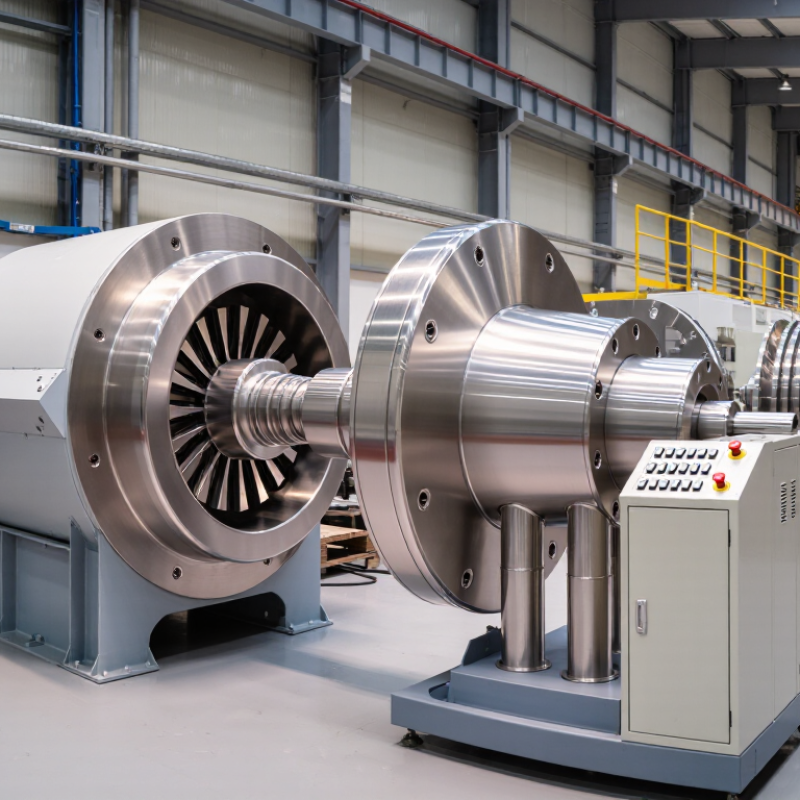
Screw centrifuges, often called decanter centrifuges, separate solids from liquids through continuous rotation. Their main parts include a bowl, conveyor, gearbox, and wear-resistant discharge ports. In wastewater plants, they dewater activated sludge before transport or further treatment. UN-Water’s World Water Development Report 2017 estimated that over 80% of global wastewater was discharged without treatment. This figure explains the continuing need for compact separation equipment.
Industrial applications are broader. Food processors use screw centrifuges for starch, vegetable proteins, and fermentation residues. Chemical plants handle mineral slurries, pigments, and process waste. China Statistical Yearbook 2024 reported an urban sewage treatment rate above 98% in 2023. Higher treatment coverage creates more sludge, not less. Therefore, dewatering capacity remains important for municipal facilities and industrial parks. Field selection should consider feed solids, polymer demand, torque, and expected dryness. No machine is perfect. Actual performance can vary with seasonal feed changes.
Tips: Request a trial using real process samples. Check cake dryness, centrate clarity, power use, and noise. Inspect screw flights and wear protection regularly. A high throughput figure may look attractive, but it can hide greater maintenance costs. Operators should also review emergency shutdown procedures and cleaning access before purchase.
China Top 10 Screw Centrifuge Manufacturers - Industry Overview: Screw Centrifuges and Their Main Applications
| No. | Primary Application | Typical Feed Material | Main Separation Objective | Common Process Configuration | Typical Outputs | Key Selection Considerations |
|---|---|---|---|---|---|---|
| 1 | Municipal Wastewater Sludge | Waste activated sludge, primary sludge, and mixed sewage sludge | Continuous thickening or dewatering before disposal, drying, digestion, or incineration | Two-phase solid–liquid separation, often combined with polymer conditioning | Conveyed dewatered sludge cake and clarified centrate | Feed variability, polymer demand, cake dryness, centrate quality, odor control, and automatic torque protection |
| 2 | Industrial Wastewater Treatment | Sludge from food processing, textiles, chemicals, paper, and general manufacturing | Reduce sludge volume and recover process water | High-throughput continuous dewatering with adjustable differential speed | Industrial sludge cake and separated liquid phase | Corrosion resistance, abrasive content, chemical compatibility, wash systems, and enclosed operation |
| 3 | Food and Beverage Processing | Fruit pulp, vegetable fibers, fermentation solids, dairy by-products, and beverage residues | Recover liquid products or concentrate suspended solids | Clarification, thickening, or dewatering depending on the product stream | Clarified liquid, concentrated solids, or recoverable product fraction | Food-contact materials, hygienic design, cleanability, product yield, and low shear requirements |
| 4 | Starch and Grain Processing | Starch milk, gluten slurry, grain steepwater, and process residues | Separate starch or protein-rich solids from process water | Clarification and concentration in continuous processing lines | Concentrated starch or protein fraction and clarified process liquid | Fine-particle capture, throughput, wear protection, product purity, and wash-water management |
| 5 | Edible Oil and Oilseed Processing | Oilseed foots, wash water, suspended solids, and oil-containing process streams | Remove suspended solids and recover usable liquid phases | Solid–liquid separation, with configuration selected for the oil or aqueous phase | Clarified oil or water phase and separated solids | Oil recovery, temperature control, sealing arrangement, material compatibility, and cleaning requirements |
| 6 | Mining and Mineral Processing | Mineral slurries, tailings, coal fines, and abrasive process solids | Recover water and produce a transportable or stackable solids fraction | Heavy-duty dewatering with abrasion-resistant wetted components | Dewatered mineral solids and clarified or partially clarified water | Particle size distribution, abrasive wear, feed density, torque capacity, and solids discharge design |
| 7 | Oil and Gas Drilling Fluids | Drilling mud containing barite, drilled solids, and fine formation particles | Remove unwanted fine solids and support drilling-fluid recycling | High-speed clarification or solids-control operation | Separated fine solids and recovered drilling fluid | Fluid rheology, barite recovery, explosion-protection requirements, wear resistance, and mobility |
| 8 | Chemical and Petrochemical Processing | Reaction slurries, catalyst residues, pigments, salts, and chemical precipitates | Separate valuable solids, remove contaminants, or recover process liquid | Closed continuous separation with application-specific materials and seals | Recovered solids and clarified mother liquor or process liquid | Chemical resistance, hazardous-area classification, temperature, pressure, solvent compatibility, and containment |
| 9 | Pharmaceutical and Biotechnology Processing | Cell broth, fermentation biomass, crystallization slurry, and fine active-product suspensions | Harvest biomass, concentrate solids, or separate crystals from mother liquor | Low-contamination, enclosed solid–liquid separation with controlled discharge | Concentrated biomass or crystals and clarified process liquid | Product recovery, hygienic construction, clean-in-place capability, containment, and validation requirements |
| 10 | Animal Manure and Renewable Energy | Digestate, livestock manure slurry, and biomass fermentation residues | Separate fibrous solids from liquid nutrient-rich fractions | Continuous dewatering after anaerobic digestion or mechanical conditioning | Separated fiber cake and liquid fertilizer fraction | Fiber content, sand contamination, odor management, wear protection, nutrient recovery, and energy consumption |
