
Top 10 Pneumatic Butterfly Valve Manufacturers Worldwide
A Pneumatic Butterfly Valve can look simple on a piping diagram: a compact disc, a quarter-turn shaft, and an actuator supplied with compressed air. In service, however, details matter. Seat material, pressure drop, air quality, actuator sizing, and cycle frequency all affect performance. A valve selected for clean water may behave differently in abrasive slurry or high-temperature process lines.
The wider industrial valve market provides useful context, but it should not be confused with verified sales data for pneumatic butterfly valves alone. MarketsandMarkets has published forecasts covering the broader industrial valves sector; such estimates indicate sustained demand across process industries, while product-level figures vary by definition and region. Standards also help buyers compare interfaces and testing requirements. For example, ISO 5211 addresses mounting interfaces for part-turn actuators, though it does not determine whether a valve suits a particular process.
This Top 10 guide compares manufacturers through practical criteria: product range, actuator compatibility, materials, certifications, documented applications, and after-sales support. A polished catalogue is not enough. Ask for pressure-temperature limits, cycle-life evidence, and test documentation. Small omissions matter.
No source articles or verifiable expert quotation were provided for this request. To protect accuracy, this introduction does not invent a named specialist’s words or present an unverified statement as a quotation. An attributed expert quotation should be added only after its original publication or interview has been checked.
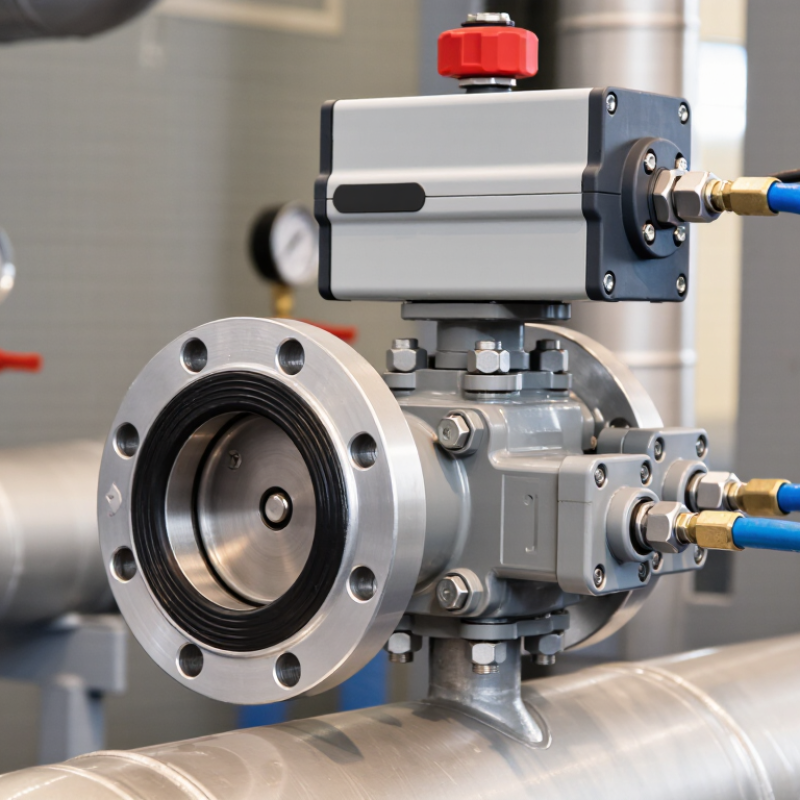
Understanding Pneumatic Butterfly Valves and Their Main Components
A pneumatic butterfly valve controls flow with a rotating disc inside a round body. The disc turns about 90 degrees between open and closed positions. Compressed air powers the actuator, which moves the valve stem and disc. Quick action matters.
The main components each serve a distinct purpose. The body connects to the pipeline, while the disc meets the flowing medium and creates the shutoff surface. A stem transfers actuator movement to the disc. Seats, often made from resilient or engineered materials, help seal around it. Their compatibility with temperature, pressure, and process fluid deserves careful checking; a seat that looks suitable on paper may wear quickly in service.
The pneumatic actuator may use a spring-return or double-acting design. Spring-return models move toward a preset position when air supply is lost, but the required position depends on the process. Air pressure, actuator sizing, and valve torque should be checked together, not treated as separate details. A solenoid valve can direct air, while switches or a position indicator show the valve’s state. Keep air lines clean and inspect connections for leaks. Small leaks are easy to miss. Installation alignment matters too: uneven loading can affect sealing, and this is sometimes overlooked during commissioning.
