
Top 10 Carbon Steel Rebar Suppliers for Global Buyers
Choosing a Carbon Steel Rebar Supplier is not just a price comparison. A delayed shipment or inconsistent bar diameter can disrupt a pour, tie up crews, and leave a project schedule exposed. Buyers need evidence they can check, not polished promises.
Quality expert W. Edwards Deming famously said, “In God we trust; all others must bring data.” For rebar procurement, that means reviewing mill test certificates, grade and size availability, traceability, production capacity, and delivery records. Ask how each supplier handles a shipment that arrives with mismatched markings or incomplete paperwork. Details matter. A certificate is useful only when it can be linked to the material delivered.
This Top 10 guide gives global buyers a practical starting point for comparing suppliers across regions and project needs. It considers product range, export experience, quality controls, communication, and logistics, while recognizing that availability and lead times can change. A supplier suited to a coastal infrastructure project may not be the best fit for a tight urban schedule. No list can replace direct verification, and rankings can become outdated. That limitation deserves attention. Buyers should confirm current certifications, local technical requirements, inspection options, and delivery terms before committing. Use the profiles to narrow the field, then ask specific questions and compare documented answers.
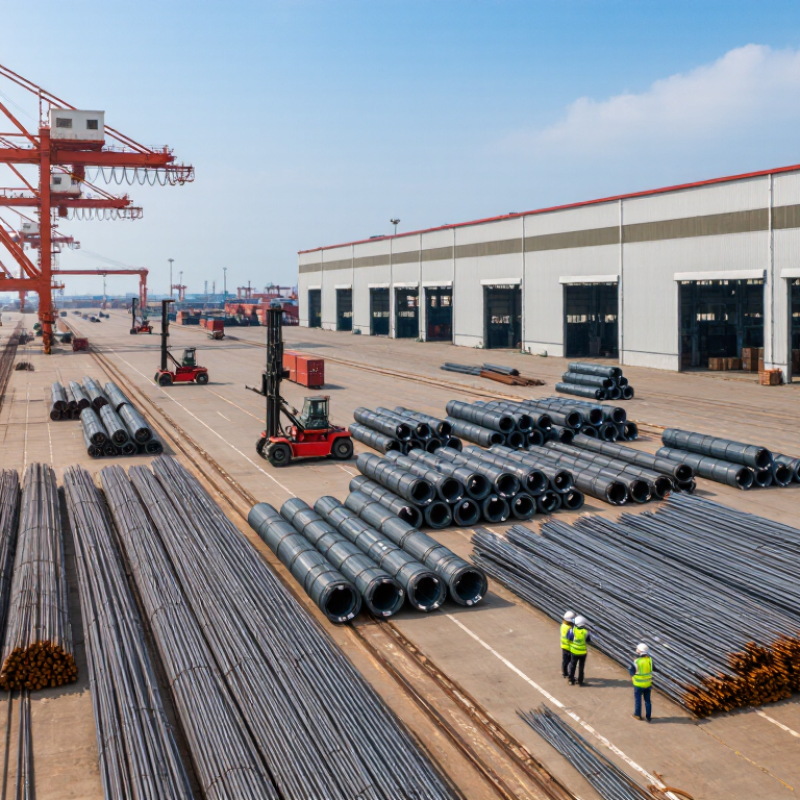
Carbon Steel Rebar: Grades, Properties, and Common Uses
Carbon steel rebar is classified by yield strength, ductility, and the standard used in a project. In ASTM specifications, Grade 60 denotes a minimum yield strength of 60,000 psi. Other markets use different grade names and testing rules, so grades are not always directly interchangeable. Check the governing standard.
Ribbed surfaces help concrete grip the bar and transfer tension through a reinforced section. Carbon steel offers high strength and can be bent to specified shapes, but it is not inherently corrosion-resistant. Chlorides, moisture, and cracks can accelerate rusting. A706 bars have controlled properties for applications requiring greater ductility or weldability; welding still needs project approval and suitable procedures. Details matter.
Rebar commonly reinforces foundations, floor slabs, beams, columns, bridges, and retaining walls. A small slab may use straight bars on chairs, while a column cage needs carefully spaced ties and hooked ends. The correct diameter and spacing depend on structural design, not supplier preference. Buyers should compare mill test certificates with the specified grade, dimensions, and heat numbers. It is easy to focus on price and overlook traceability; that shortcut can create costly uncertainty later.
