
China Top 10 Remote Control Actuator Manufacturers
Choosing a Remote Control Actuator manufacturer involves more than comparing catalog prices. Buyers need to match actuator performance to the actual equipment, operating environment, and control system. A unit that looks suitable on paper may fall short when exposed to repeated cycles, side loads, moisture, or limited installation space. Small details matter.
This guide introduces ten manufacturers in China and offers a practical starting point for evaluating them. It considers product range, stated force and stroke, speed, duty cycle, control options, customization, and available technical support. Where possible, compare published specifications with test reports, sample performance, and clear answers from the supplier. Ask how force is measured, what conditions apply to rated duty cycles, and whether protection ratings cover the intended installation. Those answers can reveal gaps that a polished brochure may not show.
Look closely at more than the product page. Review factory and quality-control information, communication quality, lead times, spare-part availability, and the supplier’s experience with similar applications. Request drawings and confirm mounting dimensions before ordering samples. Measure twice. A ranking can guide research, but it cannot replace application-specific checks or independent verification. Company capabilities and product details may change, and this overview should not be treated as a certification of every claim. That caveat is useful, if less convenient. The right partner is the one whose documented performance, support, and delivery fit your requirements—not simply the one with the lowest quoted price.
Understanding Remote Control Actuators and Their Core Functions
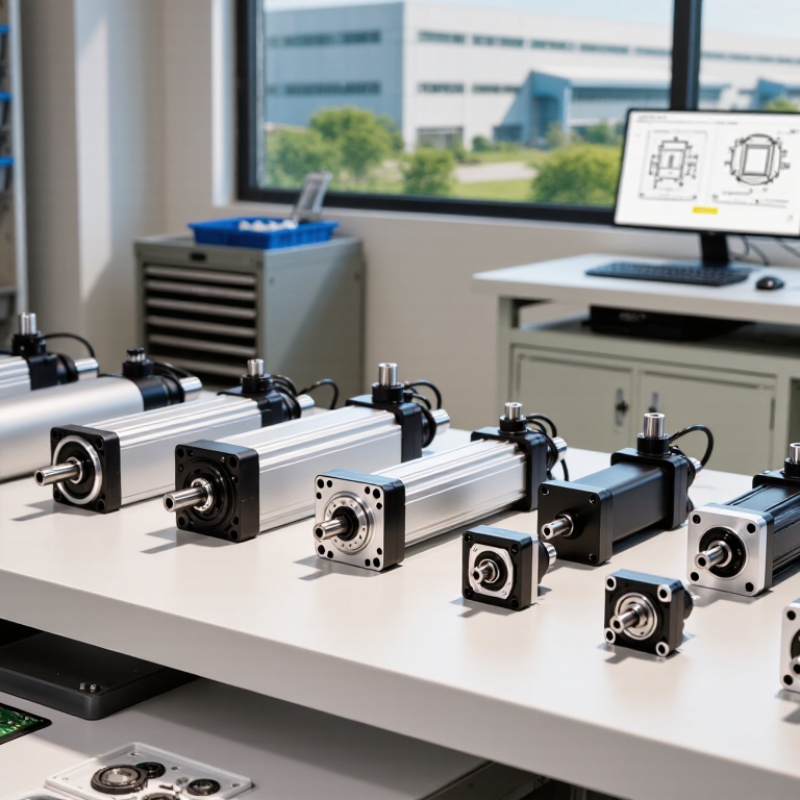
Remote control actuators convert an electrical command into physical movement. A receiver reads the signal, and a motor or linear drive moves a gate, valve, panel, or machine part. The movement may be a straight push or a rotation. Core functions include opening, closing, positioning, and holding a load. In a sliding access panel, for example, the actuator must move the panel smoothly and stop at its travel limits. That visible motion is only part of the job. Control accuracy, load capacity, and response time also matter.
Some systems use limit switches or position sensors to prevent over-travel. Others rely on timed operation, which may be less precise as parts wear. A mismatch between actuator force and load can cause slow movement, excess heat, or early failure. No setup is perfectly quiet or maintenance-free. It is worth checking real operating conditions rather than relying only on a catalog rating.
Tips: Check the load, stroke length, supply voltage, and duty cycle before selection. Test the actuator with the actual mechanism. Listen for unusual noise, and inspect mounting points periodically.
China Top 10 Remote Control Actuator Manufacturers - Understanding Remote Control Actuators and Their Core Functions
Technical overview of ten common actuator types and control approaches. This table describes product categories and functions; it is not a company ranking.
| No. | Actuator Type | Primary Motion | Typical Control Method | Core Function | Common Applications |
|---|---|---|---|---|---|
| 1 | Electric Linear Actuator | Linear extension and retraction | Wired switch, relay, or remote receiver | Converts motor rotation into straight-line movement for positioning, pushing, or pulling. | Adjustable furniture, access panels, vents, and equipment positioning |
| 2 | Electric Rotary Actuator | Angular rotation | On/off or modulating electrical control | Turns a shaft or mechanism through a set angle or continuous rotation, depending on design. | Dampers, rotating platforms, and automated machinery |
| 3 | Quarter-Turn Valve Actuator | Typically a 90-degree turn | Electrical command with open/close or position control | Rotates a compatible valve stem to open, close, or regulate flow. | Ball valves and butterfly valves in fluid systems |
| 4 | Multi-Turn Valve Actuator | Multiple shaft rotations | Electrical control, often with limit and torque protection | Provides the repeated turns needed to operate rising-stem or other multi-turn valves. | Gate valves and globe valves in industrial piping |
| 5 | Electrohydraulic Actuator | Linear or rotary motion | Electrical signals control a hydraulic power unit or valve | Uses hydraulic pressure to produce force or movement; suitable designs can deliver high force in a compact system. | Mobile equipment, industrial machinery, and heavy-duty positioning |
| 6 | Pneumatic Actuator | Linear or rotary motion | Air pressure controlled by an electrically operated valve | Converts compressed-air pressure into mechanical movement. | Factory automation, process valves, and packaging equipment |
| 7 | Servo Actuator | Controlled angular or linear movement | Closed-loop control using a command signal and position feedback | Adjusts movement based on feedback to achieve more precise position or speed control. | Robotics, automation, and precision positioning systems |
| 8 | Stepper-Motor Actuator | Incremental rotary or linear movement | Electronic driver sends timed electrical pulses | Moves in discrete steps; position can be controlled by pulse count, although missed steps may occur without feedback. | Instrument mechanisms, small positioning systems, and automation equipment |
| 9 | DC Gearmotor Actuator | Rotary movement, often reduced in speed by gearing | DC motor driver, relay, or remote-control receiver | Uses a gearbox to trade rotational speed for increased output torque; direction can be changed by reversing motor polarity with suitable control electronics. | Small mechanisms, powered access systems, and light-duty automation |
| 10 | Wireless-Controlled Actuator System | Depends on the connected actuator | Radio-frequency, Bluetooth, Wi-Fi, or another compatible wireless link | Transmits commands to a receiver that operates the actuator; wireless control is an interface and does not itself define the actuator's motion or force. | Remote operation of compatible valves, linear actuators, and equipment |
