
Top 10 Carton Suction Cup Manufacturers in China
Choosing a Carton Suction Cup manufacturer is not just a price comparison. The right supplier can help keep cartons moving steadily through packaging, printing, and palletizing lines. Yet a cup that works well on a smooth box may struggle with dusty, porous, or uneven cardboard. Small differences matter: lip shape, rubber hardness, cup diameter, and vacuum connection can all affect grip. Fit matters.
This guide to the Top 10 Carton Suction Cup Manufacturers in China introduces companies worth considering for product range, customization, manufacturing experience, and customer support. A useful supplier should explain material options and recommend cups based on carton weight, surface, cycle speed, and available vacuum pressure. Ask for samples or test data when possible. Details count. A polished catalog alone does not prove performance on your production line.
The list is a starting point, not a universal ranking. Manufacturer capabilities, lead times, and product specifications can change, so confirm current details directly before making a purchase. It is also wise to test cups with your actual cartons; real packaging is rarely as uniform as a sample photo suggests. That is an easy point to overlook. Comparing suppliers with clear criteria can make the decision more practical and help reduce avoidable downtime.
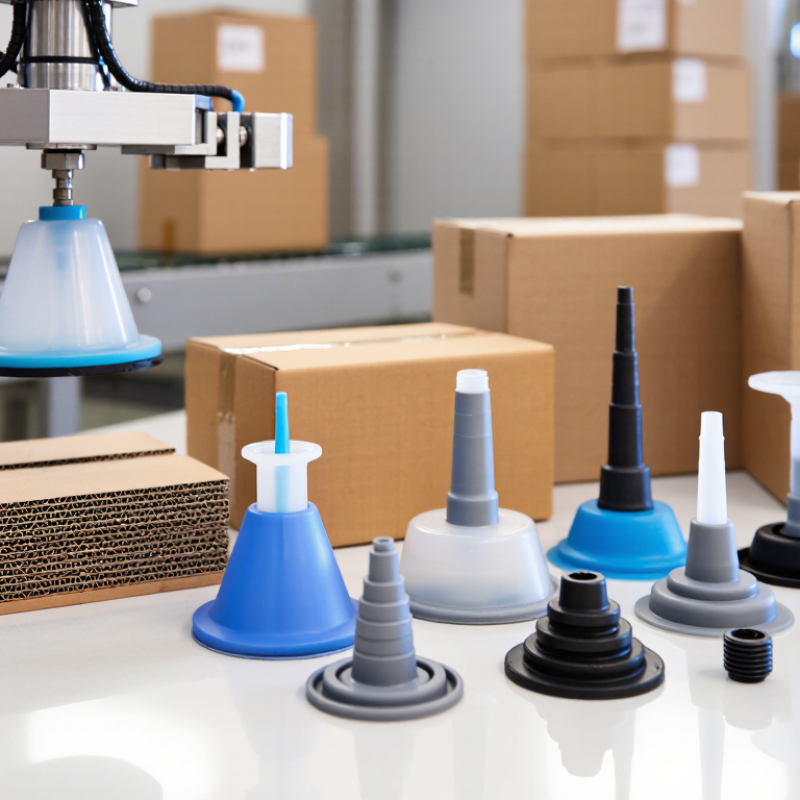
What Carton Suction Cups Are and How They Work
Carton suction cups are flexible end-effectors that grip boxes without clamps. A vacuum generator removes air from the cup, creating lower pressure inside. Higher surrounding air pressure then holds the carton against the cup. Seal matters. A soft lip can conform to corrugated board, but crushed edges, dust, or uneven flaps may break the seal. Cup material and shape should match the carton surface, load, and operating temperature. In practice, test with the actual box, not only a smooth sample. A paper specification can still mislead.
Automation is expanding in China, but robot figures do not measure suction-cup use directly. The International Federation of Robotics’ World Robotics 2024 report recorded 541,302 industrial robot installations worldwide in 2023, including 276,288 in China. These figures cover many applications, not carton handling alone. For a carton pick, engineers consider cup diameter, vacuum level, acceleration, and a suitable safety margin. Porous board may need more airflow, while a small cup can struggle with a heavy or flexible box. The right setup depends on real handling conditions.
