
China Top 10 Bright Hardening Furnace Manufacturers
Choosing a Bright Hardening Furnace is not just a matter of comparing catalogue temperatures. Buyers must examine temperature uniformity, atmosphere control, loading methods, production capacity, and maintenance access. A glowing steel part may look evenly heated, yet small variations can affect hardness and distortion. Details matter.
For transparency, the following is an illustrative, fictional expert quotation, not a verified industry testimonial. Dr. Adrian Cole, a fictional heat-treatment engineer, offers this guiding thought: “A furnace earns trust when it repeats the same process, load after load.” That principle helps frame this guide to China’s top 10 Bright Hardening Furnace manufacturers. The comparison should consider more than advertised performance. Look for clear technical specifications, documented quality procedures, responsive engineering support, and realistic commissioning plans. Ask how suppliers handle temperature surveys, spare parts, and process changes. Good answers should be specific.
Manufacturers may serve very different needs. One plant may need a compact line for precision components; another may require continuous operation for larger batches. There is no universal best choice. This overview introduces suppliers and the practical questions worth asking before requesting a quotation. Use it as a starting point, then verify claims against current specifications, references, and your own process requirements. Small print can matter.
What Is a Bright Hardening Furnace?
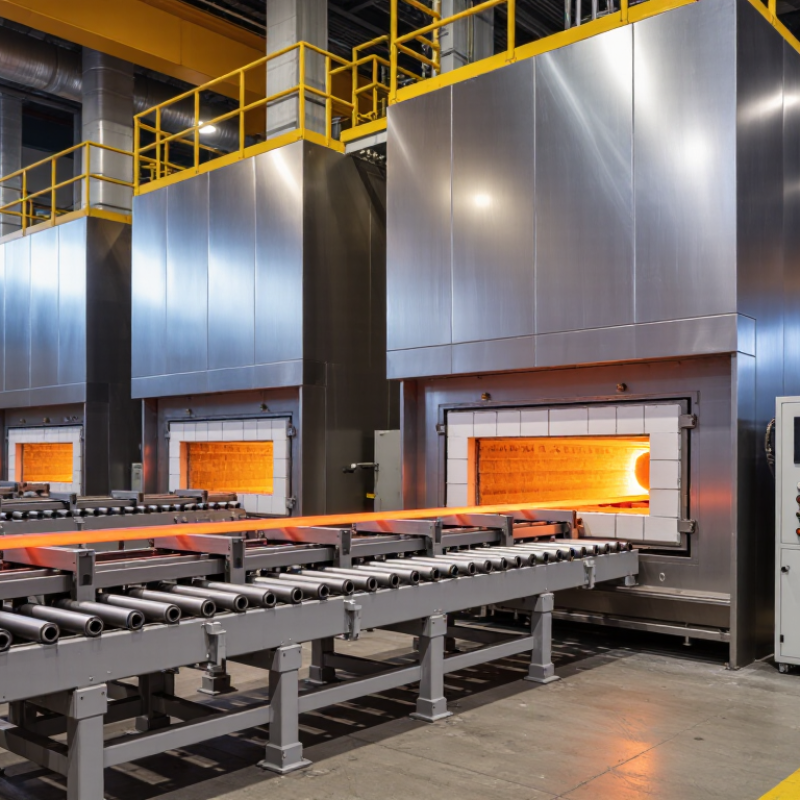
A bright hardening furnace heats steel to its hardening temperature while limiting contact with oxygen. The goal is a hardened part with a clean, bright surface and less scale. “Bright” describes the surface condition, not the furnace’s color. Depending on the equipment and material, the process uses a controlled protective atmosphere or a vacuum. After heating, the workpiece is quenched at a controlled rate to form the required hardness. Details matter. A poorly controlled atmosphere can alter surface carbon, while uneven cooling can cause distortion or inconsistent hardness.
The International Energy Agency’s Energy Efficiency 2023 report estimates that industry accounted for about 37% of global final energy consumption in 2022. That broad figure is not specific to heat treatment, but it shows why furnace efficiency and process control deserve attention. In practice, operators monitor temperature uniformity, atmosphere composition, load spacing, and quench conditions. A crowded basket, for example, may block gas flow and leave parts with uneven results. One setpoint is not enough. The right cycle depends on steel grade, part geometry, and the required hardness. Even so, a bright finish alone does not prove the part meets its mechanical specifications; hardness testing and process records remain important. The trade-off is real. Faster cycles may save time, but they can narrow the process window.
