
5 Tips to Choose the Right UAV Camera Gimbal?
A reliable Uav Camera Gimbal can determine whether aerial footage looks professional or merely usable. It affects image stability, framing, payload balance, and operator confidence. The choice matters most when a drone faces wind, vibration, changing light, or repeated inspection routes.
The commercial drone market is expanding beyond hobby filming. Grand View Research reports continued growth in the global commercial drone market, driven by construction, agriculture, energy, and public safety applications. Drone Industry Insights has also identified inspection, mapping, and surveying as leading professional use cases. These findings suggest a practical point: gimbals should be selected for the mission, not for impressive specifications alone.
Small details reveal real performance. A bridge inspector may need smooth three-axis stabilization while the drone hovers beside concrete joints. A survey crew may prioritize camera integration, accurate orientation data, and dependable operation over cinematic movement. Buyers should examine stabilization modes, payload capacity, vibration isolation, control latency, weather resistance, and compatibility with the aircraft’s flight controller. Battery consumption deserves attention too.
Numbers can mislead.
A high-resolution camera cannot repair unstable footage. Similarly, a lightweight gimbal may save battery power but struggle with heavier lenses or wind exposure. The International Civil Aviation Organization emphasizes safe, reliable unmanned aircraft operations, reinforcing the importance of equipment dependability and responsible use. No checklist is perfect. Field testing remains essential, because laboratory specifications rarely capture every rooftop, coastline, or dusty construction site. The following five tips provide a clearer framework for choosing a Uav Camera Gimbal with professional judgment and realistic expectations.
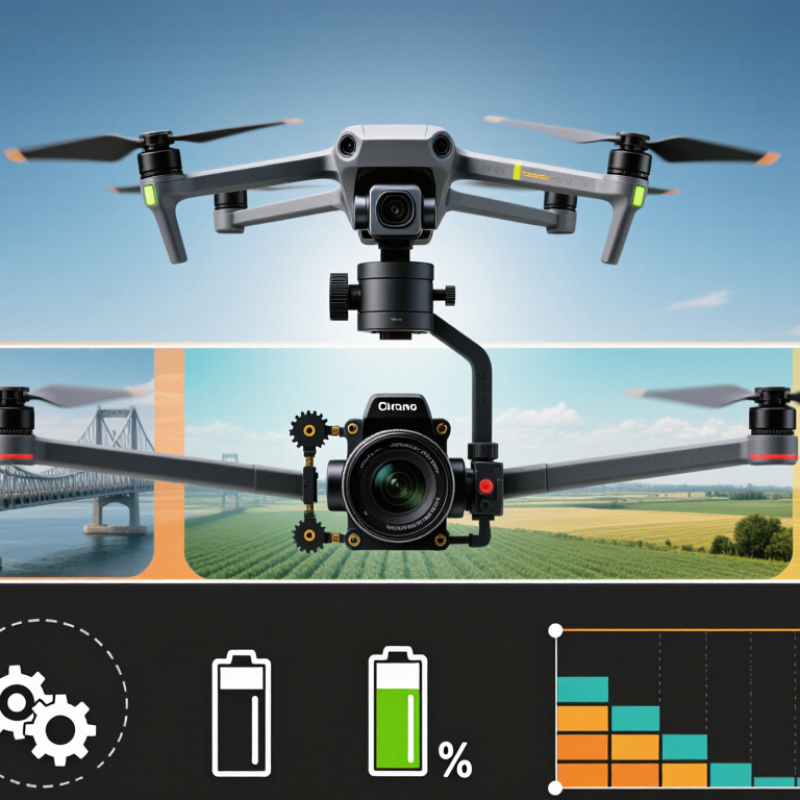
Define the UAV Mission and Imaging Requirements
Before choosing a UAV camera gimbal, define the mission in measurable terms. A mapping flight needs stable nadir images, while infrastructure inspection may require angled views and smooth tracking. Write down the target size, flight altitude, route length, expected wind, and usable daylight. These details expose demands that product brochures often hide. If the aircraft must hover beside a tower, vibration control may matter more than extreme optical zoom.
Imaging requirements should guide every mechanical decision. Specify ground sampling distance, frame rate, sensor size, shutter response, and acceptable image blur. A large sensor can improve low-light detail, but it may increase payload weight and power consumption. Thermal or multispectral work also requires accurate alignment between sensors. Ask how calibration will be checked in the field, not only in a laboratory. On one test flight, a perfectly sharp camera still produced weak data because sunlight created glare. That mistake changed the checklist.
Choose a gimbal with enough rotation range for planned viewpoints, plus dependable stabilization during acceleration and braking. Review payload limits, connector compatibility, data storage, and operating temperature. A gimbal that performs well on calm days may drift during coastal gusts. Request repeatable test evidence, such as horizon stability and image sharpness from several flight directions. Keep a small margin for future sensors or heavier protective housings. Perfect specifications are not enough.
