
7 Tips for Choosing the Best Rod Heaters?
Choosing the right Rod Heaters starts with the process, not the product page. A heater that works well in a compact aluminum die may struggle in a thick steel plate. The difference often comes down to watt density, fit, operating temperature, and heat loss. Small details matter. A loose bore can slow heat transfer, while poor temperature control can create hot spots and shorten service life.
Heat-transfer scholar Dr. John H. Lienhard IV’s work offers a useful engineering reminder: evaluate how heat moves through the actual system. That is a paraphrase of a technical principle, not a direct quotation. For a real purchase, verify recommendations against the heater maker’s specifications and your equipment’s operating conditions.
This guide covers seven practical checks for comparing Rod Heaters. It looks at material compatibility, dimensions, wattage, temperature limits, controls, installation, and supplier support. A caliper, a drawing, and a clear temperature target can prevent costly guesswork. Yet specifications do not tell the whole story. Cycle time, surrounding insulation, and the part’s changing load can all affect performance. Measure carefully. Ask questions. Recheck assumptions.
The best choice is not always the most powerful or the least expensive. It is the heater that delivers stable, even heat within the limits of the application. Use these tips as a starting point, then confirm critical details with a qualified heating professional and the manufacturer.
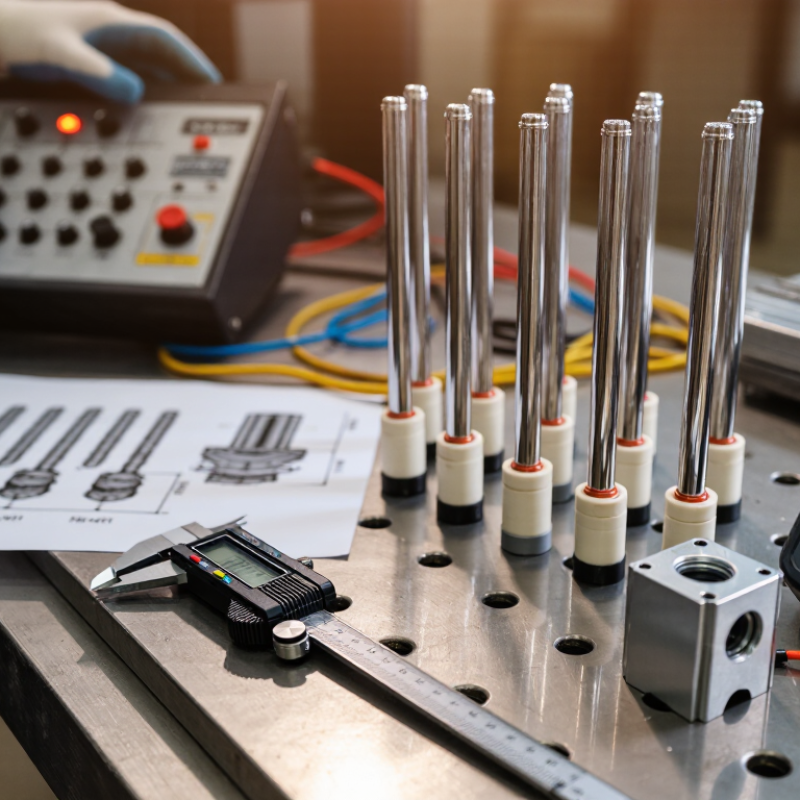
How Rod Heaters Work and Where They Are Used
7 Tips for Choosing the Best Rod Heaters?
How Rod Heaters Work and Where They Are Used
A rod heater turns electrical energy into heat through resistance. Current passes through a resistive element, often surrounded by ceramic insulation and a protective metal sheath. The sheath transfers heat to a nearby metal block, liquid, or surface. In a mold, for example, a tightly fitted heater warms the steel from inside. Contact matters. A loose fit can create hot spots and shorten service life.
Rod heaters are common in plastic-processing molds, dies, packaging equipment, and laboratory instruments. Some designs heat tanks or pipes when their construction suits the fluid and operating conditions. The U.S. Department of Energy’s 2015 Quadrennial Technology Review estimated that process heating accounted for about 36% of U.S. manufacturing energy use. That figure covers many heating methods, not rod heaters alone, but it shows why temperature control and insulation matter in industrial settings.
Choosing a heater means matching its diameter, length, watt density, and operating temperature to the equipment. A small change in fit can make a real difference. Measure the bore, check the material’s temperature limits, and consider how heat escapes during production. This is easy to overlook. A heater may reach its setpoint while the workpiece stays unevenly warm. That mismatch deserves a second look.
