
7 Tips for Choosing the Best HEPA Air Filter?
Choosing a Hepa Air Filter can feel straightforward until product labels, room sizes, and replacement costs start competing for attention. A HEPA claim alone does not tell you whether a unit suits your space. In the United States, a true HEPA filter is commonly described as capturing at least 99.97% of particles 0.3 microns in size. Still, the filter is only one part of an air purifier. Airflow, the seal around the filter, and the complete unit’s performance also matter. Small details count. A loose-fitting filter, for example, may let air bypass the media. That is easy to overlook.
This guide’s seven tips will help you compare options with more confidence. Start with the room’s dimensions and the manufacturer’s recommended coverage. Then consider clean air delivery rate, operating noise, replacement-filter availability, and ongoing cost. Check product documentation rather than relying only on large claims or a familiar logo. If you are searching for an Air Filter Hepa, confirm that the listing describes a complete filter or a compatible replacement part. They are not always the same thing. Think about your daily routine, too: a loud purifier beside a desk may be switched off, even if its specifications look impressive. There is no perfect choice for every room. The useful choice is one you can verify, maintain, and run consistently. These tips offer a practical starting point, though manufacturer guidance and local product standards can differ.
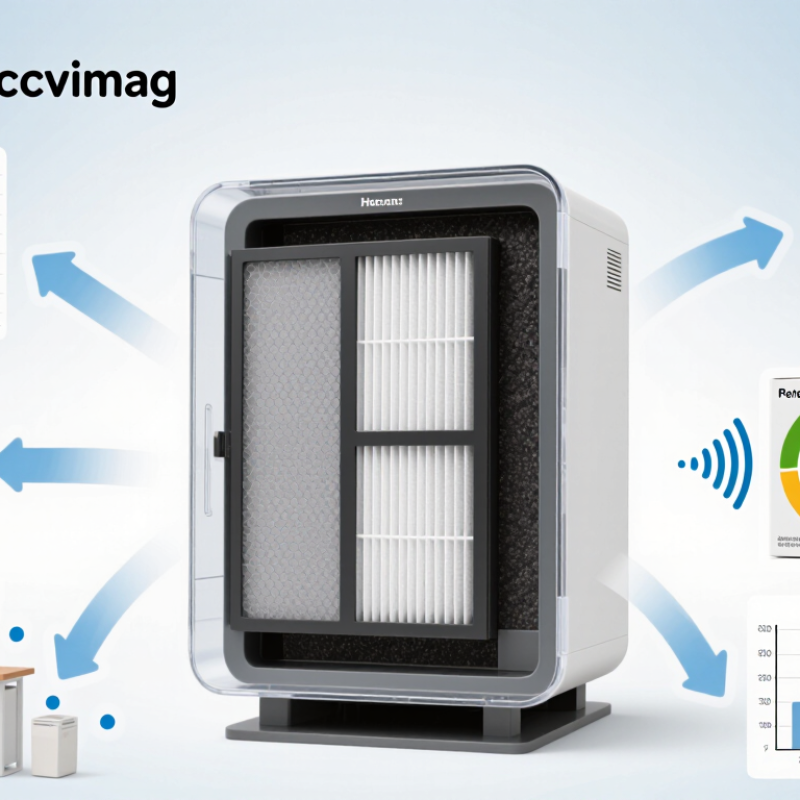
Identify Your Room Size and Air Quality Needs
Measure the room before comparing HEPA air cleaners. Multiply its length by its width, then note the ceiling height and whether doors usually stay open. AHAM recommends a smoke CADR of at least two-thirds of a room’s floor area, assuming an eight-foot ceiling. For a 240-square-foot room, that means a smoke CADR of at least 160. A tape measure beats a guess. Taller ceilings or open-plan spaces may need more cleaning capacity than the floor-area estimate suggests.
Room size is only half the decision. Consider what you actually notice: cooking particles near the kitchen, seasonal pollen by an open window, or pet dander on the sofa. The U.S. EPA’s Guide to Air Cleaners in the Home explains that CADR helps compare particle removal for smoke, dust, and pollen; it does not measure removal of gases or odors. EPA’s indoor-air guide reports that concentrations of some indoor pollutants are often two to five times outdoor levels, though conditions vary widely. If odors or chemical vapors are your main concern, a particle filter alone may disappoint. Check the cleaner’s stated room coverage, and be cautious when that number assumes a low fan speed you would rarely tolerate.
