
10 Tips for Choosing Plastic Injection Molding Machines
Choosing Plastic Injection Molding Machines is a practical decision, not a simple equipment purchase. The right machine must match your products, materials, cycle times, production volume, and available floor space. A compact machine may suit small medical components, while larger automotive parts require stronger clamping force and greater shot capacity. The numbers must fit the process.
Small details matter. Check the mold dimensions, tie-bar spacing, injection pressure, screw design, and control accuracy. Confirm that the machine can handle your resin without excessive heat or shear. Energy consumption also deserves attention, especially during long production runs. An efficient hydraulic, hybrid, or electric system may reduce operating costs, but the cheapest quotation is not always the best value.
A poor match can create flash, short shots, warping, or unstable cycle times. Those defects waste material and damage delivery schedules. They also reveal weaknesses in the original selection process. No machine choice is perfect. Yet careful comparison reduces avoidable surprises. Speak with experienced technicians, request verified specifications, and inspect service support before signing an order. Ask how quickly replacement parts arrive and who will troubleshoot a controller fault at midnight.
Keep safety, maintenance access, operator training, and future expansion in view. A machine that performs well today may become restrictive after a new mold arrives. The following ten tips examine these decisions closely, using practical criteria rather than attractive brochures. Some recommendations may require adjustment for your factory, because real production conditions rarely match a sales demonstration.
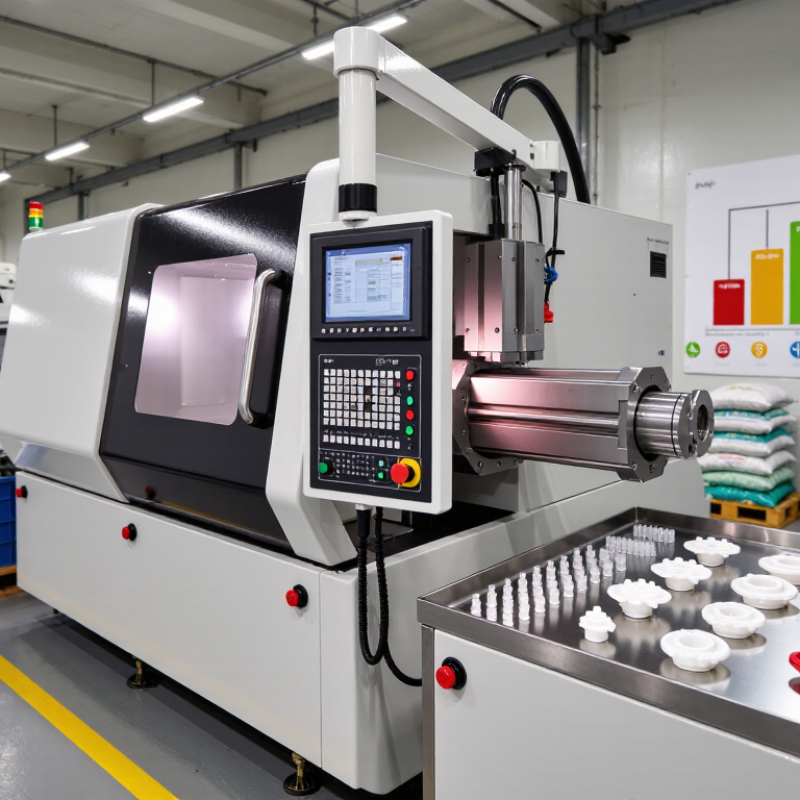
Define Production Requirements and Machine Specifications
Before comparing machines, define the production job in measurable terms.
Record resin type, part weight, projected area, mold dimensions, annual volume, cycle time, and quality tolerance. A small housing may need only moderate clamping force, while a thin-walled tray can demand high injection speed and pressure.
As a practical starting point, many processors size clamping force around 2–5 tons per square inch of projected area, then verify it through mold trials. Do not rely on a single formula.
The machine specification must match the complete process.
Check shot capacity, injection pressure, screw diameter, tie-bar spacing, platen size, mold-height range, ejection stroke, and control repeatability. Keep the planned shot within roughly 30–70% of barrel capacity; oversized barrels can increase residence time and material degradation.
The Plastics Industry Association reported approximately $548.1 billion in U.S. plastics industry shipments in 2022, showing how costly small efficiency losses can become at scale. EUROMAP valued global plastics and rubber machinery production at about €36.2 billion in 2023, reflecting a highly technical and competitive equipment market.
Energy data deserves attention too. Compare actual kilowatt-hours per kilogram, not brochure claims.
A spreadsheet can lie.
I have seen machines pass a catalog review but fail on mold access, cooling capacity, or unstable startup cycles. Leave room for future molds, but avoid paying for unused tonnage. The best specification is sometimes less impressive.
