
7 Tips for Choosing Packaging Paper Bags
Choosing Packaging Paper Bags is not just a matter of picking a color or adding a logo. The right bag must suit the product, carrying conditions, and customer experience. Packaging educator Walter Soroka describes packaging as “a coordinated system of preparing goods for transport, warehousing, logistics, sale, and end use.” That wider view is useful here. A paper bag should look appealing, but it also needs to protect and carry its contents. Small details matter. A damp pastry box, a sharp bottle edge, or a heavy stack of books can reveal weaknesses quickly.
This guide introduces seven practical checks: paper grade, bag size, handle design, load capacity, printing, sustainability claims, and supplier testing. Look closely at the bag’s base and seams, not only its front panel. Ask for samples, then test them with products similar in weight and shape to yours. A bag that feels sturdy when empty may behave differently when filled. Paper alone is not the whole story. Coatings, inks, and construction can affect performance and disposal options, so review supplier specifications rather than relying on vague labels. These tips provide a starting point, not a substitute for testing your actual products. Trade-offs remain: a thicker bag may feel more durable, yet use more material. The best choice is usually the one that meets real handling needs without adding features customers will never notice.
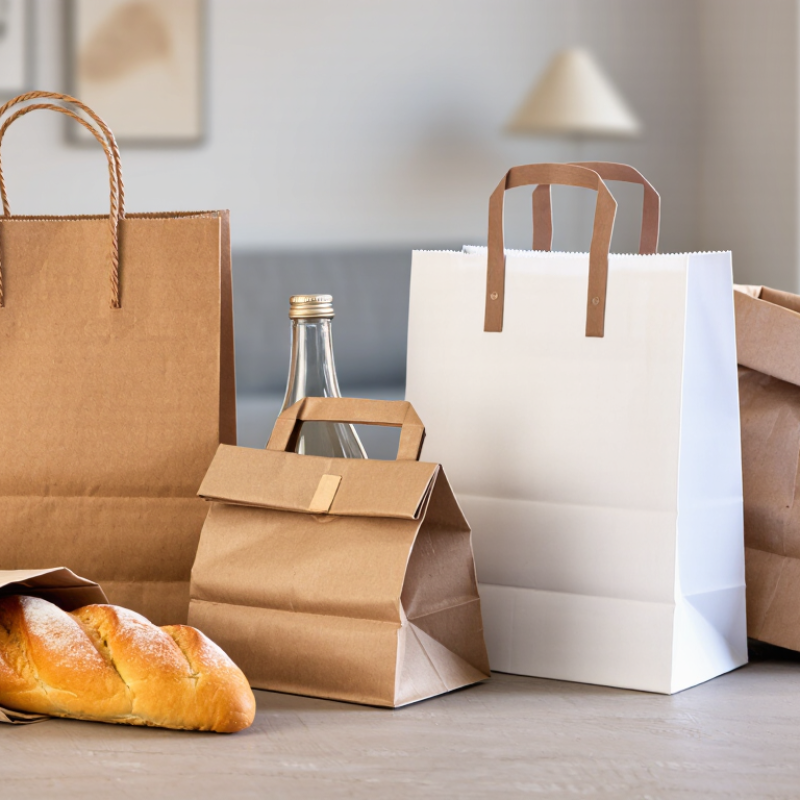
What Packaging Paper Bags Are and Where They Are Used
Packaging paper bags are carriers made from paper sheets or rolls, folded and joined to form a base and side panels. Many use kraft paper for strength, with flat or twisted handles added for easier carrying. The design can be plain, printed, or coated, though coatings may affect recyclability. Small details matter. A wide gusset helps a bag hold a bakery box; a reinforced base supports heavier groceries. Common uses include food takeaway, retail purchases, gifts, and lightweight e-commerce orders. Paper can tear when wet, so it is not ideal for every product or delivery route.
The scale of packaging helps explain why bag choices deserve attention. Eurostat’s 2022 packaging waste data reports that paper and cardboard made up 40.8% of packaging waste generated in the EU. In the United States, the EPA’s 2018 recycling data puts the recycling rate for paper and paperboard containers and packaging at 80.9%. These figures describe broad material streams, not the outcome for every individual bag. Local collection rules, food residue, coatings, and sorting all matter. A paper bag can feel reassuringly simple, yet its environmental value depends on how it is made, used, and handled after use. Reuse helps, when practical.
