
10 Tips for Choosing Orthopedic Spine Implants
Choosing Orthopedic Spine Implants is not a catalog exercise. The right choice depends on the diagnosis, anatomy, surgical plan, bone quality, and the patient’s goals. A cage that fits neatly on an imaging screen may still be unsuitable for a particular patient. Small details matter: implant dimensions, material, fixation method, and compatibility with the planned procedure. So does the evidence behind the device.
Orthopedic spine surgeon Dr. Alexander R. Vaccaro is a relevant clinical authority in this field. To avoid putting unverified words in his mouth, the following is an editorial paraphrase, not a direct quotation: “Choose the implant to support the patient’s anatomy and surgical goal—not the other way around.” That principle frames these ten tips. They cover questions to discuss with a qualified spine specialist, including clinical evidence, device design, risks, and follow-up needs. No single implant suits every case. Not even close.
A sound decision also accounts for what is uncertain. Research may not answer every question for every patient, and a promising feature is not proof of better outcomes. Ask how the device supports the treatment plan, what alternatives exist, and what recovery may involve. Bring the questions to your care team. That conversation matters.
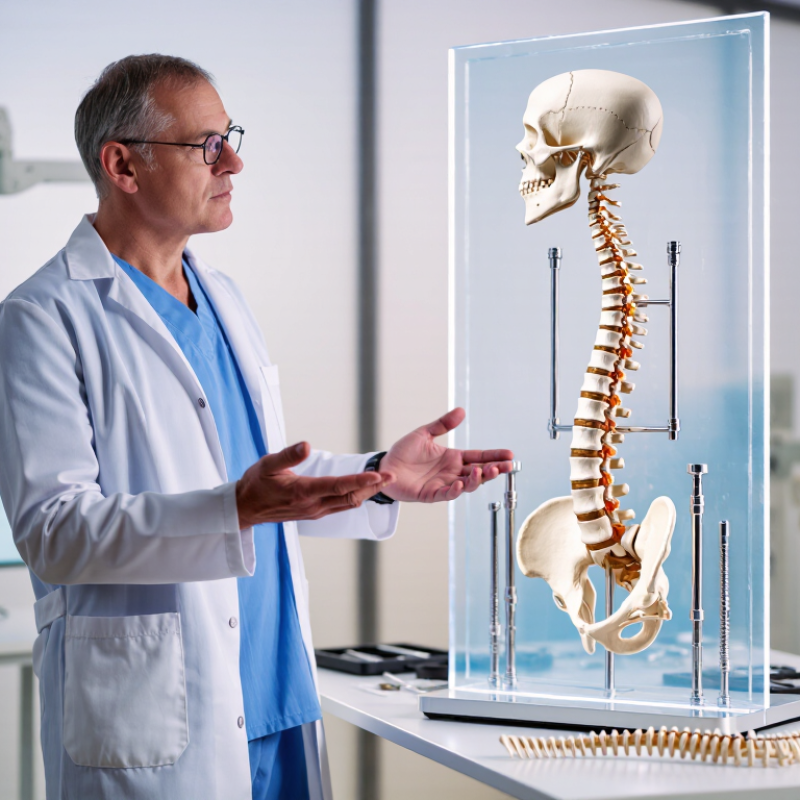
Understanding the Purpose and Requirements of Spine Implants
Orthopedic spine implants are devices used to support or stabilize parts of the spine during certain procedures. Depending on the plan, screws, rods, plates, or cages may help maintain alignment or support bone fusion. An implant does not treat every source of back pain. Its purpose should match a clear diagnosis and a specific surgical plan.
That distinction matters. The surgeon considers the spinal levels involved, a person’s anatomy, bone quality, symptoms, and overall health. Imaging helps define the problem. Osteoporosis, smoking, medications, and previous surgery may also affect planning or healing. Fit is personal. A device suited to one person may not suit another, even when their scans look similar. Patients should hear the expected benefits and limits, along with risks such as infection, loosening, or failure to fuse.
Ask what the implant is meant to do and whether nonsurgical or other surgical options are appropriate. Discuss how recovery may affect lifting, bending, and walking, and when follow-up imaging may be needed. Small details matter, such as how long sitting may be comfortable. Surgical findings can differ from what scans suggest, so plans may sometimes change. A written explanation of the proposed spinal levels and implant materials can make the conversation easier.
