What Is a Sludge Sensor and How Does It Work?
A Sludge Sensor helps operators see what is happening inside a settling tank, clarifier, or sludge blanket before visual checks can reveal the full picture. It may use ultrasound, optical measurement, or another sensing method to estimate the sludge level or solids concentration. The exact reading depends on the sensor design. It is not a universal measure of sludge quality.
In wastewater process control, Professor Gustaf Olsson has written about the role of measurement in better plant operation. A concise paraphrase of his broader perspective is: “A measurement matters when it supports a better operating decision.” This is a paraphrase, not a verified verbatim quotation. That distinction matters. A sensor provides data; operators still need context, calibration, and sound judgment.
In practice, an ultrasonic sensor sends sound through the water and detects reflections from the sludge boundary. Optical models instead assess how particles interact with light. Either way, bubbles, turbulence, fouling, or changing sludge characteristics can affect the signal. Small details count. A coating on the probe can quietly distort readings. Regular cleaning and comparison with manual checks help reveal drift. Yet no single reading tells the whole story. Understanding how a Sludge Sensor works means knowing both what it measures and where its limits begin.
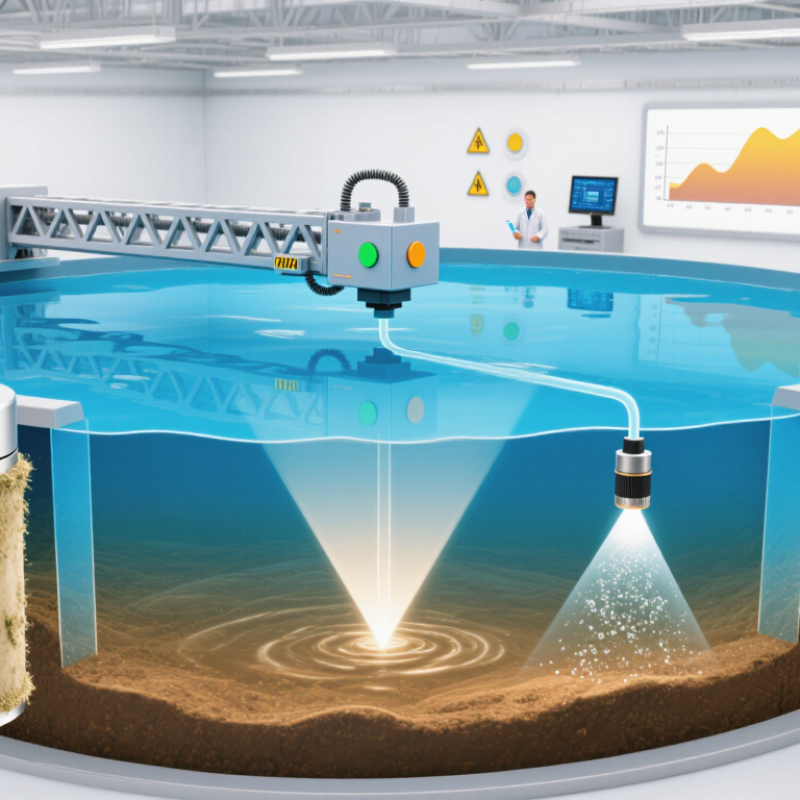
What a Sludge Sensor Measures
A sludge sensor commonly tracks the sludge blanket: the boundary between settled solids and clearer water in a clarifier. Operators use that depth to judge whether solids are building up or being removed too quickly. Some sensors also estimate suspended-solids concentration, usually in milligrams per liter. Ultrasonic models detect changes in sound reflection; optical models read how particles scatter or absorb light. The display may show a moving line or a number. It is only a reading at one point in the tank.
The measurement matters during a shift. A rising blanket can signal poor settling, excess solids, or a flow change; a sudden drop may reflect wasting or sensor disturbance. EPA’s 2022 Clean Watersheds Needs Survey estimated $630.1 billion in wastewater and stormwater infrastructure needs nationwide over 20 years, underscoring the value of dependable plant monitoring. But a sensor cannot diagnose the cause by itself. Bubbles, scraper movement, and uneven sludge can distort readings. The EPA’s Nutrient Control Design Manual discusses clarifier solids loading and blanket control as related operating concerns. Compare the sensor with a grab sample or manual depth check, especially after cleaning or calibration. Easy to overlook. Even a stable number can hide a changing sludge layer.
Key Components of a Sludge Sensor
A typical sludge sensor has a sensing element, a signal-processing unit, and a mounting assembly. The sensing element is often an ultrasonic transducer. It sends sound pulses through the water and detects echoes from the boundary between clearer liquid and thicker sludge. Some designs use optical measurement instead, so the exact components vary by sensor type.
The transducer connects to a controller through a sealed cable. The controller interprets the returning signal and displays a sludge blanket level or sends it to a plant control system. Small timing differences matter. A few extra centimeters can affect decisions about settling or sludge removal. The display may look precise, but its reading depends on calibration and site conditions.
A sturdy bracket keeps the probe at a repeatable depth, while a protective housing helps shield it from moisture and impact. Some units include a wiper or cleaning feature to limit buildup on the sensing face. Bubbles, floating debris, and uneven sludge can still confuse measurements. Real tanks are messy. Operators should compare sensor readings with occasional manual checks, especially after installation or maintenance. I would not treat one reading as the whole story.
How the Sensor Detects Sludge
What Is a Sludge Sensor and How Does It Work?
How the Sensor Detects Sludge
An ultrasonic sludge sensor sends sound pulses downward through the water. When a pulse meets a change in suspended-solids concentration, part of its energy returns as an echo. The instrument uses the echo’s travel time to estimate the sludge blanket’s depth. On screen, this may appear as a changing line against a tank profile. Optical sensors use a different approach: they measure how particles scatter or absorb light. Neither method sees a perfectly sharp boundary every time.
Bubbles, moving scrapers, and uneven settling can distort readings. Operators should compare sensor trends with physical samples, especially after installation or process changes. Standard Methods for the Examination of Water and Wastewater describes a 30-minute settling period for sludge-volume assessment. That gives operators a practical reference point, though a settling test and an in-tank sensor do not measure exactly the same thing. The comparison is useful, but not perfect.
Tips: Keep the sensing face clean, check readings at more than one tank location, and log readings beside manual observations. A small mismatch can reveal a changing blanket—or a sensor that needs attention.
How Sensor Readings Are Processed and Used
A sludge sensor turns conditions inside a tank into signals operators can interpret. In a clarifier, an ultrasonic sensor sends a sound pulse downward and measures the returning echo. The controller converts travel time into sludge-blanket depth. Optical instruments instead detect changes in light scattered by suspended solids. Each method has limits. Bubbles, rags, and uneven sludge can distort readings.
Processing matters as much as sensing. Software may smooth brief spikes, flag implausible jumps, and compare current depth with a set operating range. Operators use the trend to adjust sludge withdrawal or investigate a rising blanket before solids escape with treated water. They should check the signal against a manual sample or visual inspection; one reading is not the whole story. Calibration can drift, and a sensor coated with sludge may report a convincing but wrong value. The U.S. EPA’s 2022 Clean Watersheds Needs Survey estimated $630.1 billion in wastewater and stormwater infrastructure needs over 20 years. That figure is not a sensor-performance measure, but it underscores the value of dependable monitoring in aging systems. Still, alarms need human judgment. A sensor can flag change, not explain its cause.
Common Applications of Sludge Sensors
What Is a Sludge Sensor and How Does It Work?
Common Applications of Sludge Sensors
Sludge sensors help operators track solids inside wastewater tanks. Some measure the sludge blanket’s position; others estimate suspended-solids concentration. In a clarifier, a sensor can reveal whether settled sludge is rising toward the outlet. Operators can then adjust sludge withdrawal before solids escape with treated water. In thickeners, readings help monitor solids accumulation and support more consistent flow to the next process. These measurements are useful, but they do not replace visual checks or process knowledge.
The U.S. Environmental Protection Agency’s 2018 report, Biosolids Generation, Use, and Disposal in the United States, estimated that wastewater facilities generated about 4.5 million dry metric tons of sewage sludge. That scale makes reliable monitoring important across treatment and handling stages. Sensors can also support digester-feed control and dewatering operations, where changing solids levels affect equipment performance. One limitation remains: bubbles, uneven sludge layers, and sensor fouling can distort readings. A precise number is not always a true picture.
Tips: Clean the probe regularly, compare readings with manual samples, and note changes after flow or chemical adjustments. Keep a simple log. It may expose drift before it causes trouble.
What Is a Sludge Sensor and How Does It Work?
Common applications include clarifiers, thickeners, and settling tanks. Sensors detect the boundary between clarified water and settled solids—often using ultrasonic or optical signals—and track its depth.
Illustrative example levels in metres, not universal operating targets. Actual sludge blanket depths depend on tank design, process conditions, and operating goals.

