
Top Range Exhaust Hood Types for Every Kitchen?
A Range Exhaust Hood is more than a polished panel above the stove. It can help move cooking fumes, moisture, and odors out of the room—but performance depends on its design, placement, and use. Lawrence Berkeley National Laboratory’s field research on installed cooking exhaust devices found that real-world performance varies across kitchens and hood configurations. That matters when comparing under-cabinet, wall-mounted, island, insert, and downdraft models. A powerful-looking unit is not automatically the right fit.
Brett Singer, a research scientist at Lawrence Berkeley National Laboratory, has emphasized this practical guidance: “The best way to reduce exposure to cooking pollutants is to use a range hood that vents outdoors and is used whenever you cook.” For shoppers, that means checking whether a model is ducted or recirculating, then considering cooktop width, mounting height, and everyday noise. The Home Ventilating Institute’s certified product data provides rated airflow and sound information, useful details beyond marketing claims. Still, ratings do not tell the whole story. Installation and user habits matter, too. A hood that is too loud may stay switched off; an island hood may need careful sizing to capture rising cooking plumes. No single type suits every kitchen. This guide compares the leading options, their strengths, and the trade-offs worth weighing before you buy.
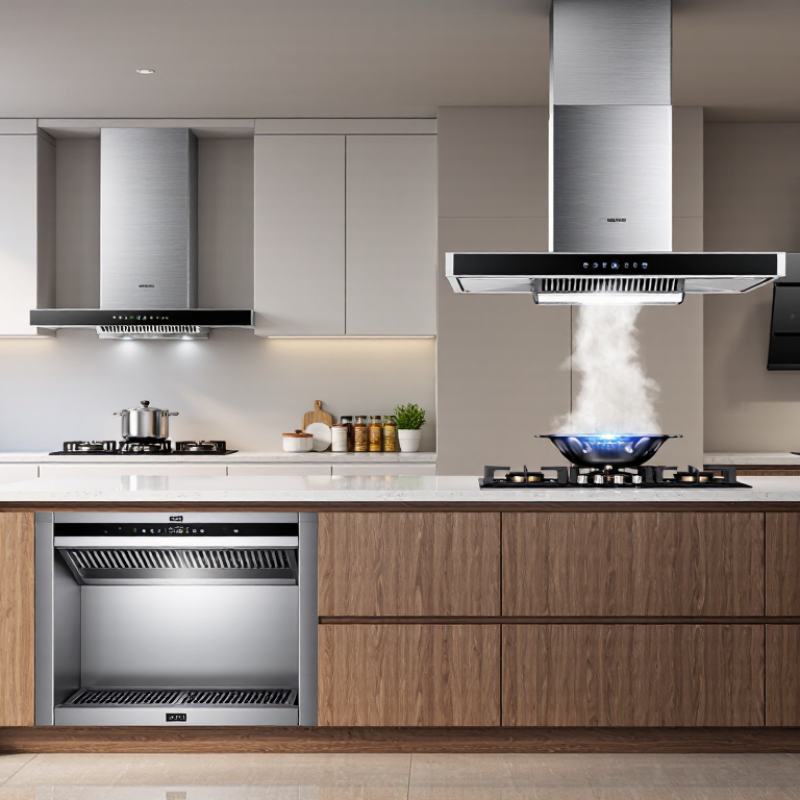
How Range Hoods Capture and Remove Cooking Pollutants
Cooking releases fine particles, grease, and odors. Gas burners can also produce nitrogen dioxide and other combustion pollutants. A range hood helps by capturing the rising plume near the cooktop and exhausting it outdoors. It is not simply a fan. The canopy must catch the plume before room currents carry it across the kitchen. That detail matters.
A Lawrence Berkeley National Laboratory study by Singer and colleagues (2012) tested 15 installed residential cooking exhaust devices. Measured pollutant capture efficiencies ranged from 15% to 98%. Capture efficiency describes how much of a pollutant the hood captures—not just how much air the fan moves. A wide, well-positioned canopy and adequate airflow can improve capture. Using rear burners may help, too. But noisy fans are often left off.
A ducted hood removes captured air from the home; a recirculating hood sends air back through filters. Those filters can trap grease, but their effectiveness depends on filter type and upkeep. Keep metal grease filters clean, and run the hood while cooking. Leaving it on briefly afterward can clear lingering pollutants. The practical weak point is simple: maintenance is easy to postpone.
