
7 POY Spinning and Winding Tips for Buyers?
POY Spinning And Winding decisions affect yarn consistency, line efficiency, and the quality of downstream texturing. Buyers must compare more than a machine’s rated speed. Package dimensions, filament count, denier range, control systems, and service support all shape performance on the factory floor.
The market context is substantial. Textile Exchange’s Materials Market Report 2024 estimates that global fiber production reached 124 million tonnes in 2023, with polyester accounting for about 57 percent. This figure describes the wider fiber market, not POY demand alone. Still, it shows why reliable polyester production equipment matters to many manufacturers. The report is useful context, but it cannot determine whether a specific machine suits a specific plant.
This guide presents seven practical tips for evaluating POY spinning and winding equipment. It looks at process stability, winding package quality, energy use, automation, maintenance access, supplier documentation, and trial-run evidence. Ask to inspect actual packages, not just polished brochures. Check whether tension remains steady across positions and whether operators can reach critical components without awkward workarounds. Small details matter.
A higher output claim can look attractive. Yet real results depend on polymer conditions, operating practices, and product specifications. No checklist replaces a factory trial. Buyers should request comparable test data, clarify what the supplier guarantees, and record unresolved questions before purchase. A careful review may take longer, but it can prevent expensive surprises after installation.
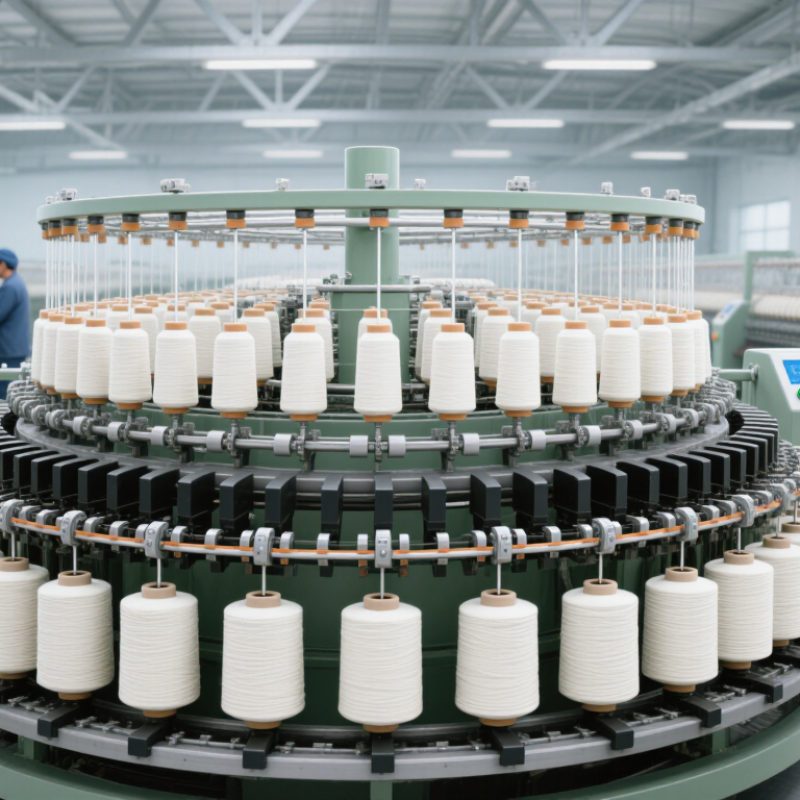
Understanding POY Spinning and Winding in the Production Process
POY, or partially oriented yarn, leaves spinning with some molecular alignment but remains suitable for later drawing. Polymer chips are melted, filtered, and pushed through a spinneret to form continuous filaments. Cooling air solidifies them. Small changes in melt temperature, filtration, or airflow can affect filament uniformity. Details matter.
After quenching, POY passes over godets, where controlled speeds help establish orientation before winding. The yarn is not fully drawn at this stage. A winding unit lays it onto a package using regulated tension and traverse. Excessive tension can make a package too compact; insufficient tension may create loose edges or unstable unwinding. A neat package does not guarantee consistent yarn. That is worth checking.
Buyers can compare denier variation, tenacity, elongation, and package build across several samples. Ask how production lots are monitored, and check packages from different positions in a shipment. Observe whether yarn unwinds smoothly, especially near the package edges. One sample can mislead. It is easy to focus on output speed and overlook winding consistency, yet downstream drawing may reveal problems that were not obvious at inspection.
