
What Is a Plate Filter and How Does It Work?
A Plate Filter separates suspended solids from a liquid by passing a slurry through filter media held between rigid plates. In many designs, a pump feeds the mixture into closed chambers. Pressure pushes liquid through the cloth, while particles collect on its surface. The clarified liquid, called filtrate, exits through drainage channels. The retained solids gradually form a cake. It sounds simple. In practice, feed properties matter.
Particle size, viscosity, temperature, and solids concentration can change filtration speed and cake dryness. Plate material, cloth choice, operating pressure, and cycle time also affect results. Operators typically monitor pressure and filtrate clarity, then stop the cycle when flow slows or the target cake is reached. The cake is discharged, and the cloth may need inspection or cleaning before another run. Small details count. A worn cloth or uneven plate closure can cause leakage and inconsistent separation. Plate filters serve many industries, but no single setup suits every process. This guide explains the main components, operating sequence, common applications, and practical selection factors. It also shows where performance depends on testing rather than assumptions. A pilot trial can reveal how real feed samples behave, including details specifications may miss.
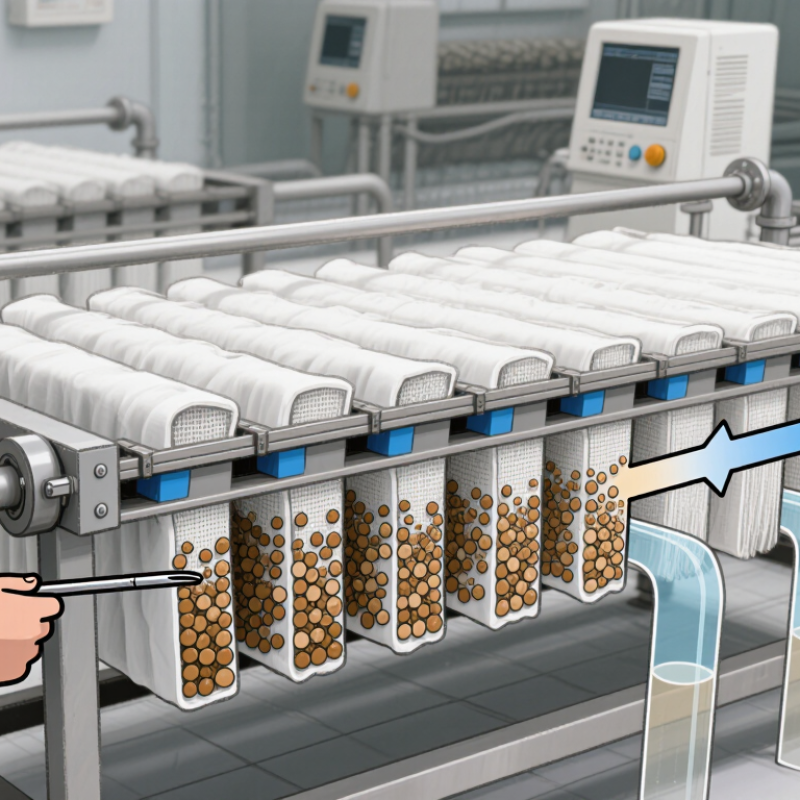
What a Plate Filter Is and What It Separates
A plate filter is a pressure-driven device that separates suspended solids from a liquid. In a plate-and-frame or recessed-plate press, filter cloth covers the plates. A pump pushes slurry into the closed chambers. Liquid passes through the cloth and exits through drainage channels; particles remain behind and build into a cake. The distinction matters: dissolved salts and molecules generally pass through with the liquid. This is not a universal purifier.
The U.S. EPA’s Design Manual: Dewatering Municipal Wastewater Sludges reports filter-press cake solids of roughly 25–50% and solids capture of about 90–99% for sludge applications. These are reported ranges, not guarantees; feed material, cloth, pressure, and cycle time change the result.
A clear filtrate may still contain fine particles. The cake can also vary across one press. In practice, operators check the filtrate and weigh or sample the cake, rather than trusting pressure readings alone. It’s a useful check.
Plate filters suit slurries where capturing solids and recovering liquid both matter, but they do not separate every contaminant. The boundary is not always neat.
