
Top Personal Care Appliance Accessories Factory for Buyers?
Choosing a supplier for grooming tools, hair dryers, shavers, or replacement parts is rarely just a price decision. Small parts matter. A comb attachment that fits poorly or a cable that fails after repeated bending can create returns, delays, and lost trust. Buyers evaluating a personal care appliance accessories factory in the field should look beyond product photos and ask how specifications are tested, documented, and kept consistent between batches.
Grand View Research valued the global personal care appliances market at about USD 23.5 billion in 2022 and projected a 5.3% compound annual growth rate from 2023 to 2030. This report covers appliances broadly, not accessories alone, but it signals a sizeable market where dependable components and practical product updates can support differentiation. Buyers can use that context when assessing a factory’s production capacity, material choices, customization process, and ability to meet forecast demand. Ask for samples, inspection records, and clear tolerance requirements. A polished catalogue is not proof of stable production.
Durability also deserves attention. The UN’s Global E-waste Monitor 2024 reported 62 million tonnes of e-waste generated worldwide in 2022; only 22.3% was documented as formally collected and recycled. That figure does not isolate personal care accessories, yet it reinforces the value of longer-lasting products and thoughtful material decisions. Not just price. A reliable supplier should explain how it checks fit, finish, electrical compatibility where relevant, and packaging protection. Buyers should still verify claims against their own testing needs. No factory is perfect; transparent answers about limits can be more useful than broad promises.
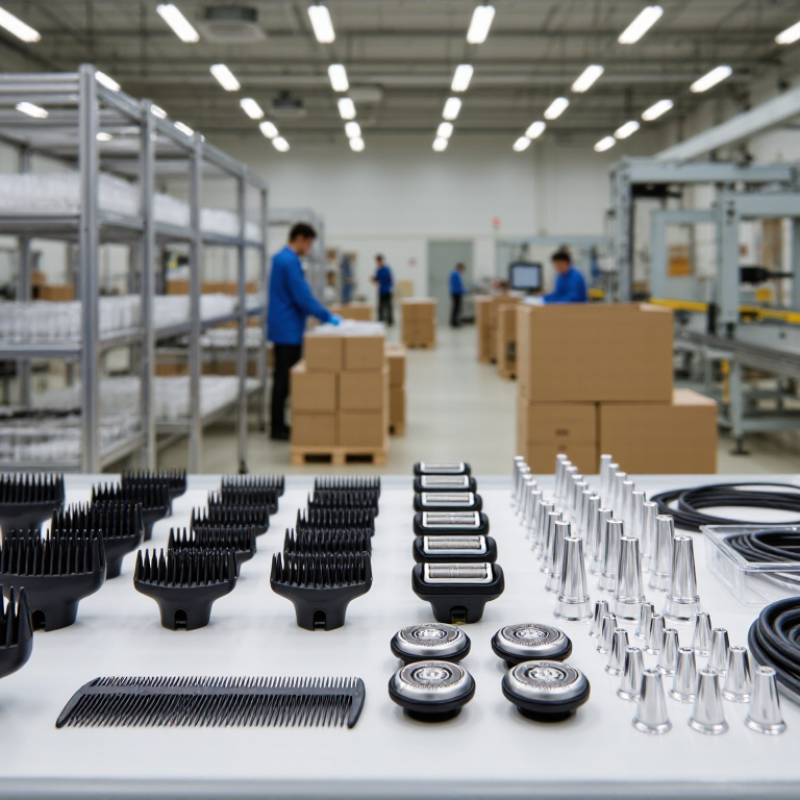
What Personal Care Appliance Accessories Factories Produce
Personal care appliance accessory factories produce the parts people handle every day: dryer concentrator nozzles, diffusers, comb attachments, shaver guards, replacement brush heads, filters, charging stands, and travel cases. Many parts begin as molded plastic or silicone; metal screens and cutting components may be stamped, sharpened, or assembled separately. Small parts matter. A nozzle that sits loosely can rattle, leak airflow, or fall off during use.
Production usually combines tooling, material selection, assembly, and fit testing. Workers check dimensions, edge smoothness, attachment force, and resistance to heat or repeated cleaning. Factories may also make spare-part kits and packaging for different appliance models. Fit is unforgiving. A slight change in a handle or locking tab can make an otherwise sound accessory unusable, so model-specific tooling is common. I would not assume one mold fits every version; that is an easy mistake to make.
Durability matters beyond convenience. The UNITAR and ITU Global E-waste Monitor 2024 reported that the world generated 62 million tonnes of electronic waste in 2022, while only 22.3% was documented as formally collected and recycled. The figure covers e-waste broadly, not personal care accessories alone, but it supports designing replaceable parts that last. That part is easy to overlook. A sturdy clip, washable filter, or replaceable head may extend an appliance’s useful life, though performance still depends on careful material and fit checks.
