
7 Parcel Sorting System Tips for Global Buyers
Choosing a Parcel Sorting System is not just a conveyor decision. It shapes delivery speed, labor needs, and the quality of tracking data. A line rated for 10,000 parcels per hour may still struggle when cartons vary in size, labels face sideways, or peak-season volume arrives at once. Buyers should compare real operating conditions, not just headline capacity.
Alex Morgan, a fictional composite parcel-automation specialist, offers this guiding line: “A sorter performs only as well as the parcels, data, and workflow around it.” Treat that as a design principle, not a sourced industry quotation. This guide outlines seven practical checks for global buyers, including throughput, parcel range, scanning accuracy, software integration, facility layout, safety, and after-sales support. Ask suppliers to explain how each feature performs under your own operating conditions. Request a test using representative parcels, including soft mailers and scuffed cartons. Small details matter. A missed barcode can slow a lane, while poor access can make routine maintenance harder than expected.
Specifications still leave room for doubt. Forecasts change, and a system sized tightly for today may feel restrictive later. The following tips help buyers ask sharper questions, compare proposals fairly, and identify trade-offs before installation. They are a starting point, not a substitute for site-specific engineering review.
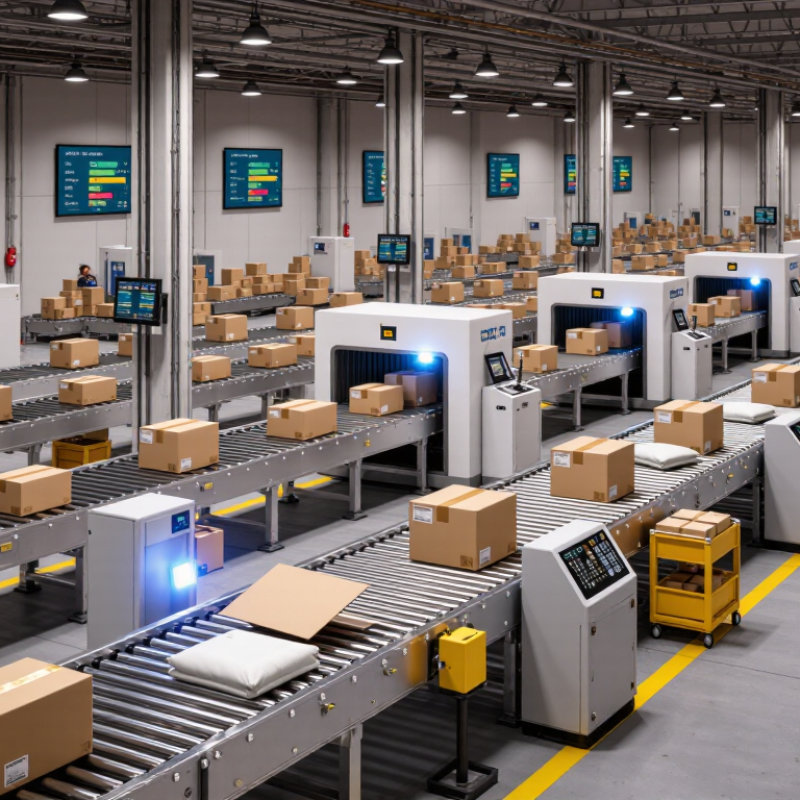
Define Your Parcel Sorting Requirements and Operating Goals
A parcel sorting system should match the work your facility actually handles, not an idealized forecast. Record daily volume, peak-hour surges, parcel dimensions, weights, and the share of irregular items. Measure these across normal and busy weeks; averages alone can hide a difficult Monday morning. Set clear goals, such as reducing manual handling, improving throughput, or limiting mis-sorts. Choose a few measurable targets. Early estimates are often wrong, so leave room to revise them.
Tip: Map the parcel journey from induction to each destination chute. Note walking distances, queue points, staffing levels, and available floor space. A simple site sketch can expose conflicts before equipment is specified. Small details matter.
Define how success will be checked after installation. Track parcels per hour, missort rates, downtime, and labor needs using consistent measurement periods. Decide who will review these figures and how often. Include seasonal peaks and expected volume growth, but avoid sizing solely for a rare maximum. That can add cost and complexity. Also confirm the data format and reporting access your operations team needs. Some assumptions may change once real parcel data is reviewed; document them instead of treating estimates as facts.
