
Top Pallet Truck Seal Manufacturers for Global Buyers
Choosing a supplier for Pallet Truck Seals is not just a price comparison. A seal may be small, but it works through every lift, turn, and loaded shift. A poor fit can mean oil seepage around the cylinder, rough movement, or avoidable service downtime. Global buyers also need to compare material options, dimensional consistency, production capacity, and communication—not only catalogue breadth. Details matter. A clear drawing, a traceable specification, and a sample tested in the intended truck can reveal more than a polished sales page.
For a transparent expert perspective, this article uses a fictional composite specialist, Daniel Mercer, rather than presenting an unverified quotation as fact. His illustrative principle is: “A seal is only reliable when its material, dimensions, and working conditions agree.” That is a simple idea, but easy to overlook when comparing manufacturers across regions. The companies featured here should be assessed against practical evidence: product range, customization support, inspection processes, and responsiveness to technical questions. No supplier is right for every application. Even a well-made seal can disappoint if the operating fluid, temperature, pressure, or installation method differs from the specification. This guide offers a starting point, not a substitute for testing. A little caution is useful.
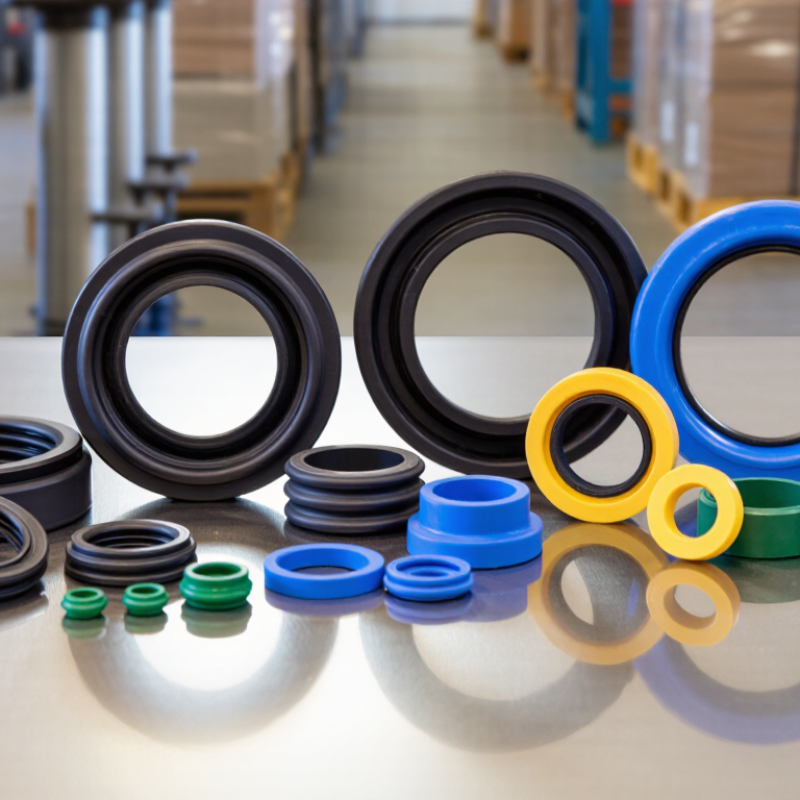
Pallet Truck Seals: Types, Materials, and Core Functions
Pallet Truck Seals: Types, Materials, and Core Functions
Pallet truck seals keep hydraulic oil inside the lifting system and help maintain steady fork movement. Common types include rod seals, piston seals, wipers, and O-rings. Rod seals limit oil leakage around the moving shaft, while piston seals help preserve pressure inside the cylinder. Wipers scrape dust and grit from the exposed rod before debris can enter. Small parts matter.
Seal materials vary by duty and operating conditions. Polyurethane is often selected for wear resistance and flexibility in demanding hydraulic applications. Nitrile rubber can suit many standard oil-based systems, while PTFE is used where low friction or chemical resistance is important. The right choice depends on fluid compatibility, temperature, pressure, and cylinder design. A seal that looks suitable may still wear quickly if the surface is rough or the fit is incorrect. That detail is easy to overlook.
Tips: Check the equipment manual before replacing a seal. Inspect the rod for scratches, rust, or burrs, and clean the groove carefully. Use the specified lubricant during installation; twisting or stretching a seal can cause early leaks. After reassembly, test the truck with a light load and watch for oil seepage. Keep it clean. A replacement seal cannot fix a damaged cylinder, and field conditions are not always as tidy as workshop examples suggest.
