
What Is a Meat Mixer and How Does It Work?
What Is a Meat Mixer and How Does It Work? This question matters wherever meat must remain uniform, safe, and commercially consistent. A Meat Mixer combines ground meat with salt, seasonings, water, fat, or functional ingredients. Its paddles, ribbons, or arms move the batch through a controlled mixing pattern. The goal is simple: distribute every ingredient evenly without damaging the product.
The scale is significant. FAOSTAT reports that global meat production has remained above 350 million tonnes annually in recent years. Meanwhile, the OECD-FAO Agricultural Outlook 2024–2033 expects continued growth in global meat demand, especially in developing markets. These figures explain why processors need repeatable equipment, not improvised handling. A mixer can support that repeatability by controlling batch size, mixing time, temperature, and discharge.
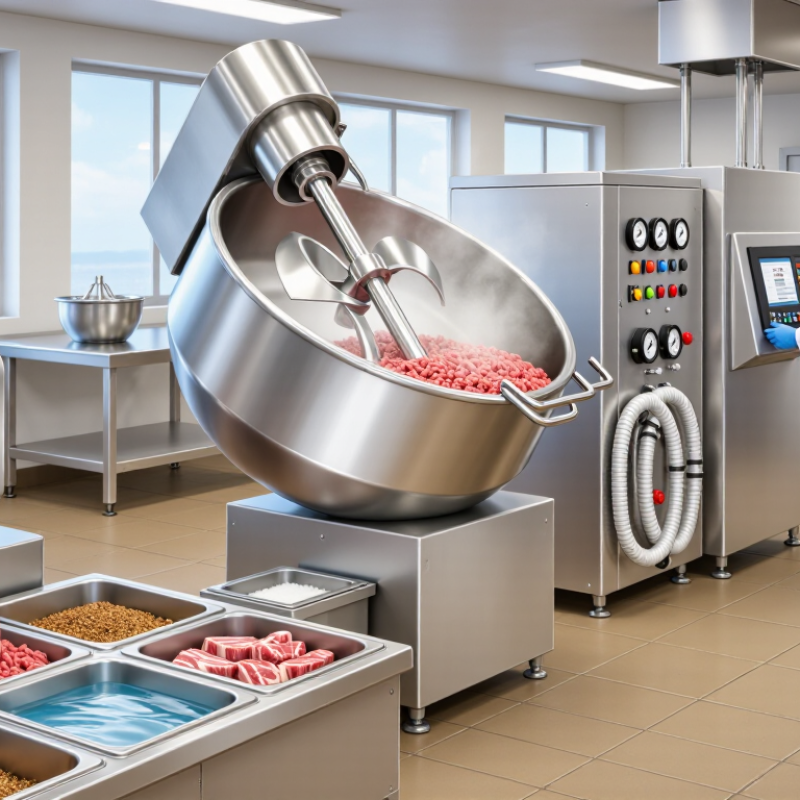
A typical cycle begins when operators load chilled meat into the stainless-steel vessel. The mixing tools then rotate at a selected speed. Some machines use vacuum pressure to reduce air pockets and improve texture. Others include cooling jackets, weighing systems, or programmable controls. Small details matter. A warm batch can affect binding, appearance, and shelf-life performance.
Hygiene is equally important. USDA FSIS guidance and EHEDG hygienic-design principles emphasize cleanable surfaces, drainage, and contamination control. These principles do not replace site validation or operator training. That part is often underestimated.
In practice, the best mixer is not always the largest one. It must match the recipe, throughput, cleaning method, and available floor space. Manufacturer claims can sound impressive, but production trials reveal more. A careful evaluation should measure mixing uniformity, product temperature, cleaning time, and maintenance access before purchase.
What Is a Meat Mixer?
A meat mixer is a food-processing machine designed to combine ground meat with seasonings, fat, brine, or other approved ingredients. It replaces repetitive hand mixing with controlled mechanical movement. The main parts include a stainless-steel tub, mixing paddles, drive motor, cover, and discharge opening. Some models use a fixed tub, while others tilt for unloading. Capacity ranges from small kitchen batches to large production loads. The machine’s value is consistency, not simply speed. Each portion should contain a similar distribution of salt, herbs, and moisture.
During operation, the paddles rotate through the mixture and lift, fold, and press it against the tub. This movement helps ingredients contact the meat without crushing it excessively. Paddle shape and rotation direction affect texture. A slow cycle may protect delicate pieces, while a faster cycle can create a tighter bind. Operators usually load chilled ingredients, close the cover, and select a timed cycle. They then inspect the texture before unloading. A mixer cannot correct poor raw material or inaccurate measurements. That point is easy to overlook.
Tips: Keep the meat cold, and never overfill the tub. Leave space for ingredients to turn freely. Weigh seasonings instead of guessing. Check the batch midway, because a short cycle may leave dry pockets. Clean and sanitize food-contact surfaces promptly, following the equipment instructions. Inspect paddles, seals, and guards regularly.
