
7 Lifted Golf Cart Buying Tips for Global Buyers
A Lifted Golf cart can look ready for rough paths in a showroom photo. The right buying decision takes more than appearance. Buyers across different regions must compare terrain, passenger needs, transport limits, and access to maintenance. A cart suited to a private resort may not fit a narrow farm track or a compact shipping container. Small details matter.
These seven buying tips focus on checks that can prevent costly surprises. Compare lift height, tire dimensions, braking components, and stated ground clearance with the manufacturer’s specifications. Ask for battery type, voltage, charger compatibility, and realistic range under load. Request clear photos of the frame, suspension, and tire condition, not just polished exterior shots. Confirm the cart’s dimensions and shipping weight before arranging freight. Also ask which replacement parts are stocked and who can provide service after delivery.
Looks can mislead. A larger tire may appear practical but affect handling or range, depending on the cart’s setup. Requirements for registration, transport, and permitted use can vary by destination, so verify them with relevant local authorities before purchase. Written answers are useful. Keep them. No checklist removes every risk, and supplier descriptions may leave important details unclear. That is a reason to ask better questions, not to assume every lifted model is unsuitable. With careful comparison and documented specifications, global buyers can choose a cart that matches its actual working conditions—not merely its photographs.
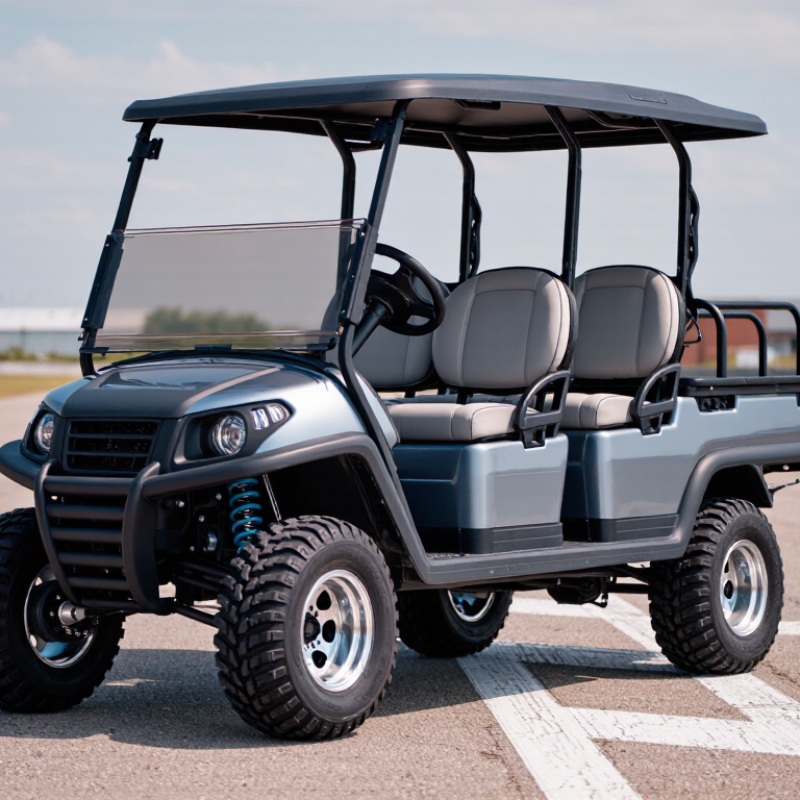
Define Your Terrain, Passenger Needs, and Intended Use
Start with the route, not the lift height. Smooth paths and short grass need less clearance than gravel tracks, ruts, or uneven farm lanes. Larger tires can help cross rough ground, but they may change handling and braking. A higher cart can also feel less stable on slopes. Check the manufacturer’s load and terrain guidance before choosing a lift kit.
Passenger needs matter just as much. The National Golf Foundation’s 2024 report counted 26.6 million on-course golfers in the United States in 2023. Golf-course use is one useful reference, not a universal buying template. Count regular passengers, add their approximate combined weight, and leave room for bags or tools. Confirm both seating capacity and payload; they are not the same thing. A tidy spec sheet can still hide a poor fit.
Tip: Walk the actual route before buying. Note steep sections, wet ground, tight turns, and where passengers climb aboard. Match the cart to its main job—course use, resort transport, or property work—rather than every imagined task. I would question extra lift height if the cart mostly carries people on paved paths. It looks capable, but may add cost without solving a real problem.
