
How to Improve Aluminium Heat Dissipation?
Improving Aluminium Heat Dissipation requires more than selecting aluminium for its attractive thermal properties. The International Aluminium Institute reports that aluminium offers thermal conductivity near 237 W/m·K in highly pure conditions. Copper conducts more heat, but aluminium is lighter, easier to form, and often more economical. That balance explains its use in heat sinks, electric-vehicle battery trays, LED housings, and power-electronics enclosures.
Real performance depends on the whole thermal path. Surface area, fin spacing, alloy selection, mounting pressure, thermal-interface material, airflow, and oxidation all matter. The U.S. Department of Energy identifies effective thermal management as an important factor in improving energy efficiency across electronics and industrial systems. A practical test might compare two identical heat sinks. One has clean, evenly spaced fins. The other has blocked channels and uneven contact. The temperature difference can be immediate.
John H. Lienhard V, a recognised heat-transfer researcher at MIT, describes the principle clearly: “Heat transfer is the science of energy transfer due to temperature differences.” This idea sounds simple. Design errors are not. Engineers should measure contact resistance, record ambient conditions, and validate results under realistic loads. Computational modelling helps, but it cannot replace physical testing. Some published conductivity values also represent ideal material conditions, not finished components. That limitation deserves attention. This guide examines how geometry, airflow, surface treatment, interfaces, and manufacturing choices can improve Aluminium Heat Dissipation without relying on assumptions.
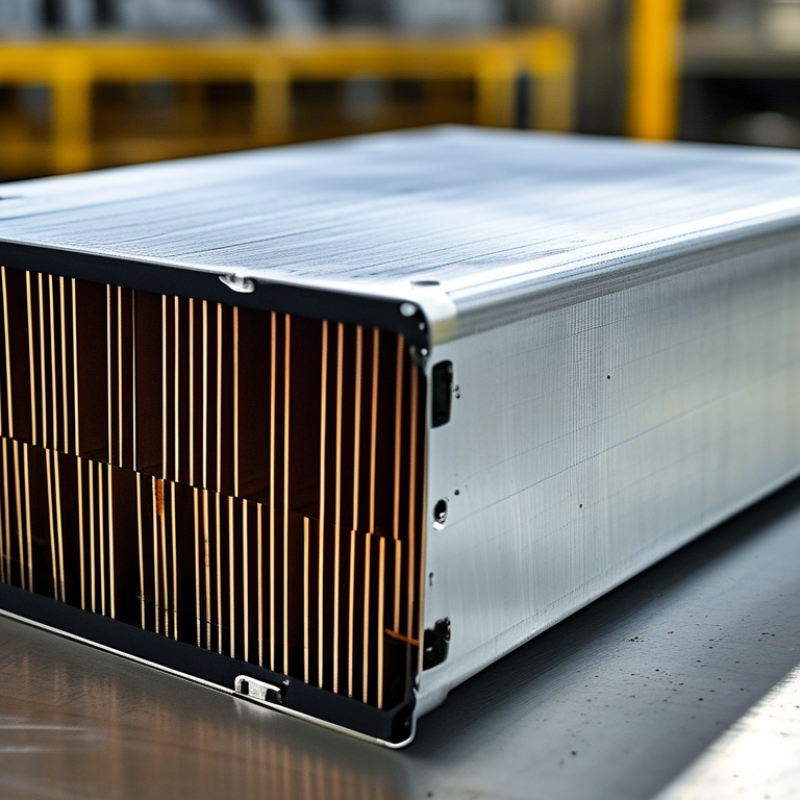
Understand the Factors That Control Aluminium Heat Dissipation
How to Improve Aluminium Heat Dissipation?
Aluminium heat dissipation depends on more than the metal’s thermal conductivity. ASM Handbook data lists pure aluminium near 237 W/m·K, while many engineering alloys conduct less efficiently. Alloy selection matters, but geometry often matters more. Thin fins increase surface area. Spacing must still allow air to move between them. Crowded fins can trap a warm boundary layer and reduce performance. Natural convection may provide only a modest heat-transfer coefficient, often around 5–10 W/m²·K, according to ASHRAE Fundamentals. Forced airflow can improve this substantially.
Surface condition also controls aluminium cooling. A black anodized surface usually radiates heat better than bright, untreated aluminium. However, radiation becomes less important when airflow is strong. Contact resistance creates another hidden problem. A small air gap between an aluminium heat sink and a component can block heat, despite aluminium’s excellent conductivity. Thermal interface materials must be thin, evenly applied, and properly compressed. Real installations are rarely perfect.
Tips: Keep fins clean and aligned with airflow. Leave practical gaps between fins. Measure the interface temperature, not only the outer surface. Use infrared readings carefully, because reflective aluminium can distort measurements. I have seen polished surfaces look cool while the component underneath remained hot. That mistake is easy to repeat. The U.S. Department of Energy also notes that airflow, surface area, and temperature difference strongly influence heat-transfer performance. Calculations should be checked against physical testing.
