
What Is a Hydraulic Lift and How Does It Work?
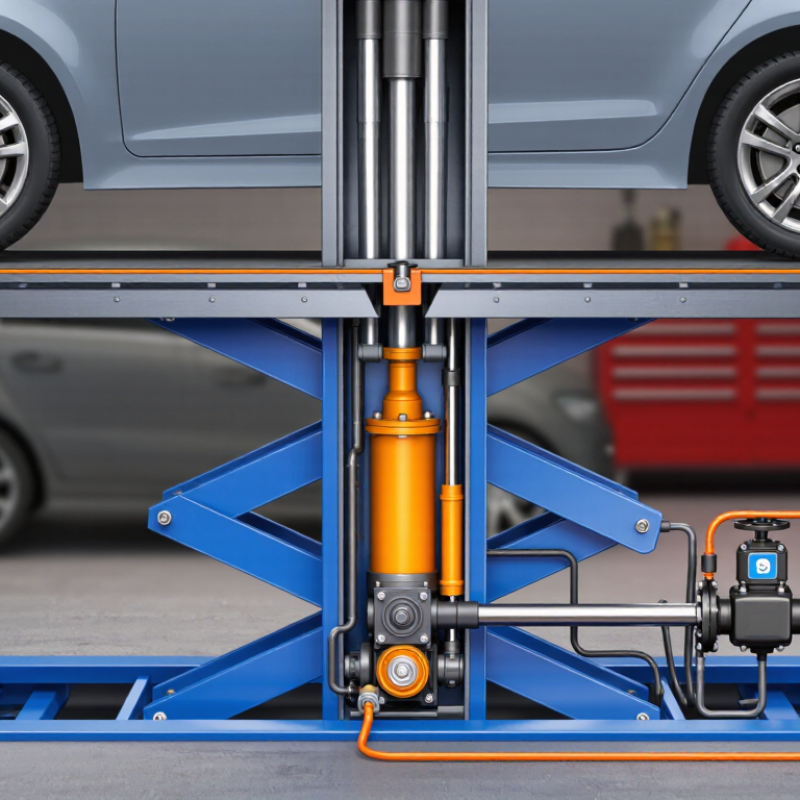
A Hydraulic Lift raises a platform by turning fluid pressure into controlled movement. Beneath the visible deck, a pump pushes hydraulic oil through a circuit and into a cylinder. The pressure moves a piston, which extends a supporting ram. On a workshop lift, you may hear the pump engage, then see the platform rise steadily beneath a vehicle. The basic idea is simple. The details matter.
Hydraulic-systems author Andrew Parr’s teaching can be paraphrased this way: “Pressure becomes useful motion only when a circuit controls it.” That distinction helps explain why a lift depends on more than its pump. The cylinder, valves, hoses, fluid, and safety supports all play a role. A release valve can regulate descent; seals help contain the fluid; and mechanical locks can support the platform during work. A slow rise or uneven movement may point to a maintenance issue, though symptoms alone do not identify its cause. Even clean-looking equipment can have wear you cannot see. That is worth remembering.
This guide explains how a Hydraulic Lift works, what its main parts do, and how pressure produces lifting force. It also looks at common lift types and the checks that support safe, reliable operation. No single description fits every design. Real systems vary, and that variation is easy to overlook.
What a Hydraulic Lift Is
A hydraulic lift is a platform or carriage raised by pressurized liquid acting on a piston inside a cylinder. Most systems use hydraulic oil, a pump, valves, and a reservoir. The pump sends oil into the cylinder; pressure moves the piston and lifts the load.
Not magic. Just pressure.
Pascal’s principle explains why pressure applied to a confined fluid transfers throughout it. A small force at the pump can therefore create a much larger lifting force at the piston, depending on their areas.
Picture a workshop lift: the steel arms rise steadily as oil enters the cylinders, while a control valve regulates movement. To lower the platform, many designs release oil through a valve, allowing the load’s weight to push the piston down. Details vary; some lifts use different cylinder arrangements, and not every model lowers in the same way.
The U.S. Department of Energy’s 2006 Improving Pumping System Performance sourcebook estimates that pumping systems use nearly 20% of global electricity demand.
That figure covers pumping broadly, not hydraulic lifts alone, but it shows why pump efficiency and maintenance matter.
In practice, leaks, worn seals, or contaminated fluid can affect performance.
That distinction is easy to miss.
