
How to Treat Venous Ulcers Safely
Venous Ulcers can turn a small ankle wound into a stubborn, painful problem. A shallow sore may leave fluid on a dressing, stain the skin brown, and make each step uncomfortable. Safe care starts with finding the cause, not simply covering the wound. A clinician should assess circulation, swelling, medicines, and signs of infection. Arterial blood flow matters. Compression can help many venous ulcers heal, but it is not suitable for everyone without proper assessment.
Vascular surgeon Peter Gloviczki has contributed to major clinical guidance on venous disease. A safe paraphrase of a key principle in that guidance is: “Assess arterial circulation before starting compression.” That is not a direct quotation. It is a practical reminder, and an important one. Care may include clinician-directed compression, leg elevation, gentle wound cleaning, and regular checks for progress. A dressing should protect the wound without hiding changes that need attention. Increasing pain, spreading redness, fever, or sudden worsening calls for prompt medical advice.
Healing can be slow. That is frustrating. Even careful treatment may need adjustment, and not every wound follows a neat timeline. This guide explains how to approach Venous Ulcers safely, what to expect from professional care, and which warning signs should not be ignored. It cannot replace an individual examination. The safest plan is one matched to the person, the wound, and their circulation.
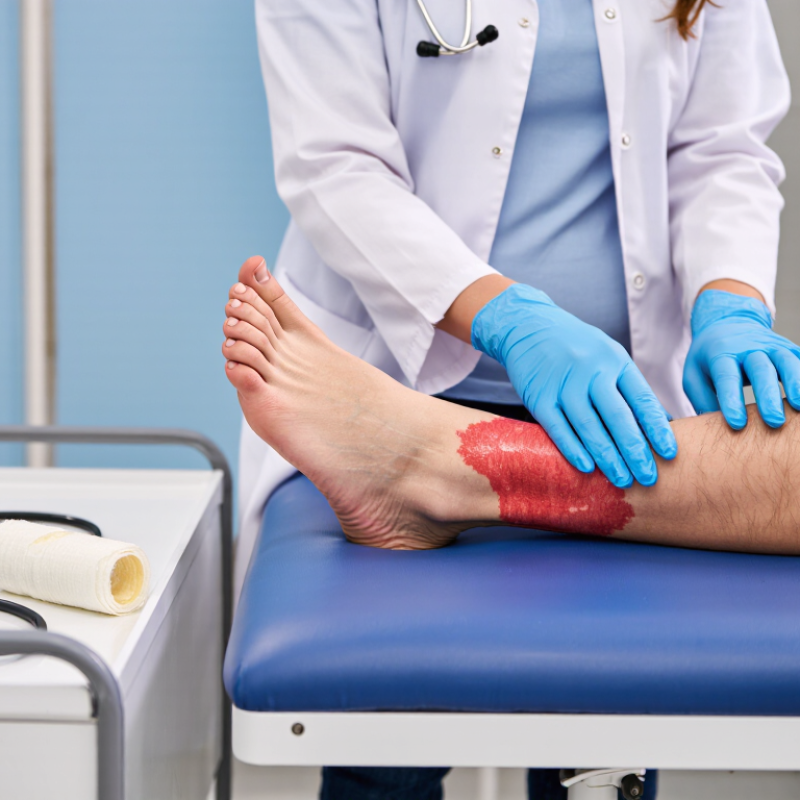
Check ABI Before Compression; ABI ≥0.8 Commonly Supports Full Compression
Before treating a venous ulcer, check the ankle-brachial index (ABI). This simple test compares ankle and arm blood pressure to assess arterial blood flow. Check ABI first. An ABI of 0.8 or higher commonly supports full compression, when the patient’s overall assessment agrees. A clinician should select the compression level and confirm the dressing or wrap fits correctly.
The number is not the whole story. An ABI above about 1.3 may be unreliable, especially when diabetes or kidney disease stiffens the arteries. Values below 0.8 may call for reduced compression or further vascular assessment; very low readings generally require specialist guidance before compression. Local protocols vary. Cold toes, new pain, numbness, or pale or blue skin need prompt clinical review.
For a person with a suitable ABI, compression can help control swelling and support healing. Check the skin and toes after application, and ask about comfort rather than assuming the wrap feels fine. In practice, a reassuring result can still miss details. That is worth remembering. Keep the wound clean, protect fragile surrounding skin, and arrange regular follow-up so changes in pain, drainage, or swelling are noticed early.
