
How to Choose the Right Voltage Instrument?
Choosing the right Voltage Instrument begins with the measurement, not the product label. Will you check a household circuit, monitor a control panel, or verify a low-voltage sensor? Each task demands a different range, resolution, input impedance, and safety category. A handheld digital multimeter may suit routine checks. A bench voltmeter can offer finer resolution for stable laboratory signals. The wrong choice can miss brief changes or load a sensitive circuit.
Lord Kelvin, the physicist and measurement pioneer, wrote, “When you can measure what you are speaking about, and express it in numbers, you know something about it.” His principle remains useful here. A reading is only helpful when the instrument’s accuracy, bandwidth, and measurement method fit the signal. Check the manufacturer’s specifications, calibration information, and operating limits. Also consider the probes: worn insulation or an unsuitable rating can undermine an otherwise capable meter. Small details matter.
Start with real conditions. Is the signal AC, DC, or mixed? Could it contain fast transients? Will you work in a cramped cabinet, beside a motor, or at a quiet bench? These details shape the right choice. Even experienced technicians sometimes find the spec sheet less clear than expected. That deserves a second look. This guide explains how to compare Voltage Instrument types, interpret key specifications, and avoid common selection mistakes—without treating the highest price or largest display as proof of better performance. A careful choice may take longer. It is worth checking twice.
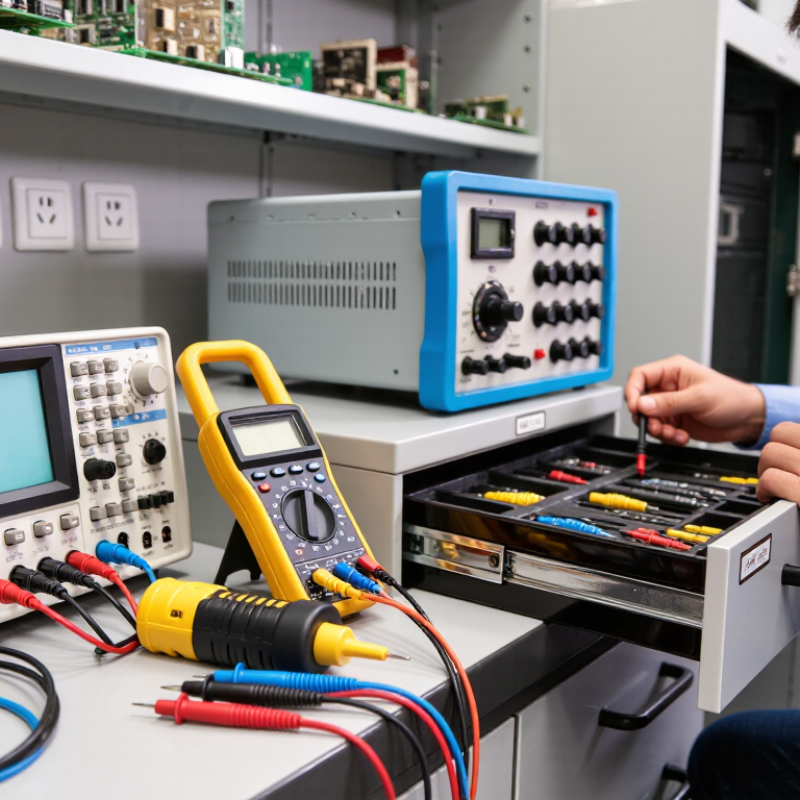
Identify the Voltage Measurement Requirements
How to Choose the Right Voltage Instrument?
Identify the Voltage Measurement Requirements
Start with the circuit. Decide whether you need to measure AC, DC, or both, and note the expected voltage range. Include possible spikes, not just the normal reading. A meter rated too close to the expected maximum may be unsuitable.
For AC measurements, check whether the instrument reports true RMS if the waveform may be distorted or non-sinusoidal. Also confirm its supported frequency range. For changing signals, a basic display may miss brief peaks. Think about the waveform.
Accuracy and resolution are different. Accuracy tells you how close a reading should be to the actual value; resolution describes the smallest displayed change. Consider the measurement environment, too: a crowded panel, damp location, or high-energy circuit may require specific safety ratings and suitable probes. Never rely on a voltage range alone to establish safe use. Check the instrument’s stated ratings and instructions for the intended circuit. In practical testing, small details—such as probe contact and an unstable reading—can change the result. I still find it useful to pause and ask whether the measurement setup itself could be causing the uncertainty.
