
How to Choose TRV Radiator Valves?
Choosing Trv Radiator Valves starts with understanding your radiator, heating system, and comfort needs. A thermostatic radiator valve adjusts hot-water flow as room temperature changes, helping prevent a sunny room from becoming uncomfortably warm. The right choice depends on practical details, not appearance alone. Check the valve connection, pipe size, and whether the pipe approaches from the floor or wall. Small details matter. You should also confirm that the valve suits your heating system and the radiator’s flow direction. Product specifications and manufacturer guidance are useful checks before buying.
Consider how each room is used. A bedroom may benefit from a lower temperature setting, while a frequently used living room may need steadier warmth. Standard and angled valve bodies suit different pipe layouts, and smart models can offer schedules or remote adjustments. Yet added features are not always necessary. A simpler model may be easier to operate and maintain. Keep the radiator clear of heavy curtains or furniture, which can affect temperature sensing and valve response. If you are unsure about compatibility, ask a qualified heating professional to inspect the connection before installation. Even careful research has limits: older systems can have unusual fittings or controls. This guide explains the key features, fit, and checks to help you choose with greater confidence.
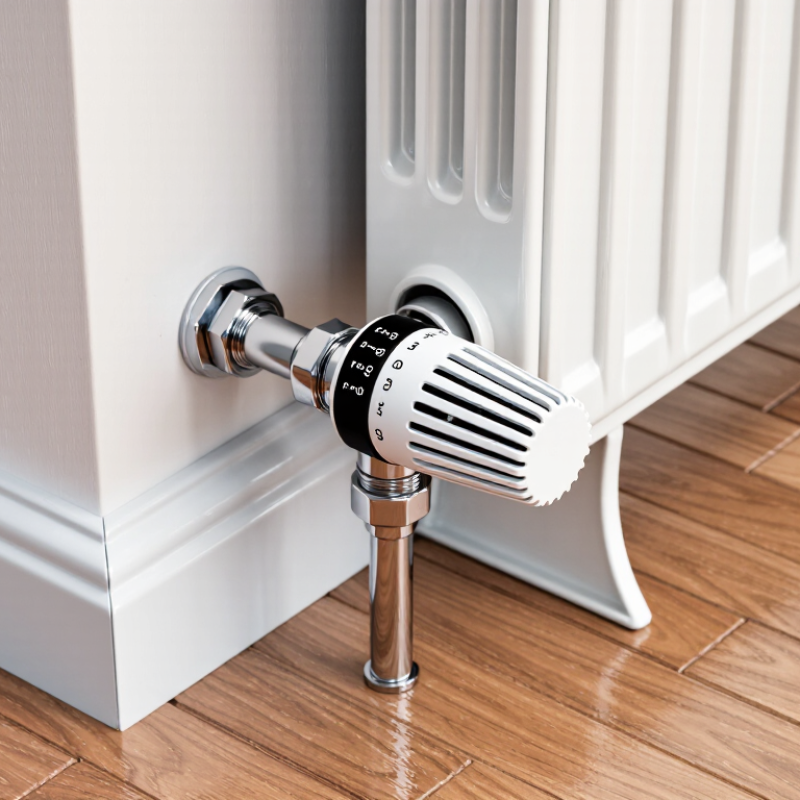
Understand How Thermostatic Radiator Valves Control Heat
A thermostatic radiator valve (TRV) responds to the air temperature around its sensor. As the room warms, the sensor expands and presses a small pin inside the valve. This restricts hot water entering the radiator. When the room cools, the sensor contracts and allows more flow. Small changes matter. A TRV regulates one radiator; it does not directly set the boiler’s water temperature or guarantee an exact room temperature.
The numbered settings are guides, not precise degrees. Their effect depends on the valve, its location, and the room. It is easy to assume a higher setting heats a room faster, but it usually keeps the valve open longer instead. Keep the sensor clear of curtains and furniture, which can trap warm air and cause the radiator to shut down too soon. A cold radiator may be responding correctly if the room has reached its set point. If it stays cold in a cool room, check that the valve is not obstructed and consider asking a heating professional to inspect it. When choosing a TRV, check that its connection matches your radiator and pipework, and that its shape suits the installation. A good fit matters more than an impressive dial.
