
How to Choose the Right Titanium Sheets?
Choosing the right Titanium Sheets begins with understanding the job, not browsing a product list. A medical implant, aircraft panel, heat exchanger, and marine bracket demand different grades, thicknesses, and finishes. The wrong choice may look acceptable at delivery, yet fail during forming, welding, or repeated exposure to saltwater.
Materials expert Matthew J. Donachie Jr. wrote, “The properties of titanium depend on composition, processing, and structure.” That principle remains practical today. Grade 2 titanium often suits corrosion-resistant equipment and moderate forming. Grade 5, known as Ti-6Al-4V, offers higher strength for demanding structural parts. Consider more than grade. Check sheet thickness, flatness, surface condition, tolerances, annealing status, and traceability. Ask for mill certificates and independent test records when performance matters.
Think about the workshop, too. Can the sheet be cut cleanly with your available tools? Will the design require tight bends? Titanium can react with oxygen during elevated-temperature processing, so controlled welding and proper shielding are essential. Small details matter.
A checklist helps.
It can still miss something.
Cost per kilogram may distract from total value. A thinner sheet can reduce weight, but it may increase distortion or machining time. I have seen specifications focus heavily on tensile strength while overlooking fatigue, thermal expansion, and surface damage. That is an uncomfortable gap. The best selection balances service conditions, manufacturing limits, verification, and long-term reliability. Before ordering Titanium Sheets, confirm the real failure risks and ask whether the chosen grade solves them.
Understanding Titanium Sheet Grades and Their Key Properties
How to Choose the Right Titanium Sheets?
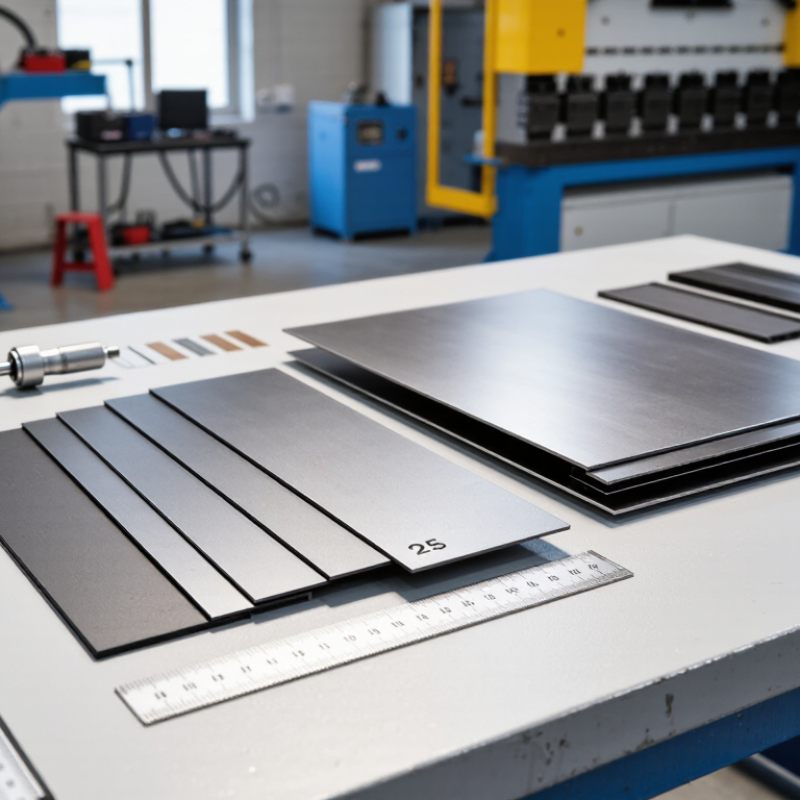
Titanium sheet grades differ in strength, formability, corrosion resistance, and cost. Grade 1 contains the lowest oxygen level among commercially pure grades. It offers excellent ductility and easy forming, but its tensile strength is limited. ASTM B265-23 lists a minimum tensile strength of about 240 MPa for Grade 1. Grade 2 raises that value to approximately 345 MPa. It remains highly formable and suits chemical tanks, heat exchangers, and marine parts. Grade 5, also called Ti-6Al-4V, reaches about 895 MPa minimum tensile strength under the same standard. It fits aircraft structures, medical components, and heavily loaded fixtures.
Strength is not the only decision. Grade 5 is harder to bend and may require tighter process control. It can also create more machining heat near thin edges. Grade 2 is often the safer choice when welding, deep forming, or surface exposure matters. The International Titanium Association reports titanium’s density near 4.5 g/cm³, roughly 40% lower than steel. That weight advantage is useful, but sheet thickness still affects stiffness. A thinner sheet may save weight and fail through vibration. I have seen grade selection focus too much on tensile strength. That approach misses springback, edge cracking, and actual service temperature. The USGS Mineral Commodity Summaries 2024 also identifies aerospace and chemical processing as major titanium demand sectors. Before ordering, compare ASTM chemistry, thickness tolerance, temper, and inspection records. Numbers can look convincing. The wrong grade can still be expensive.
