
How to Choose the Right Spray Nozzle?
Choosing the right Spray Nozzle is not a simple catalog decision. It is a process decision.
A nozzle shapes droplet size, spray angle, flow rate, coverage, and drift. These details affect product quality, water use, energy demand, and maintenance. Arthur H. Lefebvre, a leading authority on atomization, wrote, “Atomization is the conversion of a bulk liquid into a spray of droplets.” His explanation remains practical: nozzle selection begins with understanding the droplets required by the application.
Recent industry research supports this view. Grand View Research’s Spray Nozzle Market Size, Share & Trends Analysis Report identifies agriculture, industrial processing, and cleaning as major application areas. MarketsandMarkets also highlights pressure, flow control, material durability, and automation as important market drivers. However, market reports often use different definitions and forecast periods. Their figures should guide research, not replace testing.
Experience matters here.
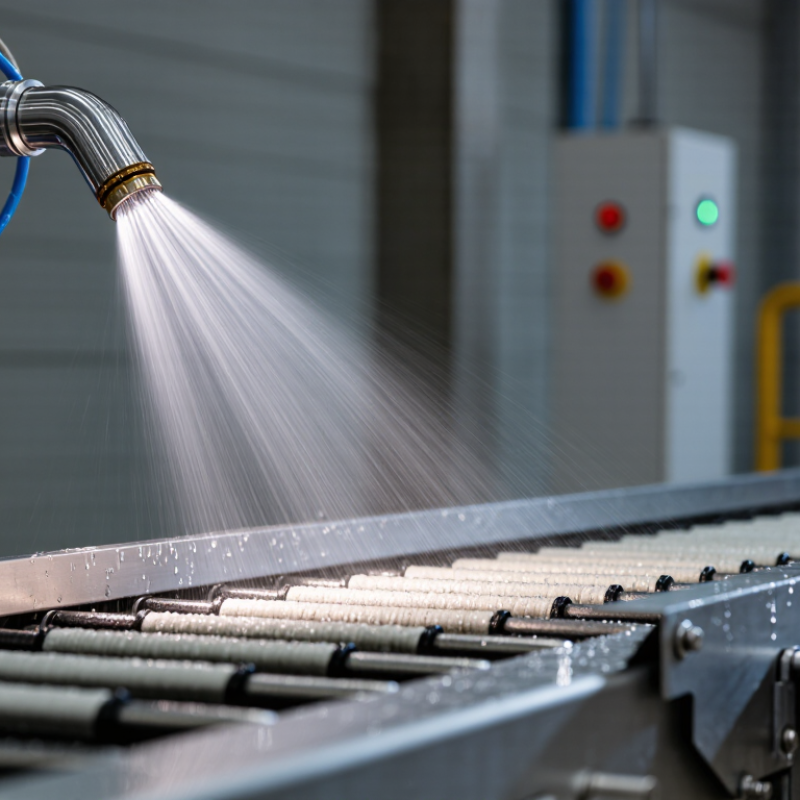
A nozzle that performs well on a test bench may struggle with hard water, abrasive particles, unstable pressure, or changing temperatures. Imagine a stainless-steel nozzle spraying a narrow fan across a moving conveyor. A small pressure change can create uneven coverage, visible striping, and wasted liquid.
This guide compares nozzle types, materials, spray patterns, and operating conditions. It also considers maintenance, safety, and total operating cost. The “best” nozzle may not be the most expensive one. It may be the model that delivers stable performance after months of real use.
That conclusion deserves testing.
Measure flow rate. Check spray distribution. Inspect wear. Then question the result.
Identify the Spraying Task and Required Performance
Choosing a spray nozzle starts with the task, not the nozzle shape. Define the required result: coating, cleaning, cooling, rinsing, or controlled application. Each task needs a specific coverage pattern, droplet size, impact level, and flow rate. A narrow stream can deliver strong cleaning force. A fine mist can cover a wide surface. Fine mist works differently.
Measure the liquid’s viscosity, temperature, solids content, and sensitivity to shear. These details affect atomization and blockage risk. I once selected a nozzle by pressure alone. The spray looked acceptable, but coverage became uneven after several minutes. That experience taught me to check flow rate and liquid behavior together. Confirm that the pump can maintain the required pressure during continuous operation. Too little pressure may produce large droplets and weak coverage. Excessive pressure can create unwanted mist and accelerate wear.
Test the nozzle at the real distance, angle, speed, and temperature. Watch the edges of the spray pattern, not only its center. Small changes matter. Compare actual output with the process target, then record pressure, flow, and coverage results. A simple collection test can reveal performance differences that visual inspection misses. I still allow room for adjustment, because field conditions rarely match laboratory assumptions perfectly. If the pattern changes during testing, inspect filtration, liquid temperature, and nozzle wear before changing the nozzle size.
