
How to Choose the Right Rubber Pad in 2026?
Choosing the right Rubber Pad starts with the job it must perform. Will it absorb vibration beneath a machine, protect a workbench, or cushion a moving part? A pad that feels firm in your hand may compress too much under load. One that resists wear may transmit more vibration than expected. Small details matter: temperature, oil exposure, pad thickness, surface texture, and how the load is distributed.
The market is broad, but broad figures need care. Grand View Research estimated the global rubber market at USD 46.71 billion in 2023 and forecast a 4.8% compound annual growth rate from 2024 to 2030. That report covers rubber overall, not Rubber Pads alone. It signals a large materials sector, not a specific pad-performance guarantee. Polymer scientist James E. Mark’s Polymer Data Handbook is a useful technical reference for understanding how polymer composition relates to material properties. I could not verify a verbatim statement from Mark specifically about choosing Rubber Pads, so I will not invent one. That distinction matters. Compare published hardness, compression set, operating-temperature range, and chemical-resistance data against your actual conditions. Ask for test methods, not just adjectives. “Heavy-duty” is not a measurement. A practical choice may still involve compromise: softer pads can isolate vibration well, yet deform more under sustained weight. Match the compound to the load, then check the real installation. An imperfect fit can look fine at first. The wear marks tell another story.
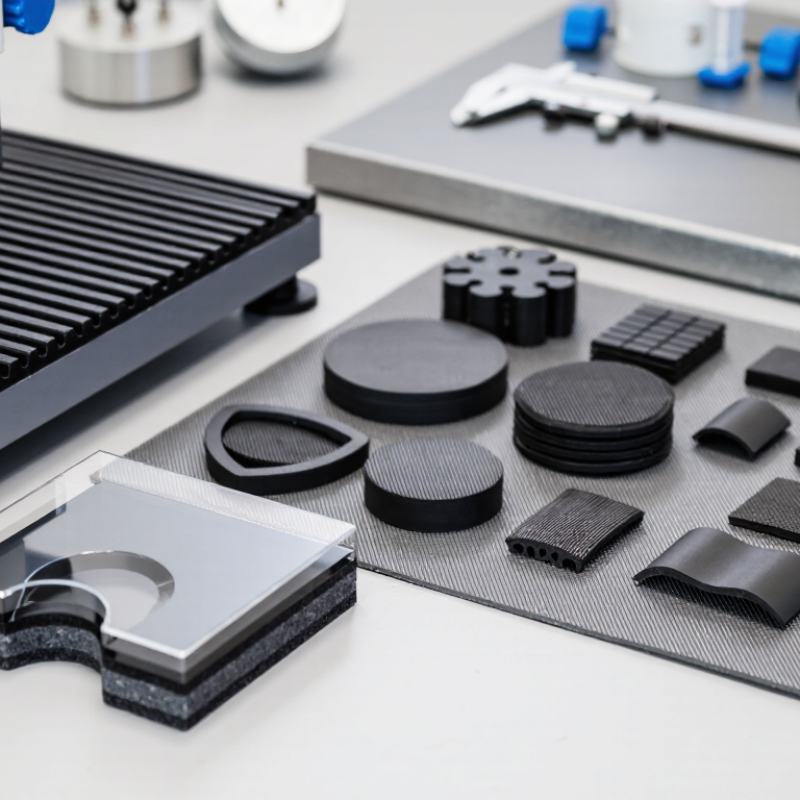
Define the Purpose and Operating Requirements of the Rubber Pad
Start by defining the pad’s job: sealing a joint, reducing vibration, spreading a load, or cushioning impact. Then record the operating details: static or repeated force, contact area, movement, temperature range, and exposure to oils, water, or sunlight. A pad beneath a vibrating pump faces different demands from one supporting a stationary cabinet. Specify hardness only after these conditions are clear. ASTM D2240 uses a 0–100 durometer scale, but hardness alone does not predict load capacity or service life.
Tips: Measure the available space and note sharp edges or uneven surfaces. These small details can change how a pad deforms. Keep the measurements.
For repeated compression, review compression-set data under conditions close to the real application. ISO 815-1 describes how compression set is measured after specified compression and recovery; compare test conditions, not just headline values. Ask suppliers for the test temperature, duration, and sample thickness. A result from a short, warm test may not represent years of cool, cyclic use. One early estimate may miss the mark, so trial the chosen pad under realistic loads before finalizing the specification. The extra check can feel fussy, but replacing a flattened pad is rarely simpler.
