
How to Choose the Right Anchor Chain in 2026
Choosing an Anchor Chain in 2026 is not simply a matter of buying the heaviest chain available. Your boat’s displacement, windage, anchoring habits, and cruising grounds all affect the right match. A chain that looks substantial on a store rack may still be poorly suited to your windlass or bow roller. Details matter. Diameter, grade, length, and corrosion protection each influence strength, handling, and service life.
This guide explains how to compare those details without treating one specification as right for every boat. Check your windlass manual and boatbuilder’s guidance before settling on a chain size or grade. Compatibility is practical, not theoretical: mismatched links may jam, while extra weight can affect bow trim and handling. Consider how often you anchor, the seabed conditions you commonly encounter, and how you will inspect and store the chain. Look for clear product specifications, traceable quality information, and suitable markings. Ask a qualified marine professional when your setup is unusual.
There is no perfect setup. A well-matched chain can still be awkward to handle, and a durable finish will not prevent every sign of wear. That is worth remembering. The aim is a dependable system, not a label that sounds reassuring. The sections ahead cover chain materials, sizing, windlass fit, maintenance, and buying checks, so you can make a choice grounded in your boat’s actual needs.
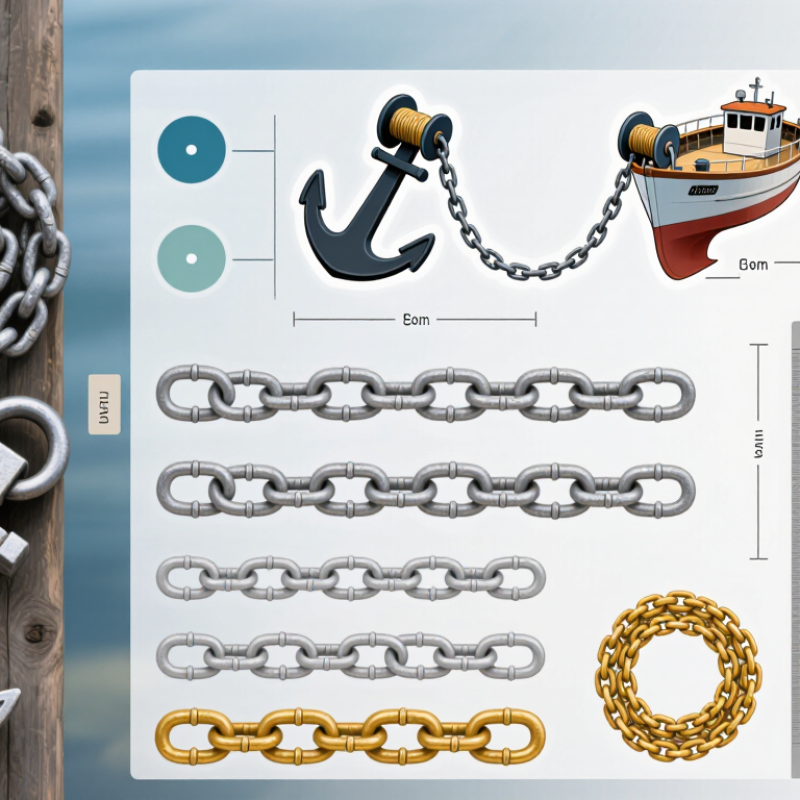
Understand the Role and Types of Anchor Chain
Anchor chain connects the anchor to the boat, but it does more than keep them together. Its weight helps the anchor settle and can soften sudden pulls as the boat moves. On a breezy afternoon, you may see the chain form a gentle curve between the bow and seabed. That curve can reduce snatch loads, though it becomes less pronounced in deep water or strong wind. Chain alone cannot guarantee a secure hold; anchor design, seabed, and scope matter too. Easy to overlook.
Chain choices differ by link size, strength, material, and windlass compatibility. Calibrated chain has consistent link dimensions for a windlass gypsy; uncalibrated chain may not feed reliably through it. Strength grades vary, so compare documented working-load ratings rather than judging by thickness alone. Galvanized steel is a common practical option, while stainless steel offers corrosion resistance but needs careful inspection, especially around links and fittings. Match the chain diameter and grade to the boat, anchor, and equipment. The heaviest option is not automatically the safest or easiest to handle. I would check the windlass manual and inspect sample links before ordering; specifications can look clear on paper, yet small fit differences matter.
