
How to Choose the Right Analog Converter?
Choosing the right Analog Converter starts with the signal, not the product label. Is the circuit converting a sensor’s voltage into digital data, or turning digital values into an analog output? That distinction shapes the required architecture. A temperature sensor may produce a slow, small signal, while an audio circuit must preserve a much wider range of frequencies. Different jobs call for different trade-offs.
Look closely at input or output range, resolution, accuracy, sampling rate, bandwidth, and noise. These specifications are related, but they are not interchangeable. More bits do not automatically mean more useful precision. Check the full signal chain, including reference voltage, power supply, interface, and expected operating conditions. A converter that looks suitable on paper may still perform poorly if its input is noisy or its reference is unstable. Small details matter.
The datasheet is a strong starting point, not a guarantee of results in your design. Compare specifications under conditions close to your own, and test a prototype when practical. A bench measurement can reveal noise, settling time, or layout issues that a headline figure misses. It is easy to focus on one impressive number and overlook the rest. The best choice is usually the converter that meets the real requirements with dependable performance and reasonable design effort—not simply the most advanced or expensive option.
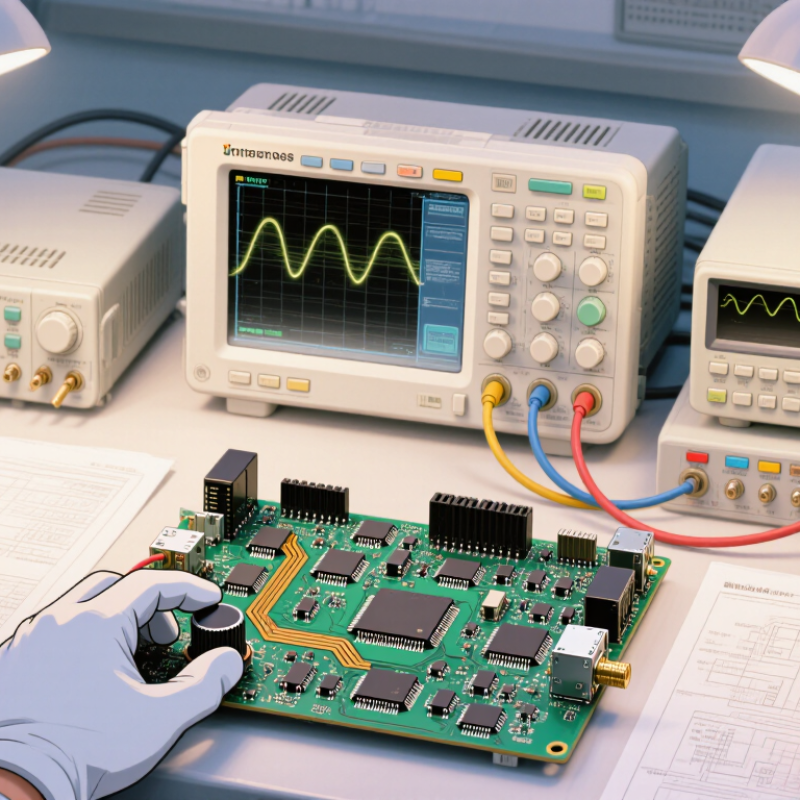
Define the Converter’s Role: ADCs Digitize Signals; DACs Reconstruct Them
How to Choose the Right Analog Converter?
Define the converter’s role before comparing specifications. An ADC samples an analog input and encodes it as digital values. A DAC converts digital codes into an analog voltage or current. That distinction matters. For example, an ADC can capture a microphone’s changing waveform, while a DAC can feed a reconstructed waveform to an output stage. Match the converter to the signal’s direction, range, and speed. A sensor that changes slowly may not need the same sampling rate as a rapidly varying signal.
Resolution and sample rate deserve attention, but neither works alone. Check input range, noise, latency, and the analog circuitry around the converter. I still find it easy to focus on bit depth and overlook bandwidth. That can lead to a poor fit. The WSTS Spring 2024 Forecast projected 2024 analog semiconductor sales of about $79.3 billion, reflecting the broad role of analog electronics across applications. This market figure is context, not a guide to selecting one converter.
Tips: Start with the signal you need to measure or produce. For an ADC, check the source’s bandwidth and required sampling rate. For a DAC, check the output load and required settling time. Leave practical margin; real circuits are rarely as tidy as a datasheet example.
