How to Choose the Best Exterior Doors?
Choosing the right Exterior Doors begins with more than color or curb appeal. A door faces rain, wind, sunlight, and daily use, often all at once. The right choice should fit your climate, entryway, and household routine. A beautiful slab may still disappoint if it leaks air or needs constant upkeep.
Building-science expert Joe Lstiburek’s work emphasizes managing water and air at the building envelope. A practical paraphrase of that principle is: “A door must control water and air, not just welcome guests.” This is not a verbatim quotation, but it captures an important selection test. Check the door’s material, weather seals, frame, glazing, and installation details together. A strong door can underperform when the threshold is poorly fitted or the frame is out of square. Small gaps matter.
This guide compares common materials, including fiberglass, steel, and wood, and explains how each responds to weather, wear, and maintenance. It also covers insulation, security features, style, sizing, and cost. Your climate changes the priorities. So does the direction your entry faces. A sheltered porch may protect a wood door; an exposed entrance may need tougher finishes and dependable seals. No checklist can make every choice obvious. Some trade-offs remain, and budget limits are real. Use the sections ahead to weigh them carefully and choose a door that works beyond the showroom.
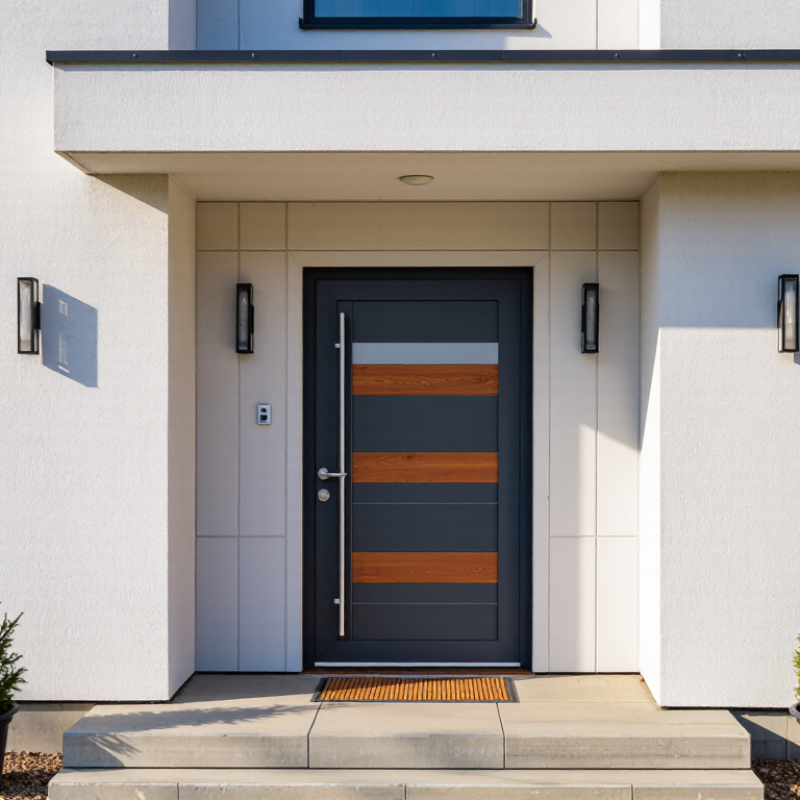
Identify the Door’s Purpose and Exposure to Weather
An exterior door should be chosen for its job, not just its appearance. A busy front entry needs a durable finish and hardware that can handle frequent use. A side door near a garden may face damp shoes, splashes, and repeated wetting. For a patio opening, consider how much glass you want and whether afternoon sun will heat the room. Small details matter.
Weather exposure changes the specification. Check the direction of prevailing rain, the amount of direct sun, and local wind conditions. NOAA’s 1991–2020 U.S. Climate Normals provide location-based temperature, precipitation, and wind data; use them as context, not a substitute for local design requirements. The U.S. Department of Energy’s Energy Saver guidance estimates that windows account for 25–30% of residential heating and cooling energy loss or gain. That figure is about windows, not doors, but it shows why glazed door areas and their seals deserve attention. Review the door’s NFRC-rated U-factor and, where applicable, solar heat gain coefficient. Also inspect the threshold and weatherstripping; a beautiful slab can still admit drafts. It is easy to overlook the threshold. And exposure is not always obvious: a sheltered porch may still drive rain toward the sill.
Compare Materials, Construction, and Durability
Exterior doors face rain, sun, wind, and repeated daily use, so compare their materials and internal construction—not just their appearance. Steel doors resist impact and often provide strong insulation, but scratched coatings may expose metal to rust. Fiberglass resists moisture and temperature swings, and its textured surface can resemble painted wood. Solid wood offers natural character, though changing humidity can cause swelling or sticking without regular care. Feel the weight. A light sample is not automatically weak, but a hollow-sounding door may signal a less substantial core.
Look for insulated cores, reinforced lock areas, and tight-fitting weather seals. These details affect comfort and durability as much as the outer skin. Check corners and edges closely; gaps or uneven joints can let water in over time. A showroom sample can hide problems that appear after years outdoors. No material is maintenance-free, and a small finish flaw may matter more than a polished product description suggests. Match the door to local exposure: a shaded entry has different demands from one facing afternoon sun or driving rain. Also inspect the frame and threshold, since a durable slab can still perform poorly when installed out of square. An experienced installer can confirm fit, but ask how often the finish and seals need inspection.
Assess Energy Efficiency, Security, and Weather Resistance
Choosing an exterior door starts with the conditions it must handle. For energy efficiency, compare the door’s U-factor: a lower value generally means less heat moves through it. Look for insulated cores, well-sealed edges, and glass with appropriate low-emissivity coatings. A rating alone is not enough. Poor installation can leave a narrow gap that lets cold air slip past the frame.
Security depends on more than the lock. Check that the frame is sturdy and the strike plate is firmly secured with long screws. If the door includes glass, consider whether its placement makes the lock reachable from outside. Small gaps matter. A secure door should also open and close smoothly; a sticking panel may signal frame movement or a fit problem, not just an old hinge.
Weather resistance should match local exposure. A sheltered entry may need less protection than a doorway facing driving rain or strong afternoon sun. Inspect the threshold, corner seals, and finish for gaps, swelling, or peeling. After installation, test the seal by feeling for drafts on a windy day. One detail is easy to overlook: a highly insulated door can still perform poorly if the surrounding frame is damp or unsealed. No single feature solves every problem.
Select the Right Size, Style, and Hardware
Choosing an exterior door begins with accurate measurements, not a style photograph. Measure the opening’s width, height, and depth at several points, since older frames may be slightly uneven. Check the door’s swing and nearby walls, steps, and furniture. Small details matter. An inward-swinging door, for example, should clear the entry mat without catching its edge. Consider how the frame and glass affect daylight, privacy, and the home’s existing proportions. A simple panel can suit a compact entry, while a larger glazed section may brighten a shaded hallway. The prettiest option is not always the most practical.
Hardware should feel comfortable in daily use and suit the door’s exposure. Test the handle’s grip, especially if children or older adults will use it. Choose hinges and a finish designed for outdoor conditions; damp air and salty spray can wear some metals faster. A secure, well-fitted lock matters, but so do a tight threshold and weather seals that help limit drafts. I sometimes see people focus on the handle’s appearance and overlook how it feels with wet hands. That is an easy detail to miss. If changing the opening size or frame, have a qualified installer check the structure and fit before ordering. A door that looks right in a showroom can feel awkward at home.
How to Choose the Best Exterior Door
Start with accurate measurements, then choose a style and hardware suited to your entry.
Common nominal widths for single doors are 30, 32, and 36 inches; 80 inches is a common nominal height. Sizes vary by home and market. Measure the existing door, frame, and rough opening before ordering.
Choose a style
Consider how the door’s panels, glazing, and finish complement your home. Glazing can bring natural light into an entry; solid panels offer a more private look.
Select compatible hardware
Check the door’s handing, thickness, and lock preparation. Choose an exterior-rated handle set and deadbolt, with a finish suited to your climate and maintenance preferences.
Consider Installation Needs and Long-Term Maintenance
How to Choose the Best Exterior Doors?
Consider Installation Needs and Long-Term Maintenance
A door can look perfect in a showroom and still be wrong for your entryway. Measure the opening at several points, since older frames are not always square. Check wall depth, hinge placement, and whether the door swing clears nearby steps or furniture. Small details matter. A tight threshold can catch shoes, while a poorly sealed gap may let in drafts and rain.
Ask what the installation includes: removal of the old door, frame repair, flashing, insulation, and disposal. The door should sit level and plumb, with even gaps around the edges. Follow the maker’s installation instructions, and bring in a qualified installer if the frame is damaged or the opening needs structural changes. Rushing this part can create problems that are hard to spot until the next storm.
Think about upkeep before choosing a material. Wood may need periodic paint or protective coating, especially where rain and strong sun hit it. Fiberglass and steel often need less routine care, but hinges, seals, and finishes still deserve regular checks. Wipe away grit, look for cracked caulk, and test the latch once in a while. Easy to forget. One imperfect detail: maintenance schedules vary with exposure, so a calendar reminder may help, but it cannot replace a quick visual check.

