
What Is the Polydadmac Manufacturing Process?
Polydadmac Manufacturing Process describes how diallyldimethylammonium chloride, commonly called DADMAC, is converted into a water-soluble cationic polymer. The chemistry sounds straightforward. Production requires careful control. Temperature, mixing, initiator selection, and reaction time can influence the final product’s viscosity and molecular-weight profile.
In a typical industrial route, DADMAC is polymerized in an aqueous solution using a suitable free-radical initiator. Operators monitor the reaction as it progresses, since heat builds up and the mixture becomes more viscous. After polymerization, the product may be adjusted to a target concentration, then checked for properties such as solids content, viscosity, appearance, and residual monomer. These measurements help confirm that a batch meets its intended application requirements.
Details vary by grade and manufacturer. There is no single recipe. A process designed for water treatment may not produce the exact product needed for another use, and published descriptions can leave out important operating controls. That is worth remembering. This guide outlines the main production stages, the role of process control, and the quality checks that support consistency. It also distinguishes general manufacturing principles from site-specific operating instructions. Actual production parameters should be established by qualified personnel using validated procedures, suitable equipment, and product specifications. Even small changes can matter. Understanding the process helps buyers and technical teams ask better questions about product performance and documentation.
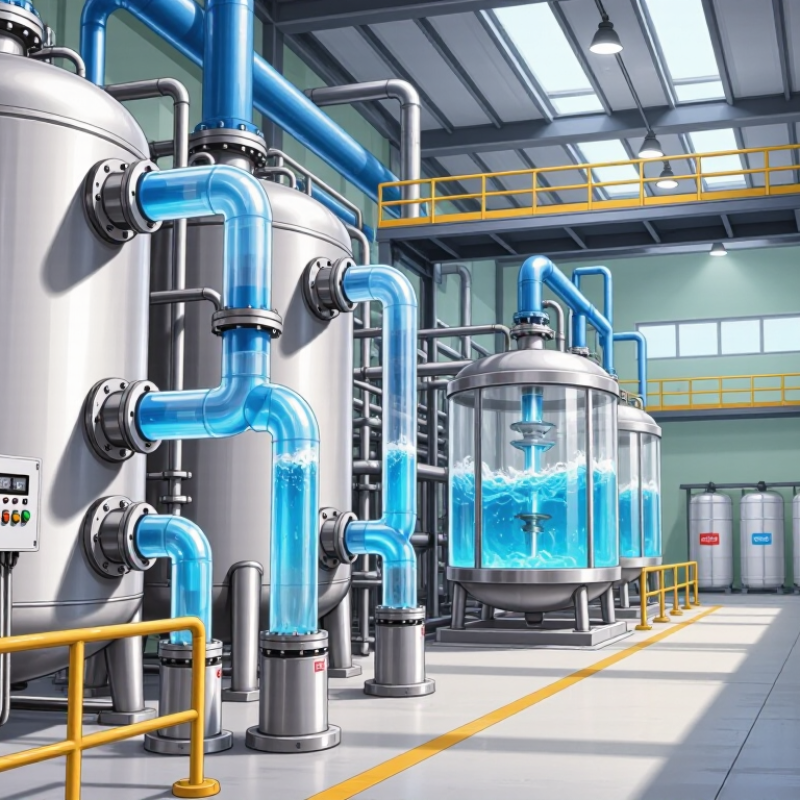
Raw Materials and Preparation for Polydadmac Production
Raw Materials and Preparation for Polydadmac Production
Polydadmac production starts with diallyldimethylammonium chloride, commonly called DADMAC, dissolved in water. PubChem lists DADMAC’s molecular weight as 161.67 g/mol, a useful reference when checking feed calculations and material identity. The other key inputs are purified water and a water-soluble initiator, which starts polymerization. Small details matter. Incoming monomer is checked for concentration, clarity, and contamination before it enters the reactor. A cloudy feed may signal a problem, though appearance alone cannot confirm its cause.
Preparation is more than measuring ingredients. Operators verify tank cleanliness, water quality, and feed-meter calibration, then mix the solution evenly without introducing excess air. The European Commission’s Best Available Techniques Reference Document for the Production of Polymers discusses process control and emissions management as important parts of polymer manufacture; these principles also guide careful Polydadmac feed preparation. Actual recipes and checks vary with product grade and equipment. That variability is easy to underestimate. A batch record should capture raw-material lot numbers, measured quantities, and any adjustment made before polymerization. These records help explain changes in viscosity or performance later, although they cannot replace laboratory testing.
