
How Does an Automatic Water Spray Retort Use Steam?
How Does an Automatic Water Spray Retort Use Steam?
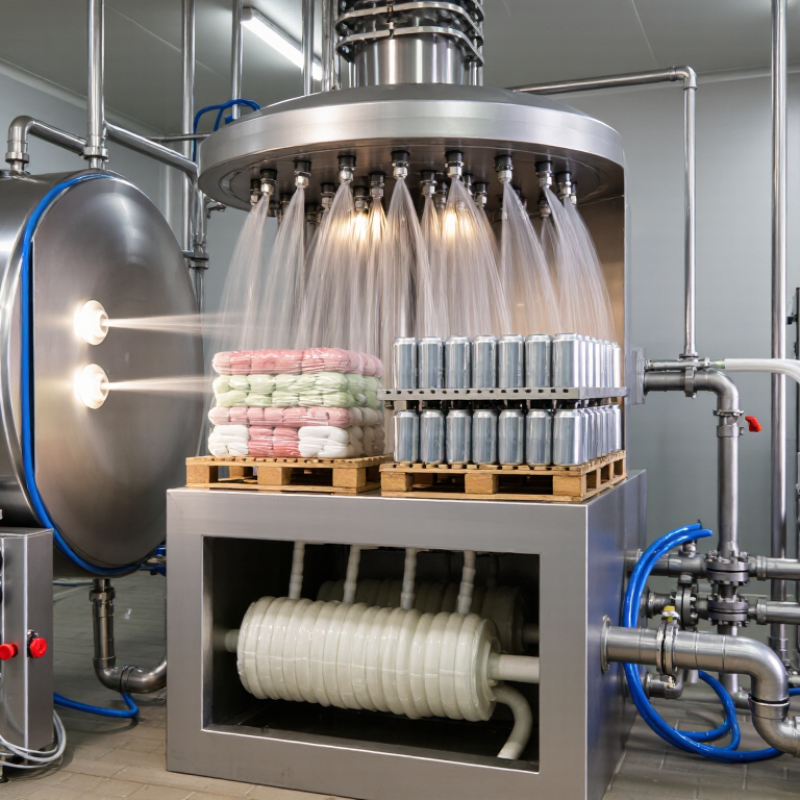
In an automatic water spray retort, steam supplies heat while circulating water carries it across packages. Depending on the retort design, steam may heat the vessel directly or transfer heat to the water through a heat exchanger. Pumps then send heated water through spray nozzles, creating a moving curtain over cans, jars, or pouches. The practical goal is steady heat distribution—not simply a high steam pressure reading.
This distinction matters. The FDA’s Guide to Inspections of Low-Acid Canned Food Manufacturers explains why scheduled thermal processes and heat-penetration records matter for commercial processing. FDA regulation 21 CFR Part 113 also sets requirements for low-acid canned foods; it does not prescribe one universal steam setting for every retort. The U.S. Department of Energy’s Improving Steam System Performance: A Sourcebook for Industry offers useful guidance on steam generation, distribution, and condensate management. These sources point to a key operating reality: steam demand depends on the load, package format, starting temperature, and equipment configuration.
For operators, Automatic Water Spray Retort Steam is best understood as part of a controlled heat-transfer system. Watch the temperature record, spray pattern, and condensate return. A blocked nozzle or unevenly loaded basket can change conditions. Small details count. One limitation in many simple explanations is that they make steam use sound uniform. It is not. Verify performance through qualified process authority review and equipment-specific validation, rather than relying on a generic cycle description.
Preparing the Retort and Loading Packaged Products
Before loading an automatic water-spray retort, check that spray nozzles, filters, drains, and basket supports are clean and unobstructed. Confirm temperature sensors and pressure instruments are within their calibration schedule. Steam may heat the circulating water directly or through a heat exchanger, depending on retort design. The spray then distributes heat across the packaged load, while controlled pressure helps protect flexible containers.
Small gaps matter. Follow the validated loading pattern, leaving the specified clearance between baskets and packages so water can reach all surfaces. Do not assume a tightly packed basket will process evenly.
Inspect packages for leaks, crushed seams, or trapped product around closures. Load them in the orientation and quantity specified by the scheduled process; avoid mixing formats unless that combination has been assessed. FDA regulations define low-acid canned food using an equilibrium pH above 4.6 and water activity above 0.85, thresholds that affect process classification (21 CFR 113.3). They also require processing records to be retained for three years (21 CFR 113.100).
Record the product, package size, load arrangement, initial temperature, and retort identification before the cycle begins. It is easy to miss. A quick visual check is useful, but it cannot replace documented process validation by a qualified process authority.
