
Top 10 Glass Manufacturing Machines for Global Buyers
Choosing a Glass Manufacturing Machine is not just a question of price or advertised output. Buyers must match each machine to the glass type, production volume, available floor space, and required finish. A line built for flat glass may not suit container production. Small differences matter.
This guide compares ten machine categories, from batch preparation and melting to forming, cutting, tempering, and inspection. It highlights practical checks: furnace capacity, control-system access, spare-parts availability, energy use, and the time needed for changeovers. A specification sheet can look convincing. The factory floor tells more. Watch how sheets move between stations, listen for uneven machinery, and ask how operators handle rejected pieces.
To avoid presenting an invented statement as a real quotation, this guide uses an illustrative expert voice, Alex Morgan, a fictional composite representing glass-process engineering experience: “A reliable machine earns its place through consistent quality, maintainable parts, and a process your team can actually run.” Treat that line as an editorial principle, not a sourced interview. It reflects a useful buying discipline, though no single checklist replaces a plant-specific assessment. Some comparisons will remain imperfect because suppliers report performance differently, and local operating conditions vary. Ask for test data, inspect finished samples, and confirm service arrangements before committing. The strongest choice is not always the fastest. It is the machine that fits your material, team, and production goals with fewer surprises.
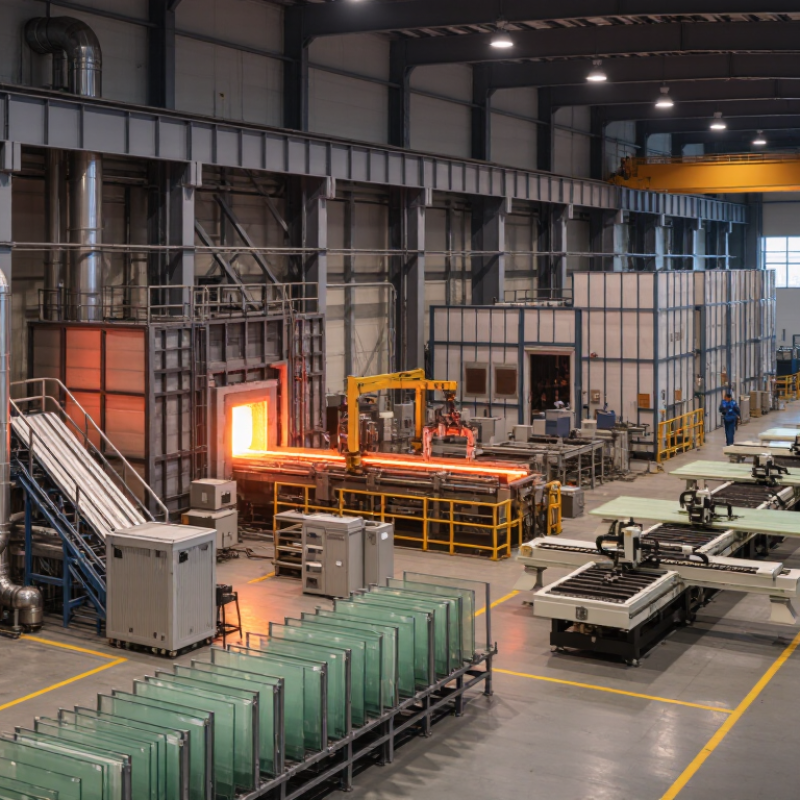
Glass Manufacturing Stages and the Equipment They Require
Glass production starts with batch preparation. Weighing systems meter silica sand, soda ash, limestone, and recycled cullet into mixers. Consistent proportions help stabilize melting, while dust collection keeps fine particles from spreading around the plant. Moisture matters.
The batch enters a furnace, where controlled heat turns it into molten glass. Temperature sensors and automatic feeders help maintain a steady supply, but furnace settings must match the glass composition and production rate. Forming equipment then shapes the melt: float lines create flat sheets, while presses or blowers make containers. Timing is critical. A small temperature shift can affect thickness, clarity, or shape.
Newly formed glass moves through an annealing lehr, a long, temperature-controlled cooling chamber. Cooling too quickly can leave internal stress, so operators monitor the temperature profile rather than relying on appearance alone. Cutting tables, edge-grinding machines, or coating lines prepare products for their intended use. Inspection systems check dimensions and detect visible defects; manual checks still help catch issues cameras may miss. Equipment choices depend on product type, output needs, and available maintenance skills. A high-speed line may look efficient, yet downtime can erase that advantage.
