
What Is a Friction Kelly Bar and How to Choose One in 2026?
A drilling rig may look steady until the Kelly bar slips, binds, or fails to transfer torque cleanly. That is when a small equipment mismatch becomes lost production. A Friction Kelly bar uses friction between its telescoping sections to transmit torque and extend drilling depth. Its performance depends on the rig, the ground, and the job—not just its advertised reach.
The Federal Highway Administration’s technical manual, Drilled Shafts: Construction Procedures and Design Methods, explains why construction methods and equipment must suit site conditions. It offers practical guidance, not a universal market ranking or a one-size-fits-all bar specification. Drilled-shaft authority Michael W. O’Neill is associated with this field of guidance. A source-faithful takeaway—not a verbatim quotation—is: “Match the tooling to the ground and the machine, not to a catalog headline.” That distinction matters. A bar that handles one rig’s torque may be unsuitable for another.
Choosing well means checking the rig manufacturer’s limits, required drilling depth, torque demand, bar configuration, and expected soil or rock. Inspect the joint engagement, too. A clean-looking catalog photo cannot show wear inside a connection. In 2026, buyers should compare current manufacturer specifications with project requirements and qualified technical advice. Small details count. This guide explains how friction bars work, where they fit, and what to verify before ordering. Some job conditions remain uncertain until drilling begins; planning cannot remove that uncertainty, but careful selection can reduce avoidable mismatch.
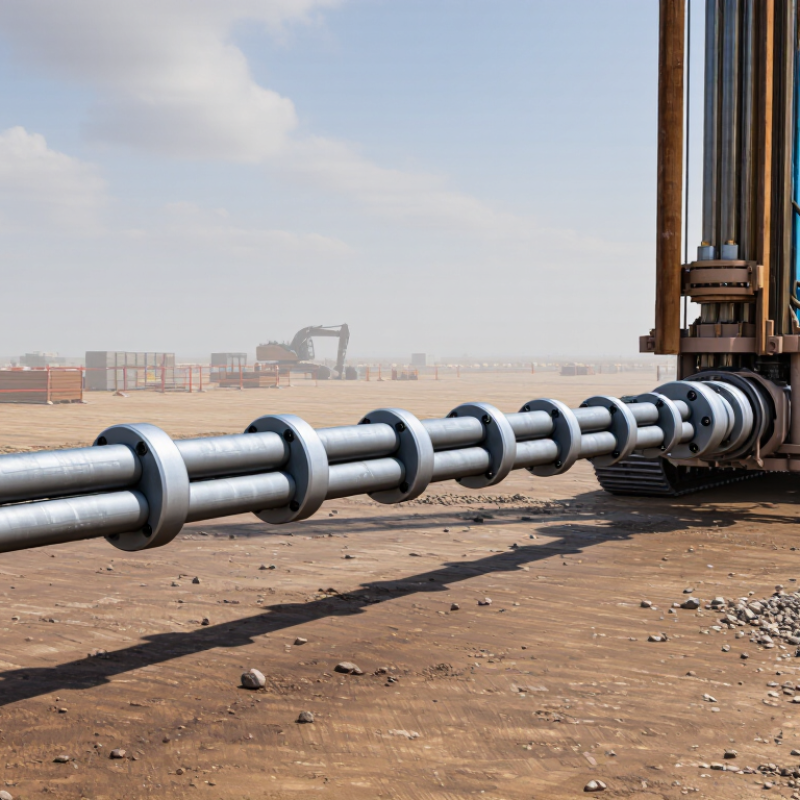
Friction Kelly Bar Fundamentals: Telescopic Sections and Torque Transfer
A Friction Kelly bar transfers rotary torque through contact between its telescopic sections. As the outer section turns, friction at the overlapping faces drives the inner sections and drilling tool. The bar extends under its own weight and retracts as the rig lifts. Unlike an interlocking bar, it relies on friction rather than positive mechanical locks, sooverlap and contact condition matter. Worn faces, dirt, or poor lubrication can affect performance. Small details count.
FHWA’s 2018 Drilled Shafts: Construction Procedures and Design Methods describes shafts ranging from about 0.46 metres to more than 6 metres in diameter. That range shows why bar selection must match the rig and job, not shaft diameter alone. Check the rig’s rated torque, required drilling depth, bar length, section overlap, and tool connection. A bar that reaches the target depth may still be unsuitable if its torque rating is below the rig’s output. Verify ratings against the equipment manual; field wear can change real-world performance.
Tips: Inspect each section for bent edges, cracked welds, uneven wear, and packed soil before drilling. Confirm the maker’s torque and overlap limits. Record unusual vibration or slipping. It may be tempting to push through a difficult layer, but pausing to check the bar can prevent avoidable damage.
