
How to Find the Best Heat Lamination Machine Price?
Finding the best heat lamination machine price is not simply a matter of choosing the lowest quotation. A machine priced at $2,000 may appear attractive, yet frequent film jams, slow warm-up times, and expensive replacement rollers can quickly increase ownership costs. Buyers should compare output speed, maximum lamination width, temperature stability, power consumption, warranty coverage, and local technical support.
Packaging equipment consultant David Zwang offers a useful principle: “The lowest purchase price rarely represents the lowest operating cost.” This idea deserves careful attention. A machine running eight hours daily faces different demands from one used for occasional office projects. Ask suppliers for realistic production samples, service response times, spare-part prices, and written warranty terms. Request the exact model configuration, because a quoted heat lamination machine price may exclude stands, feeders, installation, or shipping.
Small details count. Measure your workspace. Check whether the machine reaches the required temperature consistently. Examine finished samples under bright light, especially around edges and overlapping areas. A cheaper unit may produce acceptable results at first, but uneven pressure can become costly later.
There is no perfect comparison. Some suppliers publish incomplete prices, while others bundle useful accessories. That can confuse even experienced buyers. A reliable decision therefore combines purchase cost, operating risk, expected workload, and after-sales support. This guide explains how to compare those factors clearly, identify misleading quotations, and choose equipment that fits actual production needs rather than an attractive number on a sales sheet.
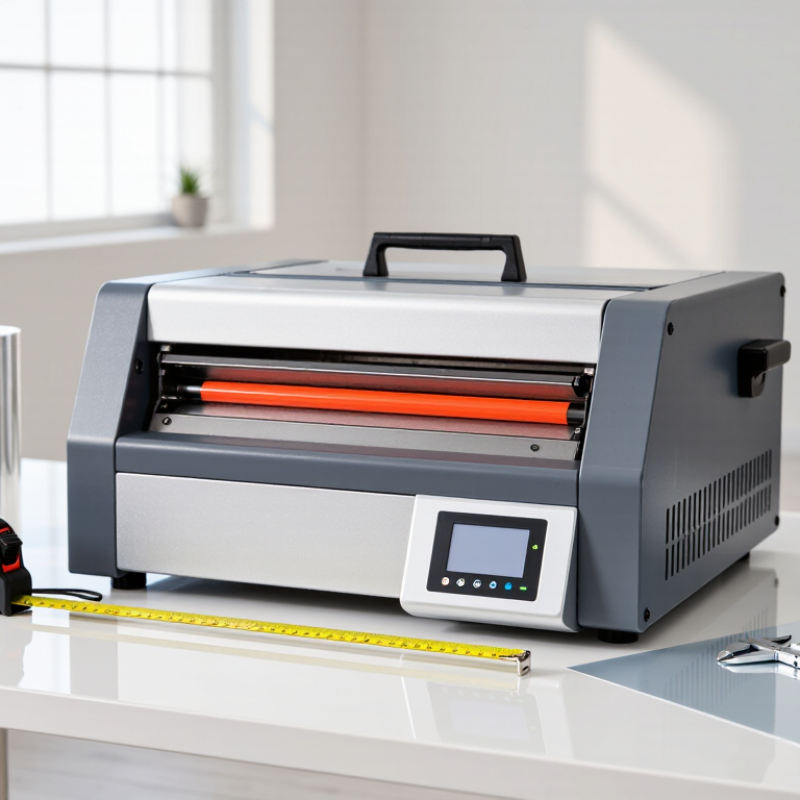
Define Lamination Needs by Film Thickness, Width, and 0.5–30 m/min Speed
Finding the best heat lamination machine price starts with film thickness, working width, and line speed. A machine handling 25-micron film may struggle with 250-micron board. Ask for tested samples, not only catalogue figures. The stated 0.5–30 m/min range also needs careful interpretation. Maximum speed often applies to thin film, simple graphics, and stable feeding conditions.
According to Smithers’ 2024 report, The Future of Printed Packaging to 2029, packaging production is moving toward shorter runs and greater version variety. That trend makes adjustable speed valuable. At 0.5 m/min, an operator can reduce wrinkles on delicate media. At 30 m/min, higher output becomes possible, but only with suitable heating power, roller pressure, and cooling control. Width matters too. A 650 mm machine may be economical for small sheets, while a 1,600 mm model can reduce manual joining on wide rolls.
Compare the complete operating cost, not just the purchase quote. Check heater zones, roller replacement, electricity use, installation, and operator training. Smithers also identifies finishing flexibility as important for changing print applications. A machine with narrow film limits may become expensive later. I would not assume the fastest model is the best value. In real production, frequent stops can erase its advertised advantage. Request speed tests across your actual film thicknesses, widths, and adhesive types. Leave room for mistakes. Trial results are often more useful than a polished specification sheet.
