
10 Essential Tips for Choosing Steel Fabrication Equipment
Choosing the right Steel Fabrication Equipment can shape productivity, safety, and product quality for years. A machine may look impressive in a supplier’s showroom, yet perform poorly in a crowded workshop. Real decisions require more than comparing prices and motor power.
This guide examines ten practical tips for selecting equipment that matches your materials, workload, floor space, and operator skills. It considers cutting thickness, bending capacity, welding compatibility, control systems, maintenance access, and energy use. For example, a plasma cutter rated for 25-millimeter steel may struggle with continuous production at that limit. Capacity claims need careful verification.
Safety matters every day.
Reliable equipment should include clear guarding, emergency stops, stable controls, and accessible documentation. Reputable manufacturers provide test data, training resources, spare-parts support, and realistic service commitments. Independent reviews and advice from experienced fabricators can reveal problems hidden behind polished brochures. Equipment should also support recognized workplace safety requirements and proper operator training.
No checklist is perfect. A growing workshop may choose a machine that becomes restrictive within two years. Another company may overpay for features rarely used. Honest evaluation means recording actual job sizes, production volumes, downtime causes, and maintenance history before purchasing. Site visits, sample cuts, and supplier demonstrations can expose weaknesses early. The best choice balances present needs with sensible future growth, without treating every advanced feature as essential.
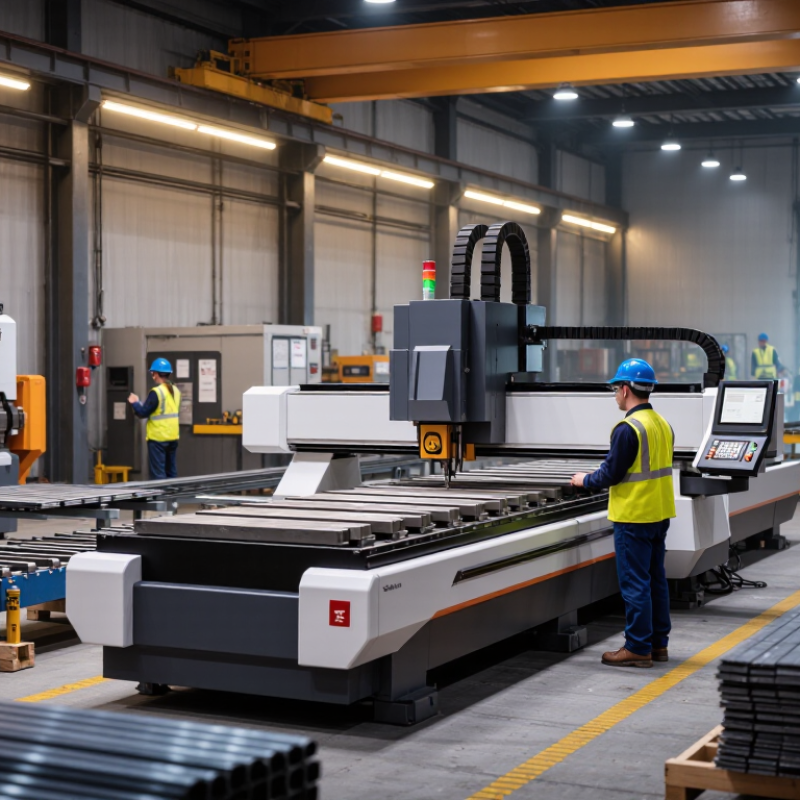
Define Production Requirements and Material Specifications
10 Essential Tips for Choosing Steel Fabrication Equipment
Define Production Requirements and Material Specifications
Before choosing equipment, document your daily production volume, steel grades, thicknesses, and maximum component sizes. Include cutting, drilling, bending, welding, or forming requirements. A machine designed for thin sheet may struggle with thick structural plate. That mismatch can cause slow cycles, poor accuracy, and unnecessary repairs.
I have seen teams focus on equipment speed while overlooking material variation. It was an expensive lesson. Carbon steel, stainless steel, and coated materials may require different power levels, tooling, extraction, and cooling systems. Record acceptable tolerances, edge quality, hole diameters, and bend angles. These details make supplier comparisons more reliable.
Describe the heaviest and lightest materials you expect to process. Add real measurements, not rough estimates. Consider future work, but avoid buying capacity you may never use. A larger machine is not automatically better. It can consume more floor space, energy, and operator attention.
Ask for sample trials using your actual steel specifications and production drawings. Inspect cut edges, dimensional accuracy, surface marks, and repeatability. Check how quickly operators can change settings. Small delays become costly across hundreds of parts. Also review maintenance access, training requirements, spare-part availability, and documented safety procedures. Supplier claims should support your testing, not replace it.
