
What Is an Electronic Component Assembler?
An Electronic Component Assembler turns separate parts into a working electronic product. The job may involve placing tiny resistors on a circuit board, soldering connectors, or fitting a finished board into a protective enclosure. Precision matters. So does patience. A misplaced component can halt a production run or create a fault that is difficult to trace later.
The role combines hands-on skill with careful process control. Assemblers follow work instructions, use tools such as soldering stations and torque drivers, and inspect joints, markings, and connections. In many facilities, automated equipment handles repeated placement, while people manage setup, checks, repairs, and exceptions. IPC President and CEO John W. Mitchell has highlighted workforce capability as important to electronics manufacturing. A practical paraphrase of that emphasis is: “Reliable electronics depend on skilled people and disciplined processes.” This is a paraphrase, not a verbatim quotation.
The title can describe different levels of responsibility, from manual bench work to operating production equipment and recording inspection results. Employers may expect familiarity with component identification, electrostatic-discharge precautions, and quality procedures. Details vary by product and workplace. A neat solder joint is useful evidence, but it does not prove the entire assembly is sound. That distinction is easy to overlook. This guide explains what an Electronic Component Assembler does, which skills the work requires, and how assembly quality is checked. It also considers the limits of the role: assemblers follow approved specifications, while design decisions usually belong to engineers.
Definition and Scope of an Electronic Component Assembler
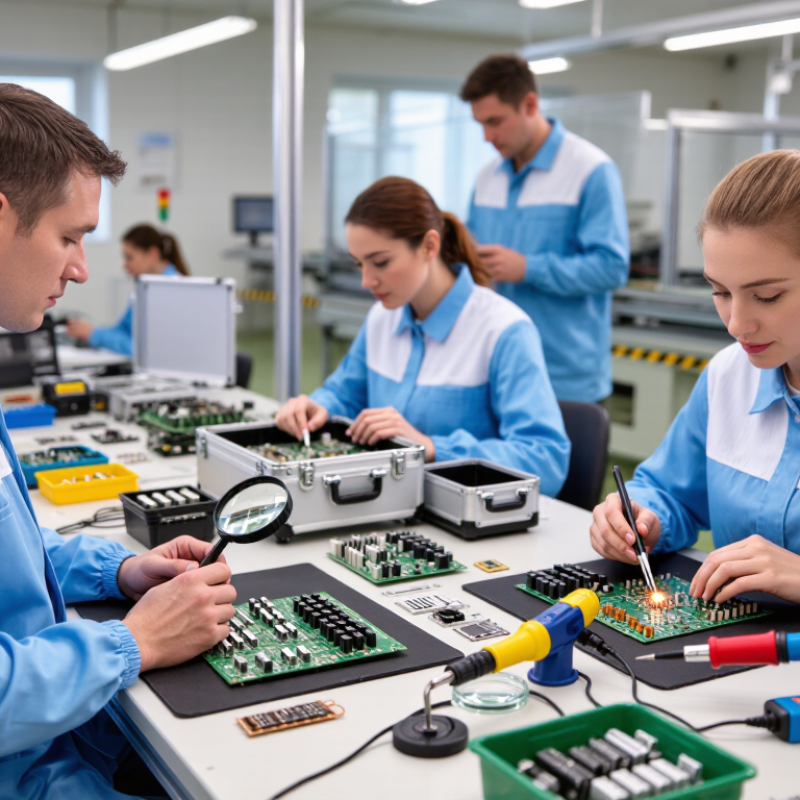
An electronic component assembler is a person or organization that joins electronic parts into a usable circuit board or product. The work may include preparing boards, placing resistors and capacitors, fitting connectors, soldering joints, and securing cables or enclosures. Some assemblies are built by hand; others use automated placement equipment, with technicians checking setups and correcting exceptions. The scope depends on the product and production plan. It may cover a bare board, a populated board, or a tested subassembly ready for integration. Small details matter. A crooked connector can stop a housing from closing.
Assembly work often includes reading drawings and parts lists, confirming component identity, controlling electrostatic discharge, and inspecting joints under magnification. Teams may record lot details and test results to help trace defects and compare repeat builds. Testing can range from visual checks to electrical measurements or a functional power-up. An assembler does not necessarily design the circuit or select its components; those duties may belong to other teams. The boundary is not always neat. In smaller shops, assemblers may flag fit or process problems, but they should not silently substitute parts. Production documents can be incomplete; guessing is not a reliable fix. Even a careful inspection can miss a raised connector pin.
