
10 Electric Winch Buying Tips for Global Buyers
An Electric Winch can look straightforward in a catalogue: rated line pull, motor power, cable length, and price. The real decision is more demanding. A unit lifting a boat trailer faces different loads and exposure than one used for recovery or industrial material handling. Buyers should examine duty cycle, drum capacity, line speed under load, braking, control options, mounting strength, and service support—not just the headline capacity.
Grand View Research’s Winch Market Size, Share & Trends Analysis Report tracks demand across applications including marine, construction, and industrial use. That breadth matters: market growth does not tell an individual buyer whether a specific winch suits a specific task. It does show why comparing products by application and operating conditions is more useful than comparing prices alone. Check manufacturer specifications, installation instructions, and applicable standards for the intended use. Small details count. A wet mounting point, undersized battery cable, or poorly matched rope can change performance.
A useful field principle is: “Choose for the working load and duty cycle, not the largest number on the box.” This is practical guidance, not a verified quotation from a named winch expert; attributing it otherwise would be misleading. The ten tips ahead focus on verifiable specifications, realistic operating conditions, and supplier support. Some buying decisions still involve trade-offs. Be honest about them.
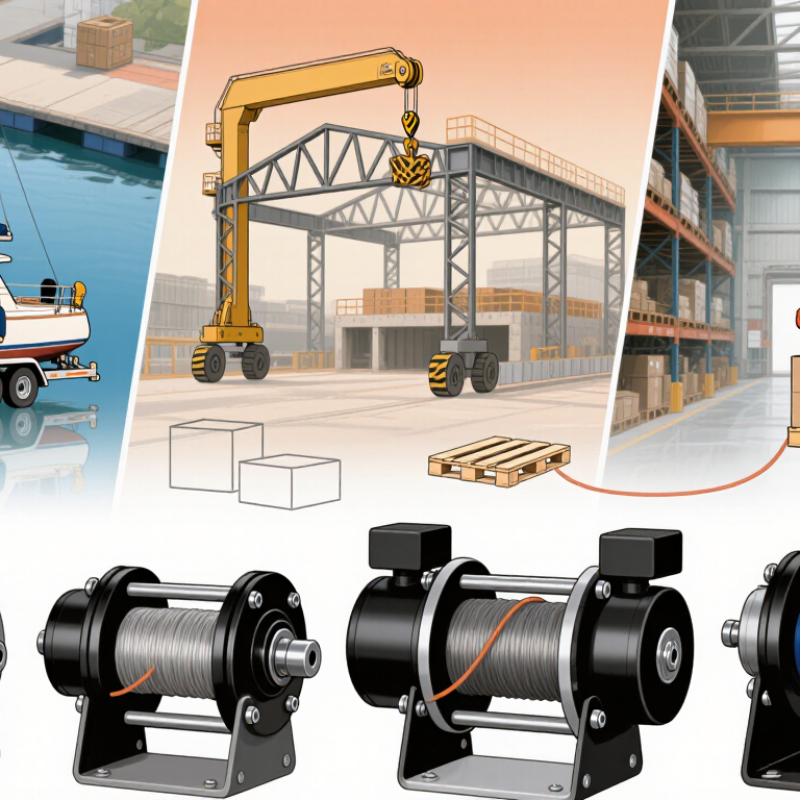
Define Required Line Pull Using the Winch’s First-Layer Rating
A winch’s headline line pull usually refers to the first rope layer, where the drum’s effective radius is smallest. As rope builds up, the radius grows and available pull falls, even if motor torque stays constant. Use the relation line pull = drum torque ÷ effective radius. For example, a 10 kN first-layer rating at a 100 mm radius yields about 6.7 kN at a 150 mm radius. This is a calculated example, not a product rating. ASME B30.7-2021 provides a useful reference for winch ratings and operating practices; check the equipment’s layer-by-layer data against its stated conditions. That changes fast. One detail buyers can miss is whether the quoted pull assumes a full battery, a particular voltage, or a specific rope arrangement.
Tip: Start with the actual load, then account for slope, rolling resistance, and the drag of the load’s contact surface. Compare the required pull with the first-layer rating, not the maximum figure in a headline. Ask for the rated pull on each layer and the rope capacity chart. If the chart is missing, don’t estimate from motor power alone. Recheck the calculation with the intended rope diameter and drum dimensions; those inputs are easy to misread.
