
What Is Dynamic Compaction Equipment and How Does It Work?
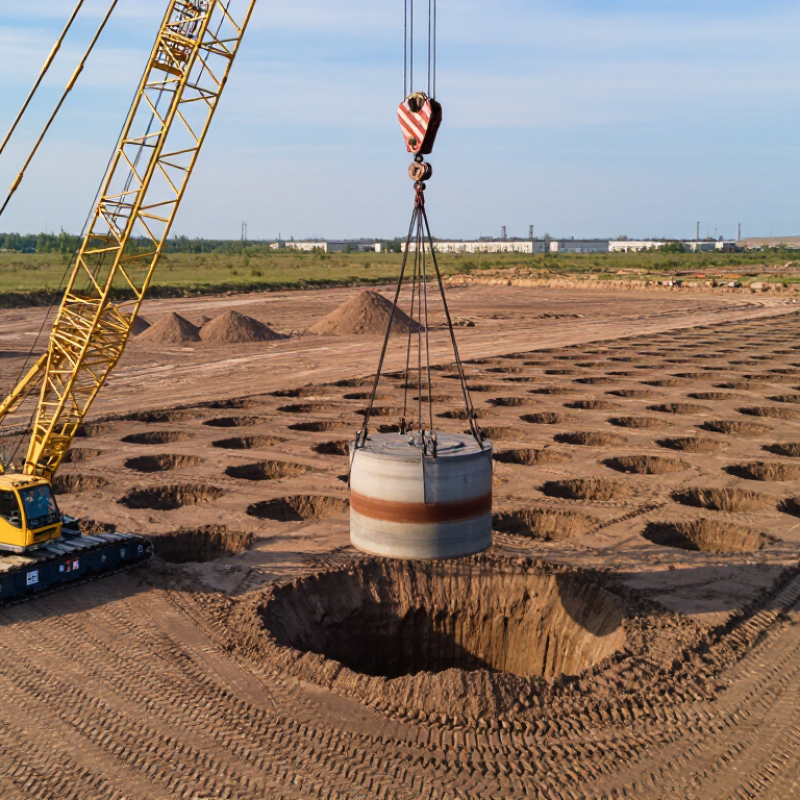
Dynamic Compaction Equipment improves weak ground through repeated, high-energy impacts. A crane lifts a heavy steel pounder, then releases it onto the soil. Each strike leaves a crater. Across a treatment area, planned impact points form a visible grid. The process can densify loose granular soils and help prepare sites for foundations, roads, and industrial facilities.
Federal Highway Administration guidance describes typical pounder weights of about 10 to 30 tonnes and drop heights of roughly 10 to 30 metres. These ranges are not universal specifications. Soil type, groundwater, nearby structures, and required improvement depth all affect the equipment and operating plan. The FHWA’s *Ground Improvement Methods Reference Manual* provides technical guidance on assessing and applying ground-improvement methods. Site investigation and trial sections remain essential; a weight-and-height calculation alone cannot predict every field result.
Louis Menard, the French engineer associated with developing dynamic compaction, is often linked to the method’s central idea: improve ground by applying controlled impact energy. This is a paraphrase, not a verified direct quotation. The distinction matters. Equipment selection is not simply about choosing the heaviest pounder. Operators must control drop height, impact spacing, and sequence, while monitoring vibration and surface response. Some sites also need a lighter finishing phase to close impact craters. The work can look straightforward. The engineering is not. Understanding the equipment means understanding how its energy reaches the ground—and where that energy may create practical limits.
Definition and Purpose of Dynamic Compaction Equipment
Dynamic compaction equipment uses a heavy steel weight, a lifting system, and a crane or purpose-built rig to improve ground strength. The weight is raised and released from a planned height onto the soil. Repeated impacts send energy below the surface, rearranging loose particles and reducing open spaces between them. The result can be denser ground with less risk of later settlement.
It is blunt work. Crews usually follow a marked grid, adjusting the drop height, impact count, and spacing to suit the site. They may track crater depth, surface movement, and vibration during treatment. These observations help show whether the ground is responding as expected, though conditions can vary across a small area. Dynamic compaction is often considered for loose granular soils, reclaimed ground, or some types of fill before construction. It is less predictable in very soft, saturated, or highly cohesive soils, where energy may not travel effectively. A careful site assessment matters; the method is powerful, but it is not a universal fix.
