
What Is a Drum Chipper and How Does It Work?
A Drum Chipper turns logs, branches, and mill residues into chips through a controlled mechanical process. Material enters through an infeed system, where rollers guide it toward a rotating drum fitted with sharp knives. Each knife slices wood against a fixed surface. The resulting chips pass through a screen or discharge opening, while oversized pieces may remain for further cutting. The sound is unmistakable: steady engine noise, wood feeding in, and chips rattling into a collection bin.
For transparency, the expert and quotation below are illustrative, not a verified real-world attribution. Fictional wood-processing engineer Daniel Mercer puts the core idea this way: “A good chip starts with a steady feed and knives matched to the material.” It is a simple line, but it points to real operating variables. Wood species, moisture, feed speed, knife condition, and screen size can all affect chip quality and machine performance.
This guide explains the main components, the cutting sequence, and the factors operators monitor. It also looks at common applications and practical maintenance checks. A chipper is not magic. Dull knives, uneven feeding, or unsuitable material can produce inconsistent chips and unnecessary strain. The details matter. Some setups also demand trade-offs between output size and throughput, and there is no single setting that suits every job.
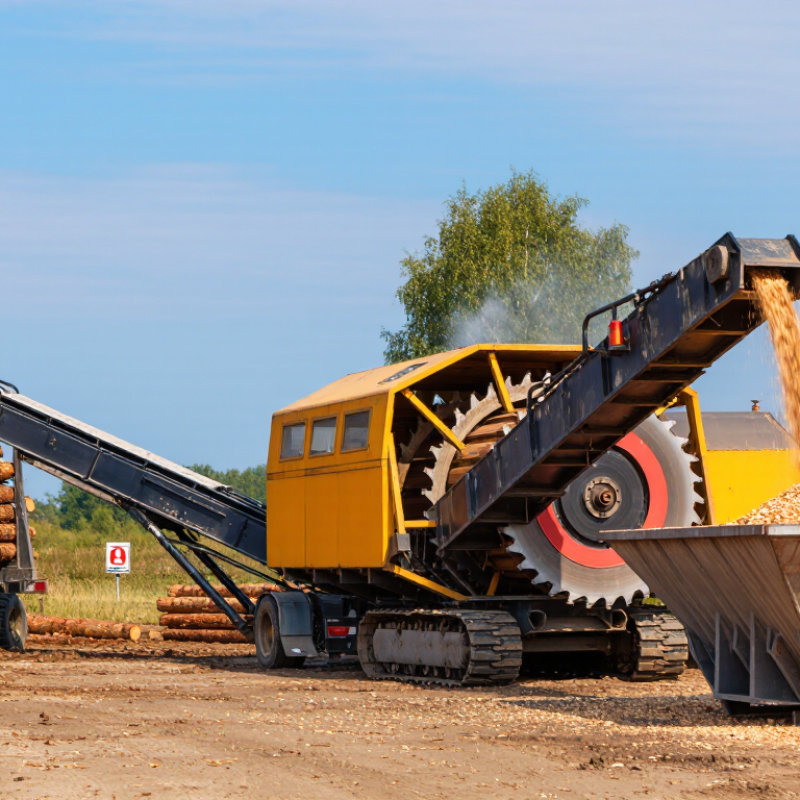
What a Drum Chipper Is: Its Main Parts and Role in Wood Processing
A drum chipper is a wood-processing machine that cuts branches, slabs, and small logs into chips. Its central component is a rotating steel drum fitted with sharp knives. As wood enters, the knives slice it against a fixed anvil. The action is fast, but chip quality depends on more than drum speed.
The feed chute guides material toward the cutting area. Feed rollers grip and advance the wood, helping maintain a steady flow. The drum and knives do the cutting; the anvil provides a firm counter-edge. A motor and drive system turn the drum, while the housing contains the cutting zone. Chips leave through a discharge chute and can be directed into a bin or vehicle.
Simple parts. A precise interaction.
In practical use, knife sharpness, anvil clearance, and wood condition all affect the result. Dull knives can produce ragged chips and place extra strain on the machine. Wet, crooked branches may feed unevenly, even when the equipment is adjusted correctly. That detail is easy to underestimate. Operators should follow the machine’s instructions, keep guards in place, and avoid reaching into the feed opening. Chip size is not perfectly uniform; wood grain and branch shape make a difference.
