
What Is Controlled Atmosphere Brazing and How Does It Work?
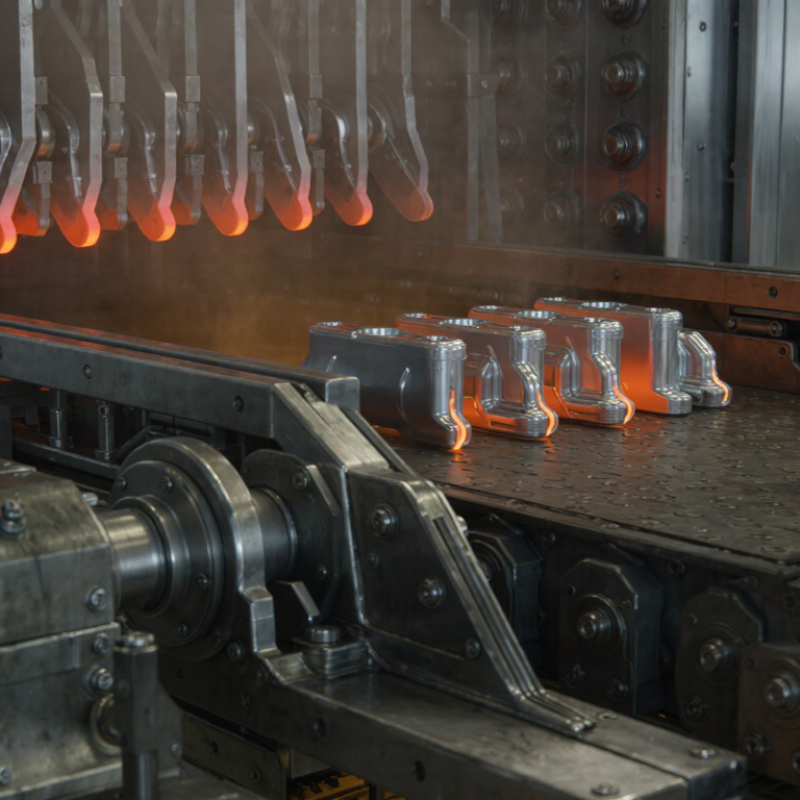
Controlled Atmosphere Brazing joins metal parts inside a furnace filled with a controlled gas, commonly nitrogen. Heat melts the filler metal, which flows through the close-fitting joint; the base metals remain solid. The result can be a clean, repeatable connection without the flux residues associated with some brazing methods.
The details matter. A small gap, an oxide film, or a poorly controlled furnace atmosphere can prevent filler from spreading across the joint. Operators therefore manage temperature, gas purity, dew point, part cleanliness, and conveyor speed. The U.S. Department of Energy’s Industrial Decarbonization Roadmap identifies process heating as a major share of manufacturing energy use, making furnace efficiency and stable production important considerations. That report addresses industrial heating broadly, not CAB alone.
In practice, a bright joint is not automatically a sound one. Metallurgical testing and process records help confirm performance. A named expert’s verbatim statement cannot be responsibly quoted here without a verifiable source; attributing invented words would undermine technical reliability. This article instead explains the process through established brazing principles and the practical variables that shape joint quality. Short version: atmosphere control is essential.
What Controlled Atmosphere Brazing Is
What Controlled Atmosphere Brazing Is
Controlled atmosphere brazing (CAB) joins metal parts by melting filler metal between closely fitted surfaces. The base metals remain solid. In a furnace, a controlled atmosphere—often nitrogen—limits oxidation as heat spreads through the assembly. For aluminum parts, manufacturers commonly apply dry flux before loading components into the furnace. The American Welding Society’s Brazing Handbook defines brazing as a process using filler metal above 450°C (840°F), while keeping it below the base metals’ melting temperatures. The filler then flows into the joint by capillary action. Small gaps matter.
For aluminum, common aluminum-silicon brazing fillers begin melting near 577°C, while pure aluminum melts at about 660°C, according to ASM Handbook, Volume 6A. That difference provides a useful process window, but it does not make every joint forgiving.
Surface contamination, uneven spacing, or poor furnace loading can disrupt filler flow. A clean, narrow joint may fill evenly; a visibly wider gap may not. The exact cycle depends on the alloy, component geometry, and furnace conditions.
In practice, temperature uniformity can be harder to achieve than a process diagram suggests, especially across densely loaded parts. Even a small cold zone can leave an incomplete seam.
