
147 Mill Ridge Rd Suite 232
Lynchburg, Virginia 24502
Phone 757-982-3665

How to Choose Pneumatic Seals in 2026?

Pneumatic Seals rarely attract attention until pressure drops, a rod sticks, or a cylinder leaves a faint lubricant film. In 2026, choosing the right seal still starts with the application, not a catalog headline. Operating pressure, speed, temperature, stroke length, and the working medium all shape performance. Small details matter. A seal that works well in a clean, slow actuator may wear quickly in a fast, dusty line. Material compatibility deserves equal care. Polyurethane, nitrile, and other elastomers respond differently to heat, compressed-air quality, lubrication, and cleaning agents. That difference is easy to overlook.

A practical selection process also checks seal profile, groove dimensions, surface finish, and installation space. Fit matters. For example, a rod seal must control leakage without creating excessive friction or damaging the rod during repeated cycles. Wipers help limit dust ingress, while piston seals support pressure separation inside the cylinder. Neither component can compensate for a poor bore, a scratched rod, or incorrect assembly. Even a premium seal can fail early. This guide explains how to compare seal materials and designs, read supplier data, and match a seal to real operating conditions. It also considers maintenance access, expected service life, and the cost of unplanned downtime. No selection chart replaces a verified fit check. When conditions are uncertain, confirm dimensions and limits with the cylinder maker or a qualified seal supplier. The best choice is not always the newest material; it is the one that performs consistently in your actual system.
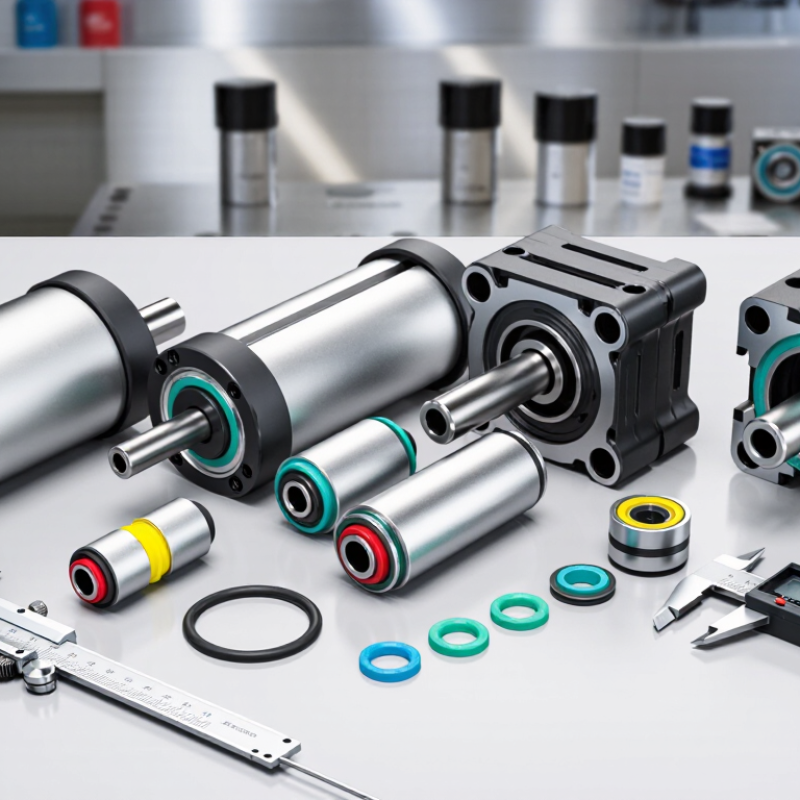
How to Choose Pneumatic Seals in 2026?

Define the Operating Conditions and Performance Requirements

Before choosing a pneumatic seal, define the conditions it will face in service. Record minimum and maximum pressure, temperature range, piston speed, stroke length, and cycle frequency. Note whether the air is dry, lubricated, or carries moisture and compressor contaminants. Small details matter.

Measure the cylinder bore, rod diameter, groove dimensions, and available clearance rather than relying only on a drawing. Check for misalignment, surface wear, and changes in load during the stroke. A seal that performs well in a clean test rig may behave differently in a machine with vibration or frequent starts. Identify the acceptable leakage level, friction limit, and expected service interval. These requirements help narrow the design and material options without treating any one specification as universal.

A common selection mistake is to focus on peak pressure while overlooking speed and heat buildup. Ask how long the system runs continuously, and whether it pauses long enough to cool. Consider maintenance access too: a seal that is difficult to replace can increase downtime. If operating data is incomplete, say so and gather measurements under real use. It is tempting to choose from the nominal values alone, but those numbers may miss brief pressure spikes or temperature changes. Test it. Verify performance across the actual operating range before committing to a production choice.

Compare Pneumatic Seal Types and Their Applications

Compare pneumatic seals by motion, pressure, speed, temperature, and air quality—not by shape alone. Piston seals suit reciprocating cylinders, where they separate pressure chambers and maintain force through each stroke. Rod seals limit leakage around the moving rod; add a wiper when dust or dried residue could enter the cylinder. Small detail, big impact.

Static O-rings work well in ports and end caps, but can roll or wear in repeated motion if the groove is poorly designed. Polyurethane seals often handle abrasion in cycling cylinders, while PTFE-based designs can reduce friction in faster or lower-lubrication service. Material choice still depends on temperature and the air’s moisture and oil content. No seal fits every duty.

The U.S. Department of Energy’s Improving Compressed Air System Performance: A Sourcebook for Industry reports that leaks can waste 20–30% of compressor output in poorly maintained systems. Seal wear is only one possible cause; fittings and tubing matter too. Match the seal profile to the cylinder drawing, then check pressure, stroke speed, and operating temperature. A slightly imperfect fit may run quietly at first, yet leak more as the seal wears.

Select Materials for Air, Temperature, and Chemical Compatibility

How to Choose Pneumatic Seals in 2026?
Select Materials for Air, Temperature, and Chemical Compatibility

Start with the air itself. Dry, clean air differs from lubricated air, which may expose seals to compressor oils and additives. Nitrile rubber is commonly considered for oil exposure, while other elastomers may suit different fluids. Check the exact compound, not just the material name. ASTM D2000 classifies rubber by properties, but it does not confirm compatibility with every chemical. ISO 1817 provides a method for testing how liquids affect vulcanized rubber.

Temperature changes the decision. A seal near a warm cylinder may behave differently during cold starts or long operating cycles. Compare the full temperature range with the seal maker’s compound data, then account for pressure, motion, and cleaning agents. The U.S. Department of Energy reports that leaks can waste 20–30% of compressed-air output in poorly maintained systems. That figure covers system leakage overall, not seals alone, but it shows why small sealing choices matter.

Tips: List every fluid, cleaner, and temperature extreme before choosing. Ask for test data when exposure is uncertain. A compatibility chart is a starting point, not a guarantee; real conditions can surprise you.

How to Choose Pneumatic Seals in 2026: Materials for Air, Temperature, and Chemical Compatibility

Typical continuous operating temperature ranges for common pneumatic seal materials (°C)

These are indicative ranges; actual limits depend on the compound, seal design, pressure, and duty cycle. For oil-misted air or mineral-oil contact, NBR is commonly used; EPDM suits water-based media but is generally unsuitable for oils and hydrocarbons. FKM offers broad chemical and heat resistance, while polyurethane is often selected for wear resistance. Check the seal grade against the exact air additives, lubricant, and contaminants.

Verify Seal Dimensions, Groove Design, and Cylinder Fit

How to Choose Pneumatic Seals in 2026?

Verify Seal Dimensions, Groove Design, and Cylinder Fit

A pneumatic seal can look correct on a parts list and still leak in service. Measure the rod or bore diameter, groove width, and groove depth with clean, calibrated tools. Check the cylinder drawing, too; worn surfaces or earlier repairs may differ from nominal dimensions. Small errors matter. A seal squeezed too tightly can wear quickly, while a loose fit may allow air to bypass the sealing lip.

Groove design determines how the seal is supported as pressure changes direction. Confirm that the groove leaves enough space for the seal to deform without pinching or twisting. Also check clearances between the piston, rod, and cylinder wall, since excess clearance can encourage extrusion under load. After assembly, move the cylinder slowly through its stroke and watch for uneven drag or leakage. A short test helps, but it cannot reveal every long-term issue. Recheck after initial operation when the application is critical. Measurements are not perfect; document any uncertainty rather than assuming the drawing tells the whole story.

Assess Service Life, Maintenance Needs, and Supplier Quality

Choosing a pneumatic seal in 2026 starts with the duty cycle, not the catalog description. Record operating pressure, temperature swings, stroke speed, and exposure to moisture or dust. A seal in a clean packaging cylinder may last far longer than one facing abrasive particles or side loading. Ask how service life was tested, then compare those conditions with your machine. Lab results help, but they are not a guarantee.

Maintenance needs matter just as much. Check whether the seal can be inspected without removing major components, and note how quickly wear becomes visible. A slow leak may first show up as longer cycle times or a compressor running more often. Keep a simple record of replacements and operating hours. It will not explain every failure, but it can reveal patterns. Not every shutdown is caused by the seal.

Supplier quality is more than a polished data sheet. Request material specifications, batch traceability, and test information for the seal size and compound you plan to use. Ask how dimensional consistency is checked between production lots. If possible, test a small quantity in the actual cylinder before standardizing it. A supplier should also ask about pressure, temperature, lubrication, and contamination—not just the bore size. If those questions never come up, reconsider the fit.

How to Choose Pneumatic Seals in 2026? - Assess Service Life, Maintenance Needs, and Supplier Quality
Selection Dimension What to Assess Practical Guidance Service-Life and Maintenance Effect Supplier Evidence to Request
Operating pressure and motion Normal and peak pressure, reciprocating speed, stroke length, and duty cycle. Specify the full operating envelope, including pressure spikes and high-cycle conditions. Confirm that the seal profile and housing are suitable for the application. Excess pressure, speed, or cycle frequency can increase friction, heat, wear, and the risk of extrusion or leakage. Application-specific recommendations and test data that state pressure, speed, stroke, temperature, and cycle conditions.
Seal material Air quality, lubricant exposure, temperature, chemical contact, and required flexibility. NBR is commonly used for general-purpose pneumatic service; polyurethane is often selected for abrasion resistance; FKM may suit higher-temperature or chemical exposure; EPDM is used where its media compatibility is appropriate; PTFE is considered when low friction or broader chemical resistance is needed. Confirm the exact compound and application limits. Material compatibility helps limit swelling, hardening, cracking, and wear. Material names alone do not define performance; formulation and operating conditions matter. Compound identification, documented temperature and media limits, and compatibility information for the actual air, lubricant, and cleaning agents.
Temperature range Minimum start-up temperature and maximum seal temperature during continuous and intermittent operation. Use the seal compound’s documented limits, not a generic material range. Consider heat generated by friction and temperature changes during start-up or cleaning. Temperatures outside the compound’s suitable range can accelerate aging, reduce elasticity, or change friction and leakage behavior. Compound-specific temperature data and test conditions, including whether limits apply to continuous or short-term exposure.
Air quality and contamination Moisture, particles, compressor oil, condensate, and the effectiveness of filtration. Specify the air-treatment conditions and required filtration for the equipment. Keep cylinder surfaces and assembly areas clean during installation. Particles can score surfaces or damage sealing lips; unsuitable oil or condensate can affect some compounds and increase maintenance frequency. Guidance on air-quality requirements, compatible lubricants, and seal handling and storage.
Seal profile and installation Rod or piston application, groove dimensions, clearance, surface finish, and assembly method. Check dimensions and tolerances against the cylinder design. Use the specified installation method and avoid twisting, cutting, or stretching the seal during assembly. Incorrect groove geometry, surface damage, or installation can cause early leakage even when the material is suitable. Dimensioned drawings, tolerance information, installation instructions, and inspection records for supplied parts.
Service-life planning Required cycles, acceptable leakage, operating profile, and consequences of downtime. Set a service-life target in cycles or operating hours and define the conditions used to evaluate it. Compare performance only when test conditions are comparable. There is no universal service-life figure for a pneumatic seal. Actual life depends on the seal, cylinder, air quality, installation, and duty cycle. Application-relevant endurance or field data with stated test conditions, failure criteria, and sample size where available.
Maintenance and replacement Access to the cylinder, planned service intervals, spare-part availability, and downtime cost. Use condition-based inspection where practical; track leakage, sluggish motion, and changes in air consumption. Keep critical replacement seals identified and stored correctly. Early detection can prevent secondary damage and unplanned downtime. Replacement intervals should be based on operating history rather than a generic schedule. Recommended inspection guidance, storage-life information, replacement identification, and consistent dimensional specifications.
Supplier quality and traceability Manufacturing controls, batch consistency, dimensional inspection, change management, and technical support. Evaluate documented quality processes and the supplier’s ability to maintain consistent material and dimensions. A quality-system certificate alone does not establish application performance. Consistent production and traceability make failures easier to investigate and help reduce variation between replacement parts. Batch or lot traceability, material documentation, inspection records, nonconformance handling, and notification of material or process changes.
Selection note: Confirm all material, temperature, pressure, and life expectations for the specific seal compound and equipment. Published ranges and test results are meaningful only when their conditions match the intended application.