
How to Choose the Right Plastic Tarpaulin?
Choosing the right Plastic Tarpaulin starts with the job it must do. A cover resting over patio furniture faces different demands from one protecting tools on a worksite. Rain, sunlight, wind, abrasion, and storage conditions all matter. So does the size of the area, including the extra material needed to secure the edges.
Materials-selection expert Michael F. Ashby’s approach can be captured in this editorial paraphrase: “Choose for the job’s constraints, not for one impressive number.” It is not a direct quotation. The principle is useful because buyers can focus too narrowly on thickness or weight. A heavier sheet may feel reassuring, but it can be awkward to handle or store. Check the fabric construction, coating, seam quality, and grommet placement together. Look closely at the corners. That is where weak reinforcement may show first.
Match the tarp to real conditions. For repeated outdoor use, ask about UV resistance and water protection, and check whether the manufacturer explains its ratings. For occasional indoor coverage, a lighter option may be easier to fold and carry. Read care instructions, inspect the edge finish, and consider how the tarp will be fastened without stretching it too tightly. Specifications help, but they cannot predict every use. Sometimes the perfect choice is not obvious. Compare the trade-offs, and be willing to reconsider if the sheet feels cumbersome or wears sooner than expected.
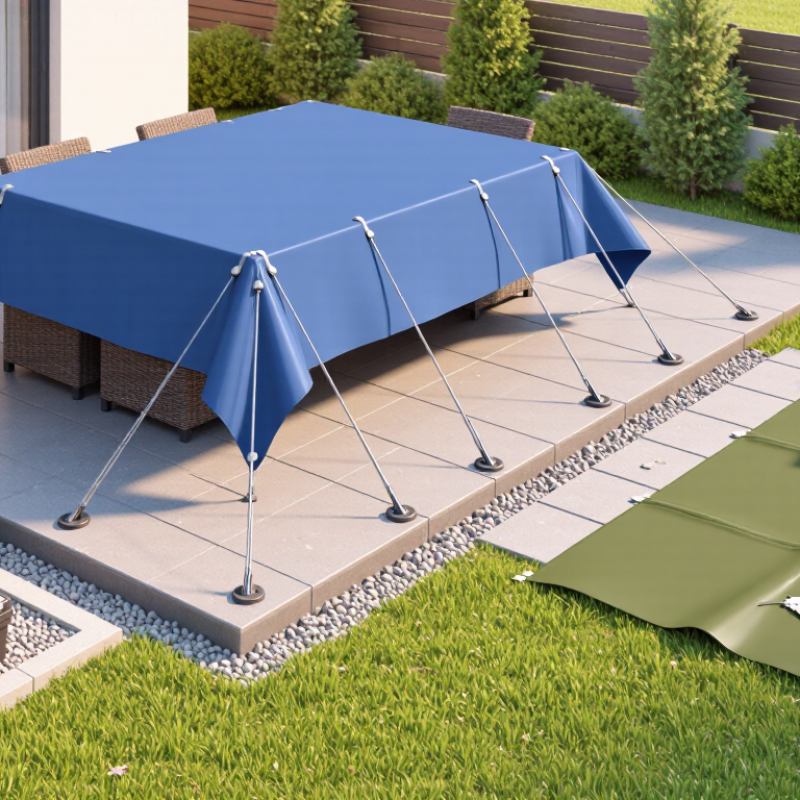
Identify the Intended Use and Conditions
Identify the job before comparing plastic tarpaulins. Will it cover patio furniture, protect tools at a worksite, or shield a load during transport? Each use puts different demands on the sheet. A garden cover may face weeks of sun and rain, while a temporary groundsheet may need to resist abrasion from gravel. Start with the job. Then note how long the tarp will stay in place and how often you will handle it.
Check the conditions where it will be used. Strong sunlight can make some plastics brittle over time, and wind can strain corners and eyelets. For exposed areas, look for UV resistance and reinforced edges. If rain is likely, consider how the tarp sheds water; a sagging sheet can collect puddles even when its surface is waterproof. Details matter. Measure the area with room for overlap and secure fastening, rather than choosing a sheet that barely fits.
Think about temperature, sharp edges, and cleaning, too. A lightweight tarp is easier to fold and carry, but may wear sooner against rough surfaces. Thicker material can be tougher, yet heavier to position alone. Check the product specifications for intended conditions, since “heavy-duty” is not a universal performance standard. I have found that the overlooked detail is often the fastening point: one poorly secured corner can flap all night. Conditions also change, so inspect the sheet after storms and reconsider whether it still suits the job.
