
How to Choose the Right Overhead Crane Wire Rope?
An Overhead Crane Wire Rope is not a generic lifting component. Its construction, diameter, core, and lay must suit the crane’s duty, reeving arrangement, sheave geometry, and working environment. A rope selected only by breaking strength may still wear quickly or perform poorly. The details matter.
The stakes are practical. The International Labour Organization’s 2023 global estimates report about 2.93 million work-related deaths and 395 million non-fatal occupational injuries each year. These figures cover many industries, not crane-rope failures alone, but they underline why lifting equipment deserves careful engineering and maintenance. For wire-rope inspection and discard criteria, ISO 4309:2017 provides a recognized technical reference; ASME B30.30 also addresses wire ropes used in lifting equipment. Neither replaces the crane manufacturer’s specifications or a competent assessment of actual service conditions.
Before comparing rope options, identify the load spectrum, lift frequency, reeving pattern, sheave-to-rope diameter ratio, and exposure to heat, moisture, or abrasion. A compacted strand may suit one duty, while another application may favor a different construction or core. Ask how the rope will be installed, lubricated, inspected, and replaced—not just how it performs on a new-rope data sheet. Small details count. A clean specification can still miss real operating conditions; that is worth checking twice. This guide explains how to evaluate those factors and choose a rope that fits the crane, its workload, and its maintenance plan.
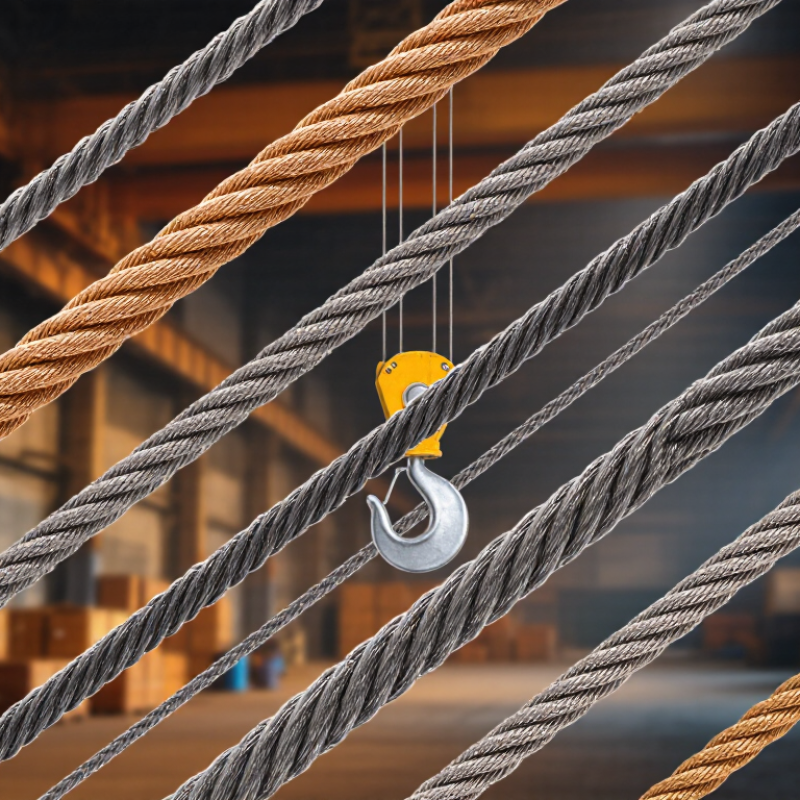
Identify the Crane Type, Hoist Design, and Operating Conditions
Start by identifying the crane and how its hoist moves the load. A bridge crane travels along runway rails, while a gantry crane moves on legs and wheels. Jib cranes have a different travel path and may impose different rope angles. These differences affect rope travel, side pull, and wear. The route matters. Check the hoist manual for the specified rope construction and diameter.
Next, inspect the hoist design. Count the rope falls and note whether the drum is grooved for a particular rope size or lay. Check the sheave diameters, fleet angle, and whether the system needs rotation-resistant rope. A mismatch can cause poor winding, twisting, or faster wear. Small details matter. I would not choose by breaking strength alone; the rope must also suit the reeving and drum.
Then consider the actual operating conditions. Frequent starts, heavy duty cycles, shock loading, abrasive dust, moisture, and outdoor exposure can change what performs reliably. Look for corrosion, broken wires, flattening, and uneven drum spooling during inspections. Check the actual path. A selection may look correct on paper, yet an overlooked sheave or harsh duty cycle can shorten service life. Compare the site conditions with the hoist maker’s specifications, and ask a qualified crane professional to review any uncertainty.
