
How to Choose an External Consumer Unit
Choosing an External Consumer Unit is not simply a matter of finding a weatherproof box. The right unit must suit the electrical circuits it will protect, the location where it will be installed, and the conditions it may face outdoors. Rain, dust, condensation, and direct sunlight can all affect equipment over time. Details matter.
This guide explains what to check before choosing a unit, including enclosure protection, circuit capacity, available space, and compatibility with suitable protective devices. An IP rating can help indicate resistance to water and dust, but it does not tell the whole story. Installation quality and the exact site conditions matter too. A sheltered wall and an exposed garden wall are not the same.
It can be tempting to focus on price or appearance. That may miss important practical questions: Will the unit accommodate the required circuits? Can it be accessed safely for inspection and maintenance? Is the enclosure appropriate for its position? Not just the price. Because consumer units involve electrical hazards, selection and installation should be confirmed by a qualified electrician familiar with the specific property and local requirements. This advice is general, not a substitute for an on-site assessment. Even careful planning can overlook a small detail, so checking the proposed location and circuit needs before buying is worthwhile.
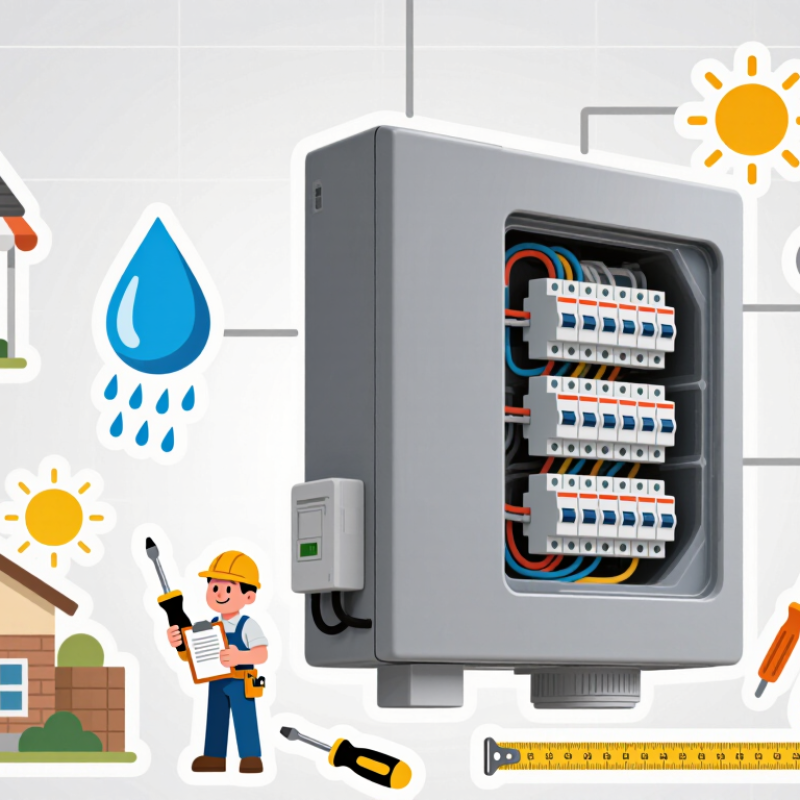
Identify the Circuits and Equipment the Unit Must Supply
How to Choose an External Consumer Unit
Identify the Circuits and Equipment the Unit Must Supply
Start with a clear list of every circuit that may connect to the external consumer unit. Include outdoor lighting, garden sockets, a shed, a water pump, or an outbuilding heater. Note what each circuit serves and when it will run. A single light has different demands from several tools used together. Small details matter.
Check the equipment labels and existing circuit information, but do not guess at electrical capacity. An electrician can assess expected loads, cable suitability, protective devices, and whether the proposed arrangement fits the installation. Mention likely future additions, too. It is easy to forget a planned freezer or workshop socket until the unit is already selected. That oversight can mean extra work.
Tips: Write down each appliance, its rated power, and where it will be used. Photograph existing labels if they are readable. Share the list with a qualified electrician before choosing an enclosure or circuit layout. If a device’s rating is unclear, mark it for checking rather than estimating. Some plans change; leave room for a proper review.
