
How to Choose the Right Electrical MCCB for Your Needs
Choosing the right Electrical Mccb is not simply a matter of matching its ampere rating to a machine’s nameplate. The breaker must suit the system voltage, pole count, prospective fault current, and the conductors it protects. A mismatch can leave equipment exposed or cause nuisance trips.
The stakes are practical. NFPA’s 2022 report, Home Fires Involving Electrical Distribution and Lighting Equipment, found an annual average of 32,620 U.S. home fires involving this equipment during 2015–2019. These fires caused an estimated 430 deaths, 1,070 injuries, and $1.3 billion in direct property damage each year. The figures do not isolate MCCBs, but they underline why protective-device selection deserves care.
Begin with the load and cable data, then check the MCCB’s interrupting capacity against the available fault current. Review trip settings, ambient temperature, enclosure conditions, and coordination with upstream protection. For example, a motor circuit may need different settings from a lighting panel, even when their running currents appear similar. IEC 60947-2 provides a relevant framework for low-voltage circuit breakers; the manufacturer’s datasheet remains essential.
Electrical-code educator Mike Holt’s selection principle can be paraphrased this way: “Protect the conductors and equipment; don’t choose a breaker by load alone.” That is a useful starting point, not a complete design method. Even a careful checklist can miss site-specific details. A qualified electrical professional should verify the final selection against the installation and applicable standards.
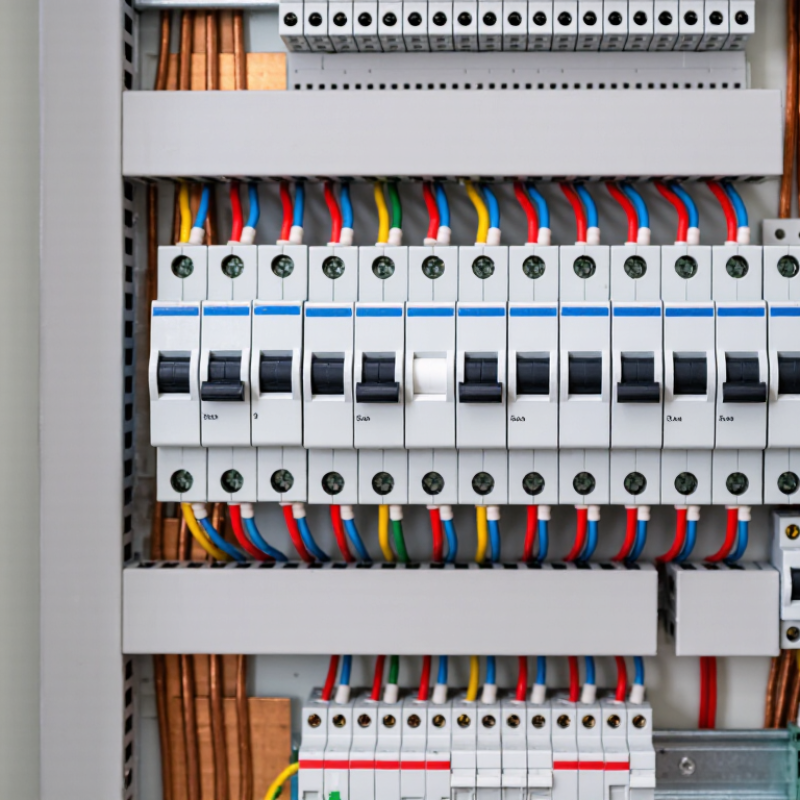
## Understand the Purpose and Operation of an MCCB
A molded case circuit breaker (MCCB) protects a circuit when current exceeds safe limits. Its thermal trip responds to sustained overloads, while its magnetic trip can react quickly to short circuits. The breaker also lets technicians isolate equipment for inspection, but it is not a substitute for safe work procedures. Under IEC 60947-2, MCCBs are assessed for low-voltage circuit protection and switching. The right choice depends on system voltage, load current, available fault current, and the equipment’s interrupting rating.
The risk is practical, not abstract. NFPA’s Electrical Fires report estimated an annual average of 46,700 U.S. home fires involving electrical failure or malfunction from 2015 to 2019. An MCCB cannot prevent every electrical fire, yet correct protection helps limit damaging overcurrent. Picture a motor starting in a warm panel: an undersized breaker may trip unnecessarily, while an unsuitable rating may fail to protect conductors. Small details matter. Selection should follow measured load data and the manufacturer’s coordination guidance, not guesswork.
Tips: Check the circuit’s rated voltage, continuous load, prospective short-circuit current, and cable capacity before choosing. Verify trip settings against the equipment’s starting current. Ask a qualified electrical professional to review coordination with upstream and downstream devices. One detail is easy to miss: ambient heat can affect breaker performance. Recheck the design when panel conditions change.
