
How to Choose the Right CHLF Pump for Your Needs?
Choosing a Chlf Pump is not a matter of matching a label to a pipe. The right model depends on the required flow, total head, fluid temperature, and the system’s operating conditions. A pump that looks suitable in a catalog may perform poorly once elbows, long pipe runs, and changing demand enter the picture. Small details matter.
A useful selection principle, consistent with the engineering approach in Igor J. Karassik’s pump references, is: “Choose for the system’s duty, not the catalog headline.” This is a paraphrase, not a verified verbatim quotation. Start with the duty point, then compare it with the manufacturer’s performance curve. Check the pump’s materials, motor rating, connection size, and installation limits against the actual application. Where suction conditions are uncertain, ask a qualified supplier to review them. Guessing here can be costly.
Real installations are rarely as tidy as diagrams. A pressure gauge may reveal a restriction that the original calculation missed. That happens. This guide outlines how to define your requirements, read CHLF Pump specifications, and compare suitable models without relying on one headline figure. It also points out where assumptions need a second look. Verify every model’s data against current manufacturer documentation before ordering. A careful choice should fit the system today and leave sensible room for its expected operating changes.
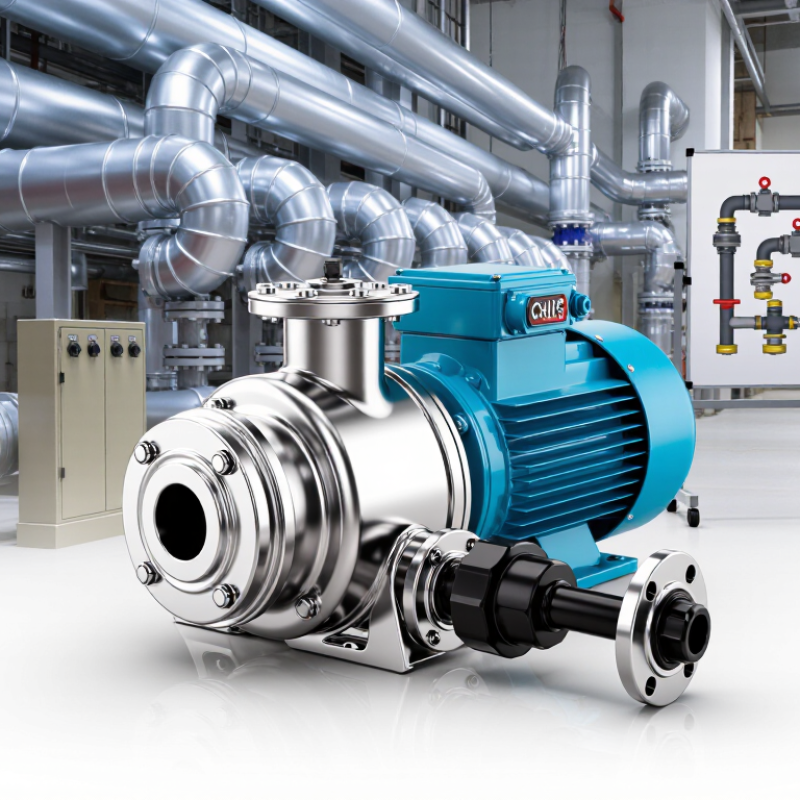
Understand the CHLF Pump’s Design and Typical Applications
A CHLF pump is typically a horizontal, multistage centrifugal pump. Several impellers sit in sequence inside a compact casing, adding pressure as water passes through each stage. Many versions use stainless-steel wetted parts, but materials and seal designs vary by model. Check the pump’s data sheet rather than assuming every CHLF configuration is identical.
This design suits clean-water duties that need steady pressure, such as building supply, HVAC circulation, equipment washing, and light industrial transfer. The U.S. Department of Energy’s Improving Pumping System Performance sourcebook reports that pumping systems can use 25–50% of energy in some industrial operations. That makes correct sizing practical, not cosmetic. Match flow and total head to the actual pipework; an oversized pump may waste power or operate noisily.
Look closely at the fluid, too. Suspended grit or long fibers can wear impellers and seals, while hot water may exceed a particular model’s limits. A pressure gauge near the discharge and a visible flow reading help reveal real operating conditions. The catalog curve is useful, but it cannot account for every elbow, clogged strainer, or future change. That part is easy to overlook.
